Day 3431 (Saturday) 31st October 2026.
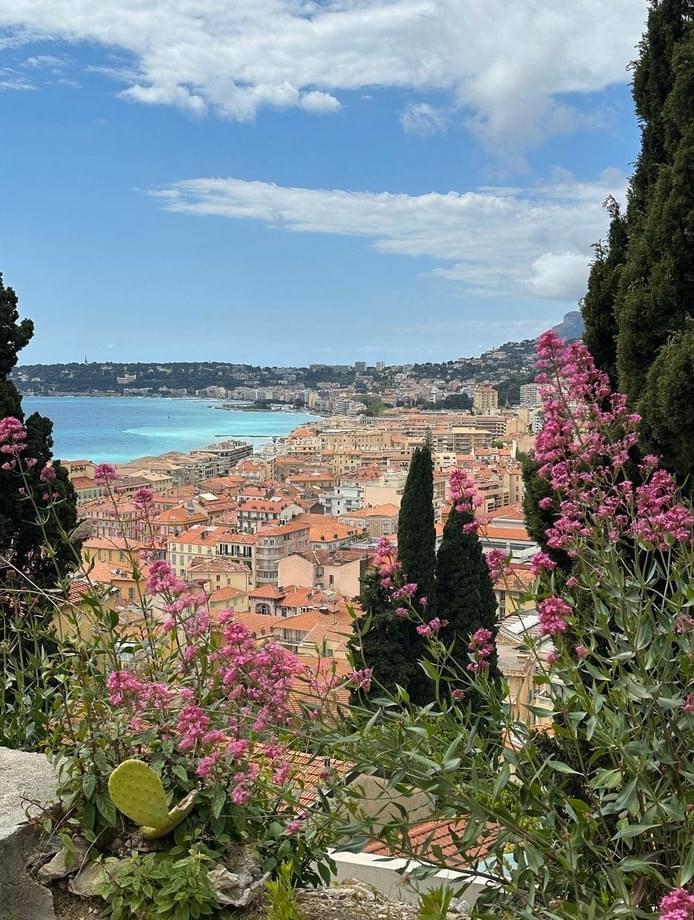
This is Beaulieu-sur-Mer

and this is Eze Village.

It was another lovely sunny day and we went to Le Phare for a beer at lunchtime and met a few locals. Then we went to Les Palmiers for lunch and thoroughly enjoyed it in sunshine.

Halloween in France – Vocabulary and Traditions by Camille Chevalier
Although we don't typically celebrate Halloween in France, Halloween is getting more and more popular among children and young adults.
Halloween has the same ideas as the French Catholic Holiday “La Toussaint”
How do you say “Trick or Treat” in French?
Well… you don’t!
The whole point being to have French kids use a few English words… But a good translation would be in French:
“des bonbons ou un sort” (candies or a spell),
“bêtises ou friandises” (mischiefs or sweets).
I’ve heard this is what they mostly use in French speaking Canada. Now let’s see how to talk about Halloween in French.
50 Halloween French Terms – French Halloween Vocabulary
Here are a few Halloween related French words.
La Toussaint – All Saint Day
Le trente et un octobre – 31st of October Halloween – halloween (say it the French way “a lo ween” – note, no article)
Bonne fête de Halloween – Happy Halloween
Friandises ou bêtises/ Des bonbons ou un sort – treat or trick
Un déguisement, un costume – a costume
Un fantôme – a ghost
Un vampire – a vampire
Une sorcière – a witch
Une princesse – a princess
Un squelette – skeleton
Un épouvantail – a scarecrow
Un diable – a devil
Une momie – a mummy
Un monstre – a monster
Une chauve-souris – a bat
Une araignée – a spider
Une toile d’araignée – spider web
Un chat noir – a black cat
Un potiron, une citrouille – a pumpkin
Une bougie – a candle
Des bonbons – candies
Une maison hantée – a haunted house
Un cimetière – a cemetery
une fée – a fairy
un pirate – a pirate
un homme des cavernes – a caveman
un démon – a demon
une goule – a ghoul
un zombie – a zombie
un extraterrestre – an alien
Un loup-garou – a werewolf
le sang – the blood
se maquiller – to wear makeup le maquillage – the makeup
une perruque – a wig
un masque – a mask
une cicatrice – a scar
les canines de vampire – the vampire fangs
Se déguiser (en) – to wear a costume, to dress-up as
Comment allez-vous vous déguisez ? Tu te déguises en quoi pour Halloween cette année ? How are you dressing for Halloween this year?
Je me déguise en sorcière – I am wearing a witch costume, I am dressing-up as a witch
Sculpter une citrouille – to carve a pumpkin
Frapper à la porte – to knock on the door
Sonner à la sonnette – to ring the bell
Aller de maison en maison – to go from house to house
Faire peur à quelqu’un – to scare someone
Avoir peur – to be scared
Donner des bonbons – to give candies
And now let’s tackle the question: is Halloween celebrated in France?
Do You Celebrate Halloween in France?
In the 1990s, young French hipsters started to have costume parties for Halloween, and some bars and restaurants took up the trend as well… To this day however, Halloween is still mostly a commercial celebration, and something for kids… and English teachers.
Halloween in France – a Good Commercial Opportunity.
Halloween is not a typical French holiday but stores try to take advantage of it, and it’s not unusual to find a “carve your Halloween pumpkin (“une citrouille” or “un potiron”) display at your local grocery store.
Well, pumpkins don’t sell like hotcakes in France, so I guess everything is good to try to sell them… But I don’t know that French people are massively carving pumpkins or doing anything special for Halloween…
Unfortunately, Halloween is usually during mid-season school break (“les vacances de la Toussaint”), so schools don’t usually organise a trick-or-treating outing.
No Tricks on Halloween in France
Although some neighbourhoods are more responsive than others, trick-or-treating is not yet part of the French tradition, and people have mixed reactions to being “disturbed’ at nightfall for candies by kids in costumes.
Note however the “trick” part is out of the question in France… That part of the tradition didn’t make it (yet?) and French folks have not had the pleasure to receive eggs or toilets paper over their fences, trees, house…
Only Scary Costumes for Halloween in France
French kids don’t seem to be aware that you don’t have to necessarily dress scary for Halloween. No lovely princesses or fairies on Halloween in France. Only ghosts, zombies and vampires. Maybe that’s why some French people don’t like it.
The other costumes must be saved for Mardi Gras (which is not really a celebrated anymore in France…)
French people typically love costume parties, they are very popular for New Year’s Eve or birthdays, even among grown-ups.
Halloween is Still a Foreign Holiday in France
If Halloween is a big hit in larger cities which often organise parades etc… It’s still a “foreign” holiday in smaller countryside villages. Most French people won’t have candies handy, and houses are not usually decorated for Halloween.
Halloween is Getting mix Reactions From French Folks.
In the small countryside village where my parents live, the school teacher is serious about teaching English, and loves the opportunity Halloween provides to motivate kids.
Halloween has the same ideas as the French Catholic Holiday “La Toussaint”
It’s too bad though, because on November 1st is the Catholic Holiday of “la Toussaint” (All Saints Day), when French people traditionally visit cemeteries, freshen up the tomb displays, bringing colourful mums (“des chrysanthèmes” chrysanthemums, aka mums)… symbol of death, never to be given as a bouquet/present… that would be a big faux-pas) and pray to their dead and their favourite saints.
La Toussaint, November 1st is a holiday in France: everything is closed. It’s in the middle of the school vacation “les vacances de la Toussaint” so kids are around. Families often gather together for a meal, and bring flowers to the cemetery (le cimetière).
If you know French people who suffered the loss of a love one, this is a good time to send your sympathy in French.
These are the same ideas that are at the very heart of Halloween. I feel Halloween could be a great way to get younger people to carry on ancient French traditions that are getting forgotten, while also integrating a fun American celebration.
Halloween is not celebrated very widely in France, but La Toussaint certainly is. Toussaint takes place every year on the 1st of November and is an important holiday of remembrance for French people and their families.
The word ‘Toussaint’ is an abbreviation of ‘Tous les saints’ and the day originated as a catholic festival to honour saints, those both known and unknown. The festival is actually centuries old, beginning around the 4th century when the Syrian Church dedicated a day to the celebration of martyr saints. However, traditions have evolved over the years. Initially the Catholics used to remember their deceased relatives on the 2nd of November. Thus they made a distinction between Toussaint (All Saints Day) and “ La Commémoration des fidèles défunts” (All Souls Day). But for families that don’t follow the Catholic tradition, the 1st has become the day of remembrance.

The chrysanthemum has also developed an inextricable link with this holiday.
It is the flower of choice to lay by graves, but how exactly it came to be is unsure. One theory is that it carried over from the first anniversary after the end of the First World War, when the French Government asked the citizens to put flowers on graves to commemorate the deceased soldiers. Chrysanthemums have a long flowering period and aren’t specific to a time of year so they may have been chosen. Another theory is that chrysanthemums were chosen because of their meaning. In the language of flowers, chrysanthemums signify love and long life.
This Toussaint is particularly significant because it also marks the centenary of the Armistice of the First World War. While we remember our friends and families that have passed away, we should also cast our thoughts further back, to the lives that the war took away.
This year the big Toussaint parade is on November 7th all over France and we assume this is to pay respect to Toussaint.



Comments
Post a Comment