Day 3384 (Monday) 14th September 2026
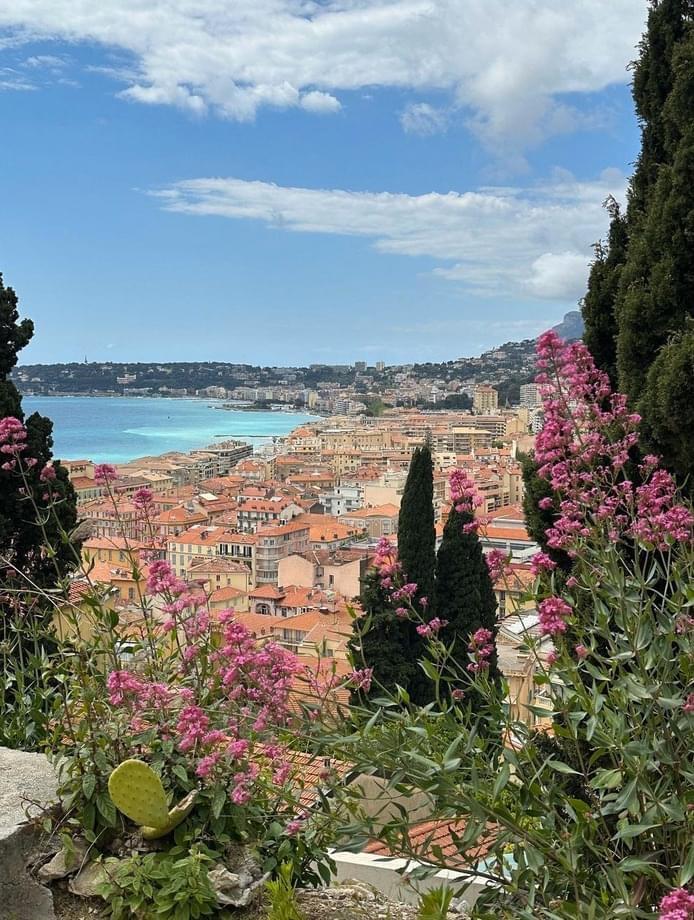
This is the view from the exotic garden in Eze Village

and this is Menton.

We had a bit of excitement in Villefranche sur Mer today and there was a film crew in town making the prequel to the film Ocean's Eleven, such a shame George Clooney isn’t in it.
This is a big light on Rue Obscure below our flat.

and this is part of the film unit on the seafront

Huw found this short article on the film…
Bradley Cooper is writing, directing and starring in a starry Ocean’s Eleven prequel, which is filming now in Europe according to co-star Wagner Moura.
This is Bradley Cooper

Update: With surprisingly little fanfare, Bradley Cooper’s Ocean’s Eleven prequel has quietly begun filming. Word of the production comes via Wagner Moura, one of multiple big-name actors filling out the crime caper’s ensemble cast.
Prequel
The untitled Ocean's Eleven prequel is a high-stakes 1960s heist film following Danny Ocean's parents as they pull off an ambitious crime at the Monaco Grand Prix.
Cast and Crew
Leads: Margot Robbie and Bradley Cooper star as the masterminds and parents of Danny Ocean.
This is Margot Robbie

Supporting Cast: Monica Barbaro, Wagner Moura (playing the villain), Omar Sy, Vicky Krieps, and George MacKay.
Behind the Scenes: Bradley Cooper directs and wrote the screenplay. Margot Robbie produces via her LuckyChap Entertainment banner alongside Cooper.
Plot and Setting
Era: Set in 1962/1963 during the glamour of vintage Formula One.
The Heist: The main plot centres on an elaborate caper at the Monaco Grand Prix.
Connection: It establishes the backstory for George Clooney's character, showing where Danny Ocean learned his trade.
Production and Release
Filming Locations: Production kicked off in Paris before moving to Nice and Monaco. (Why isn’t Villefranche mentioned here?)
Working Title: Filming has taken place under the working title Sandcastles.
Release Date: The movie is slated for theatrical release on June 25, 2027.
Another cheese story…
France to relax cheese-making rules due to record heatwaves and drought
photo

A master cheese maker and the maturing Comte cheeses in a cheese cellar in Loray, eastern France. (Photo by SEBASTIEN BOZON / AFP)
Widespread drought and record-breaking heatwaves have forced France to relax some of its famously strict rules on cheese production, with authorities announcing on Wednesday special measures for abondance, beaufort and comté. France's vast array of local cheeses are a source of national pride and authorities go to great lengths to protect traditional production methods and ensure authenticity.
To earn a coveted AOP "appellation d'origine protegée" (Protected Designation of Origin) label - and the right to give their cheese a particular protected name - producers must follow rigid rules on how the cheese is made, but also where their animals graze and what they eat.
Certain types of cheese can only be made with the milk of grass-fed cattle. But the summer's drought, which affected 95 percent of mainland France in July, has left normally rich pastures dry and bare.
In response, the government has said producers of abondance, beaufort and comté, hard cheeses made from the raw milk of cows grazing in the Alps and Jura mountains, can supplement the animals' diet with more fodder and grain brought in from elsewhere. Growth on permanent grasslands as of August 10th is a third less than the 1989-2018 average, according to the Agriculture Ministry's statistical service.
The fodder situation is "highly degraded" in almost all regions, the ministry said earlier this month. The National Institute of Origin and Quality (INAO), the government agency that administers and enforces rules of origin, says it will also grant temporary relief for several other cheeses including reblochon, cantal, bleu d'Auvergne and fourme d'Ambert.
Europe's record-breaking summer heat has caused thousands of excess deaths, set wildfires blazing and seen major rivers drop to record lows. In France, farmers are bracing for their smallest corn crop since 1980, and winegrowers are reporting some of the earliest harvests on record. Scientists say human-caused climate change has intensified the drought, with extreme heat rather than low rainfall driving the dry conditions.




Comments
Post a Comment