Day 3428 (Wednesday) 28th October 2026.
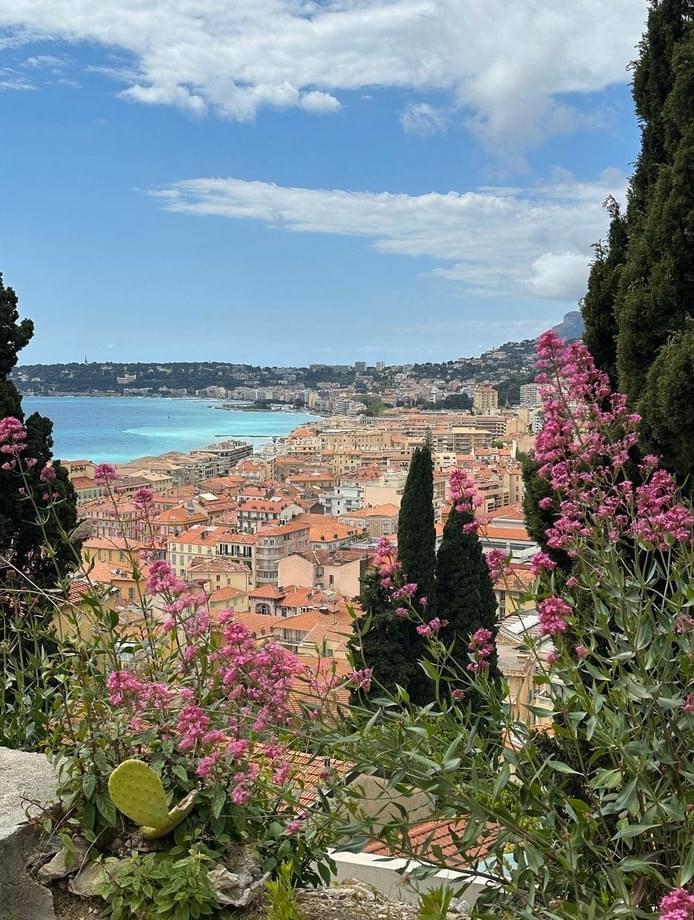
This is Villefranche-sur-Mer

and this is Mandelieu-La Napoule.

Here are some more French holidays…
4. VE Day – Fête de la victoire de 1945 : May 8

This day commemorates the unconditional surrender of German forces at the end of World War II and the end of the German occupation of France.
On this day, the French President reviews the troops at the Place de l'Etoile in Paris and revives the flame of the Unknown Soldier at the Arc de Triomphe, where he lays a wreath.
Traditions in France: lighting the flame at the Arc de Triomphe on VE Day

On VE Day in Paris, the flame is rekindled at the Arc de Triomphe in Paris Ecole polytechnique from Paris.
But it hasn't always been a holiday in France.
The holiday was first decreed by law in 1946 − but only if it fell on a Sunday. Otherwise, it would be celebrated the first Sunday after 8 May. Then, 8 May was formalised, cancelled, changed, and reinstated by various governments.
In 1975, to celebrate Franco-German reconciliation, the commemoration of the Allied victory was renamed the Day of Europe until, finally, in 1981, it became an official holiday in memory of the end of World War II and its fighters.
5. Ascension Day – l’Ascension : 40 days after Easter

This Christian holiday celebrates Jesus ascending to heaven 40 days after his resurrection. The date varies, but it always falls on a Thursday.
6. Whit Monday – Pentecôte : 50 days after Easter

In France, Pentecost Monday is also associated with the journée de solidarité, a system introduced after the deadly 2003 heatwave to help fund services for older and disabled people. Under the original arrangement, employees work an additional day without extra pay, but employers can now choose how to organise this day of solidarity and whether people work or not.
It's all a bit confusing, and many people aren't sure whether a shop or office will be open on that day or not.
7. Bastille Day – La fête nationale : July 14

In fact, our Fête Nationale celebrates not one, but two 14 Julys, a year apart, one in 1789 and the other in 1790.
This is probably the best known of French holidays and celebrations: there isn't a village without its festivities so wherever you are in France, this is a time to go out and mingle.
8. Assumption – L’assomption : August 15
This day celebrates a variety of things. In its Catholic version, it celebrates Mary's rise to heaven. But there's a lot more to this story.
Back in 1637, King Louis XIII hoped for a son and called on the country to pray to Mary to grant his wish. The king issued the decree on 15 August, placing the nation under Mary's protection and making it one of the major France national holidays.
But more than a century later, Emperor Napoleon (the ruler the French love to hate) was also born on 15 August, and in 1806 he appropriated the date for his own birthday, establishing the feast of Saint Napoleon.
So he issued his own decree in 1806, cancelling Assumption Day and replacing it with something glorifying him instead: Saint Napoleon. The Pope complained, of course, but Napoleon ignored him.
Once Napoleon abdicated in 1814, Assumption Day was restored. So much for grandiosity.
In any event, few French celebrate this holiday. It happens in the middle of summer, when many of us are on holiday anyway and it goes unnoticed.
9. All Saints’ Day − La Toussaint : November 1

This is a day to honour all the saints, but in France it is also traditionally associated with remembering the dead. Cemeteries across France will be filled with relatives coming to pay their respects to their loved ones with chrysanthemums, which you'll find on sale everywhere.
It's also pretty much the end of the warmer days and if you're visiting Paris in the fall, you'll notice the temperature has begun to change, as it is in the rest of France in autumn.
10. Armistice Day − L'armistice : November 11

This day commemorates the signing in 1918 of the armistice ending World War I in the forest of Compiègne, north of Paris. Then, two years later, the coffin of an unknown soldier was buried under the Arc de Triomphe in Paris. And in 1923, Minister of War André Maginot lit a flame of remembrance in honour of all the fallen. Since then, every Armistice Day, a solemn ceremony has rekindled the official flame, even during the years of German occupation.
Not everything is closed on 11 November and this is one of those France celebrations and holidays on which employers can ask you to work. Large shops and malls are open, but if you live in a small town or a village, as I do, chances are most things will be closed for the day.
11. Christmas − Noël : December 25

Christmas is a wonderful time to visit France and Paris in winter is especially lovely – a quick glance at the illuminations along the Champs-Elysées will confirm that. It's also the season when Christmas markets appear across the country, with all their local fare and hand-crafted goods, along with plenty of other French Christmas traditions.
Most places will decorate their church and a few of the main streets, and in recent years, more and more houses are putting up decorations.
Many of the more religious homes will have a nativity scene of sorts, and a Christmas tree is a must.
This is also time for a special Christmas meal, with the finest foods of the year. The meal might take place on the evening of 24 December or at lunch on the 25th − it depends on the family. Either way, the event is usually a lengthy one, with several courses of wonderful food – oysters, smoked salmon, foie gras, escargots and plenty more. Dessert will usually be a bûche, or a log. Head to the patisserie and order yours: just tell them how many people it's for, and they will provide the appropriate length. These days they come in a variety of flavours, vanilla of course but also chocolate, coffee, and strawberry, among others.
Santa Claus visits, of course, the evidence being found under the tree on Christmas morning. This day is one of those celebrations around the world which go beyond faith and are enjoyed everywhere.



Comments
Post a Comment