Day 3427 (Tuesday) 27th October 2026.
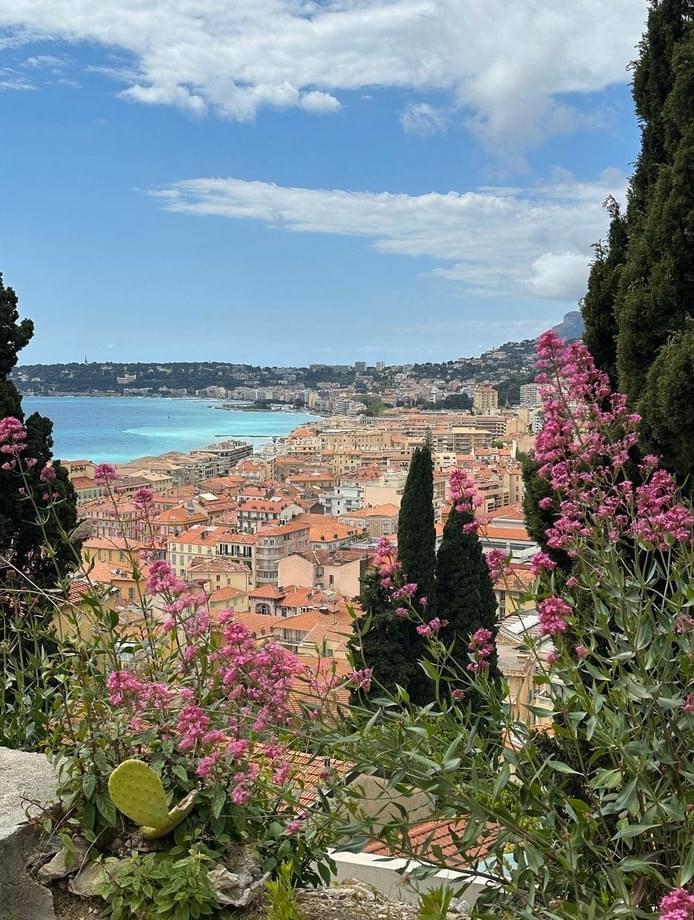
This is Beaulieu-sur-Mer

and this is Eze Village.

It was another lovely sunny day and we went for our weekly kebab in Nice, which was as good as ever. It’s really lovely all morning but by early evening it cools down considerably but it’s great while it lasts. While we were eating in the park we watched a woman taking a cat for a walk on a lead, it was very cute.

I found this article about French holidays, it’s quite long so I’ll post it over a few days, enjoy.
Here are the main holidays in France and how we celebrate them. Many French take to the roads on holidays, so this will help you avoid the worst of the traffic jams and overcrowded facilities and attractions.
Some months, one would think France is on a perpetual holiday. Take May: depending on the calendar, you might have as many as three long weekends.
Yes, there are plenty of French holidays and traditions and no, we're not on vacation all the time.
We have 11 official holidays, which some countries call bank holidays or statutory holidays.
These can affect such things as opening hours and transport, but not all businesses close and not everyone gets the day off. Still, if your gas bottle runs out, you just might be stuck with the village pizza vending machine.
Many of these will seem somewhat familiar, but a major one for Americans is missing: there is no Thanksgiving in France. Here's what you will find.
Holidays and traditions in France – and how we celebrate them
Several of the 11 official holidays have Christian origins, including Easter Monday, Ascension, Whit Monday, Assumption Day, All Saints' Day and Christmas. France is officially a secular republic.
For most people, these holidays are opportunities to visit family, eat good food or faire le pont − literally "make the bridge", by taking an extra day off when a holiday falls on a Thursday or Tuesday.
When it comes to holiday traditions in France, every opportunity is a good one.
The 11 official public holidays of France
1 January − Nouvel An (New Year's Day)
Lundi de Pâques (Easter Monday)
1 May - La Fête du Travail (May Day)
8 May - Fête de la Victoire de 1945 (VE Day)
L'ascension (40 days after Easter)
Pentecôte (50 days after Easter)
14 July - La Fête Nationale (Bastille Day)
15 August - L'assomption (Assumption Day)
1 November - La Toussaint (All Saints' Day)
11 November - L'armistice (Armistice Day)
25 December - Noël (Christmas)
Note: Alsace and Moselle have two additional holidays, Good Friday and 26 December.
1. New Year's Day – Jour de l'an : January 1
No surprise that the first day of the year is a public holiday, if only to recover from the Saint-Sylvestre, or New Year's Eve.

One of the common French New Year traditions takes place when the clock strikes midnight, and everyone kisses everyone else − "faire la bise". Champagne is usually involved.
On New Year's Day, the party mood will continue, but at home, usually with a massive meal almost as long as the meal at Christmas. Expect to spend a few days recovering.
2. Easter Monday − Lundi de Pâques

Easter Monday is the day after Easter Sunday, when Christians celebrate the resurrection of Jesus Christ. In France, it's less about religion than the fact that it is a public holiday associated with the many French Easter traditions involving eggs, bells, chocolate and family meals.
Colourful easter eggs
Have you heard of the Easter bell tradition?

In a myth that dates back to the Middle Ages, the bells had to stay silent between Good Friday and Easter Monday. Children were told the bells were away, flying to Rome to be blessed by the Pope. On their way home, they would shower down sweets and presents.
Officially, the bells would fly home on the Saturday, so Sunday would be time for the big Easter egg hunt... real eggs painted bright colours, or better yet, chocolate eggs (or rabbits or owls or all sorts of interesting creations).
The traditional Easter meal, by the way, is roast lamb, although some people might substitute rabbit. Eggs in some shape or form are also served.
3. May Day, or Labour Day − Fête du travail: May 1

May 1 is one of the days when France really does slow down.
Most shops are closed, while public services and public transport are on reduced or holiday schedules. Emergency services continue to operate, but don't count on getting routine errands done.
This is International Workers' Day and is traditionally filled with marches and demonstrations across France for worker and other rights. If you're ever going to march in France, this may be the day to do it.
French holiday traditions: May Day demonstrations
It's also known as the Fête du Muguet, or the Day of the Lily of the Valley, and the flowers are on sale everywhere. Buy a bunch and give it away to your loved ones - for love and luck.

It appears the tradition of giving this flower for good luck dates back to the 16th century, when Charles IX apparently received a bunch for good luck. He was so delighted that he decreed all women at court should receive the same flowers every first of May.
Rooted in Germanic, Celtic or Roman culture, the holiday originally celebrated the passage from the dark season to the season of light. In France we reconnect with these pagan traditions by offering each other some good luck in the form of lily of the valley.
As for the day itself, it was inspired by an 1886 gathering of 200,000 workers in Chicago who called for an eight-hour work day. In France, the first workers' May Day march took place four years later, in 1890.
There's another French May Day tradition: commemorations of Joan of Arc. In some cities, particularly Orléans, May 1 is associated with Joan, who entered the city on 29 April 1429, during the siege by the English. The date has also been adopted by political movements, especially on the French far right, which has traditionally held a Joan of Arc commemoration in Paris on 1 May.
More of these tomorrow.



Comments
Post a Comment