Day 3425 (Sunday) 25th October 2026.
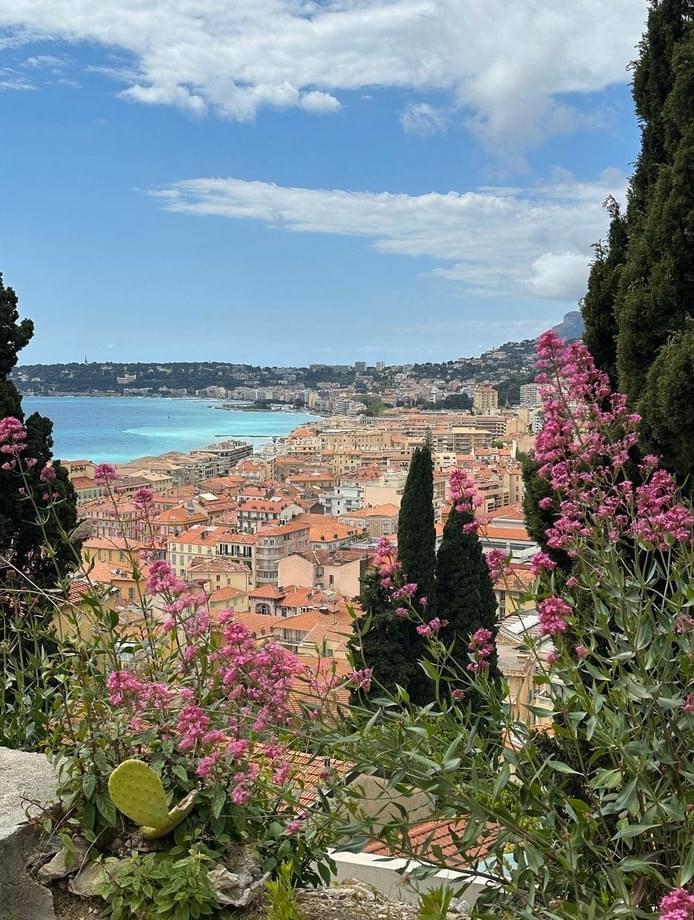
This is Villefranche, wishing us a happy Sunday.

It was a lovely sunny day after having two miserable days so it was great to go out for lunch in the square and lap up the sunshine. By about 3pm the sun had gone but it was lovely while it lasted.
Here are the rest of the traditional French recipes…
8. Confit de Canard

Duck canard main course
Region: the south west, especially Gascony.
Quite simply, duck cooked and preserved in its own fat. Often served plain it can also arrive in a rich sauce containing cherries, red wine or orange. You’ll most commonly find it sold in cans or jars in the shops and supermarkets. This is a traditional dish of south west France.
9. Bouillabaisse

Bouillabaisse is a traditional rustic fish soup
Region: Provence, and Marseille above all.
An iconic Provençal fish stew hailing from Marseille, it includes shellfish and at least three different types of fish, and is infused with saffron. It should be served with rouille (garlic and cayenne mayonnaise) that is spread on grilled bread. If you love seafood then you will adore a good Bouillabaisse, especially one made near a fishing village.
How to spot a bouillabaisse from a fish stew: a genuine Marseille bouillabaisse follows the city’s 1980 charter, Charte de la Bouillabaisse, where local restaurants agreed to use only named local rockfish such as rascasse, and to prepare it with the broth served first and the fish filleted at the table. Enjoy with a glass of crisp white Cassis – like a Marsanne – or a local Bandol rosé.
10. Pissaladière

Region: Nice and the Riviera.
Something to order with your aperitif while you read the menu alongside a Provence rosé or a white Bellet vintage from the hills above Nice. In short a pissaladière is a thin onion pizza with olives and anchovies, the base a slowly caramelised, almost puréed onion. Originating from Nice, and believe it or not, this was once early morning fare.
11. Fondue Savoyarde

Region: Savoie and the French Alps.
Fondue tends to be most associated with skiing and most commonly seen on menus of restaurants in or near the alpine regions. A big pot of melted cheese infused with white wine and garlic is the centrepiece. Have fun dipping cubes of bread into the blend of Beaufort, Emmental and Comté cheeses.
Savoie tradition says that if your bread falls off the fork into the fondue, you must buy the next drink. Its cousin, Raclette, is another melted cheese specialty, although originally from Switzerland using a raclette machine that melts the cheese over potatoes, ham and salami.
12. Tartiflette

Region: Savoie and Haute-Savoie.
While we are on the subject of mountain food, we mustn’t forget Tartiflette. Savoie and Haute Savoie are home to this carb-loading heaven. This iconic French menu item is a luxurious potato dish made with melted Reblochon cheese, lardons and onion, eaten just as it comes. Tartiflette dates to the 1980s and was popularised by the Syndicat Interprofessionnel du Reblochon (the Reblochon producers’ trade association) to boost sales of the cheese.
How to spot the real thing: it must be made with whole Reblochon, the rind left on, melted over the potatoes. Immerse yourself into this quite recent culinary invention by pairing it with a Roussette de Savoie, a crisp alpine white wine that’ll cut through the richness of the cheese.
13. Coq au Vin

Region: Burgundy, with regional variants across France.
Somewhat watered down in the UK as any old chicken casserole, an authentic coq au vin is worth tracking down: chicken braised in red wine with bacon, butter, mushrooms and beef stock.
Depending on where you are in France you may find regional variations named to reflect the region’s own wine as a primary ingredient instead of the traditional Burgundy: coq au Riesling in Alsace, for example. Best enjoyed with creamed potatoes and buttered French beans.
14. Coquilles Saint-Jacques (gratinéed scallops)

Region: Normandy and Brittany, France’s great scallop coasts.
A luxurious scallop dish:scallops poached in white wine, topped with mushroom purée and a sauce of the poaching liquid, often finished with breadcrumbs and Gruyère under a hot grill, sometimes served in the shell.
15. Escargots

Region: Burgundy is home of the classic preparation.
You may have a marmite relationship with snails but when they are cooked in butter, garlic, and parsley they are delicious and definitely ought to be on a foodie bucket list.
How to spot the real thing: escargots à la bourguignonne are served in the shell, layered with green garlic-parsley butter in a special dimpled plate. Tongs and a small fork are provided for persuading the snail out of the shell.
16. Soufflé

Region: Nationwide; a showpiece of classic French cooking techniques.
Whether it’s a cheese soufflé you have as an entrée or a chocolate one for dessert, a soufflé is invariably worth that 15-20 minute wait. And who’d have thought it’s a dish that dates back to the early decades of the 18th century.
How to spot the real thing: it should arrive risen high and wobbling, straight from the oven; a soufflé waits for no one, so eat it at once.
17. Foie Gras

Region: south west France, heartland of duck and goose.
As controversial as it is popular in France. Made from the liver of a fattened duck or goose, it carries deep gastronomic heritage and appears as a mousse, parfait or pâté, and as an accompaniment to other dishes.
18.Crêpes (and Galettes)

Crepes are a traditional French dish
Region: Brittany, eaten across France and the French-speaking world.
Perhaps the most versatile of dishes on this list, the crêpe originated in Brittany and can be sweet or savoury (known then as a galette). It can also be one of the simplest treats, with a sprinkling of sugar, or one of the most spectacular such as the renowned crepe Suzette, flamed at the table in a sauce of caramelised sugar, butter, orange and Grand Marnier.
19. Salade niçoise

Region: Nice.
As its name infers, this iconic French dish originates from Nice. The perfect lunch that often showcases the best of local produce, wherever you are in France. To a base of lettuce is added fresh tomatoes, boiled eggs, tuna (canned or freshly grilled), Niçoise Cailletier olives and anchovies.
How to spot the real thing: purists say a true salade niçoise uses raw seasonal vegetables and never cooked potato or green beans, and never both tuna and anchovy at once; recipes are fiercely argued over in Nice.
20. Crème brûlée

Region: nationwide; a bistro classic claimed by several countries.
Last and by no means least in this catalogue of iconic French dishes is the crème brûlée: a custard dessert topped with a contrasting layer of hard caramel.
Traditionally, the custard is flavoured with vanilla and we personally think this is still the most delicious way to enjoy one. But nowadays you’ll find custard flavourings (like coffee) and fruit combinations (a layer of fruit purée beneath the custard) more commonly available.
How to spot the real thing: the top should crack with a tap of the spoon, freshly caramelised so it’s still crisp, over a cold, just-set custard.



Comments
Post a Comment