Day 3421 (Wednesday) 21st October 2026.
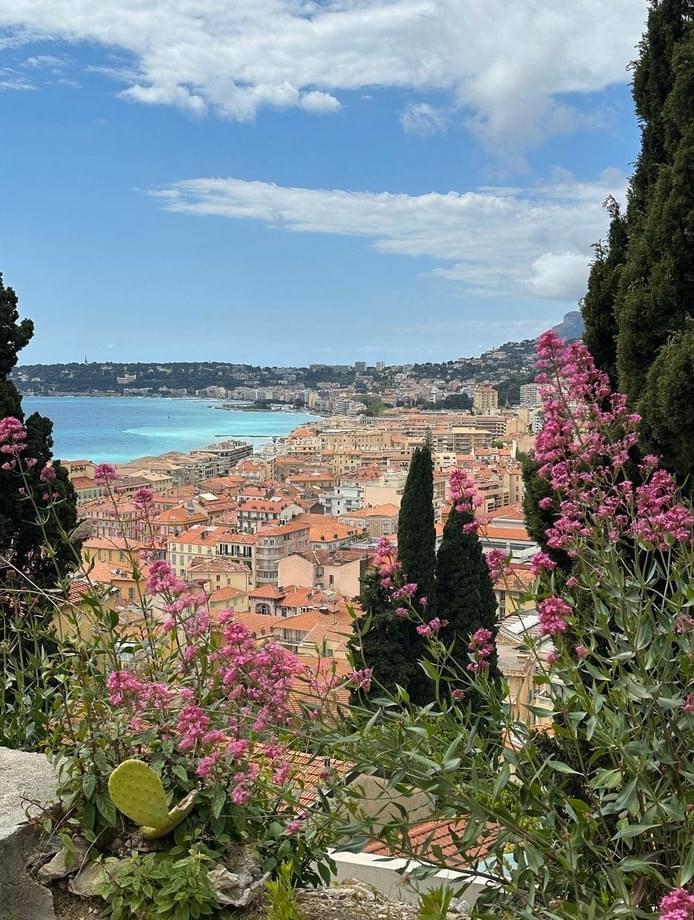
This is Eze Village

and this the Old Port of Nice.

This was the fishermen removing the pier from the seafront yesterday, it’s sad when they remove summer but the bay does look better without them.


Here are the rest of the French cheeses…
8. Selles-sur-Cher
Chavignol and Selles-sur-Cher

This cheese from the Loir-et-Cher department, in the Loire Valley, is made with goat milk.
Selles-sur-Cher is a soft, unaged cheese with a grey-blue mould surface. Its flavour is tangy and lightly salty, with a persistent aftertaste.
Some people eat it without removing the mouldy exterior for a stronger experience. However, its texture is to die for: moist and softening as it melts in the mouth. As it is with other mouldy cheeses, it has a pretty pungent smell.
Selles-sur-Cher is ideal to enjoy during an apéritif or in a salad. I especially like it with a glass of white wine from the Touraine region.
9. Munster
Munster from Alsace

This soft cheese with washed rind from the Alsace region is made with raw cow’s milk. Originally aged in monk cellars, Munster has a minimum maturing period of 21 days. This cheese has a strong smell but a slightly more gentle aroma on the palate.
Munster is best enjoyed by itself after the meal and before the dessert. This cheese is also used to make tartiflettes in Alsace, also called ‘munsteriflettes,’ which you will find in all the Alsace Christmas Markets. Another dish where you can taste Munster in Alsace is burgers, and it is ideally paired with Alsatian white wines.
10. Maroilles
Maroilles Cheese in Lille

Maroilles is one of the oldest cheeses in France. It has been known since the 10th century and was the favourite cheese of several French kings.
This soft, washed-rind cheese is made with cow milk and is produced in the Hauts-de-France region.
Maroilles is one of the strongest French cheeses, with a particularly pungent aroma and a distinct orange-red exterior. Its smell is not for the faint-hearted!
Its earthy flavours make Maroilles a staple on the menus of bistros and brasseries in Lille. Pair Maroilles with French cider or sweet white wine for a great end to your meal.
11. Brie de Meaux

One of the most popular cheeses in France, Brie is beloved worldwide. It’s a soft cow’s milk cheese with a mouldy crust from Meaux in the Ile-de-France region. It matures for 4-8 weeks and comes in many varieties, including truffles.
Its velvety texture and buttery flavour make Brie just fabulous to eat on its own or spread on a baguette. You can also find it served at room temperature and paired with a green apple or baked and warm for a comforting treat.
12. Camembert
Cheeses from Normandy

This world-famous French cheese was first produced in the late 18th century in the town of Camembert, in the Normandy region.
Slightly similar to Brie, Camembert is a soft cheese made from raw cow milk from Norman cows that live in the open air day and night. It has a crust with mould, and it has at least a 3-week ageing period.
Creamier and more pungent than Brie, Camembert has earthy notes that recall mushrooms and hazelnuts. It is usually cut into triangles and served with nuts or fruit, like grapes.
In Normandy, it is common to find Camembert au Four (baked Camembert) on the menus.
13. Pont l’Evêque

Another soft cheese with a washed rind from the Normandy region, Pont l’Evêque is square and made with cow’s milk. Its origin dates back to the 12th century, and it seems Cistercian monks first made it.
Pont l’Evêque has a smooth texture and a pungent smell, but it has a subtle and sweet flavour. This cheese comes both pasteurised and unpasteurised, and its ageing period is 4-6 weeks.
Pont l’Evêque is quite popular in France but mainly unknown to tourists, so you really should try it on your French trip.
14. Ossau-Iraty

Ossau-Iraty is a pressed, uncooked cheese made with raw sheep’s milk, produced in the French Basque Country /Ossau Valley, in the Nouvelle-Aquitaine region.
It is still made using ancient techniques and matured for at least two months. It has a rich flavour with herbal and nutty undertones.
Ossau-Iraty comes in the form of tommes, and it is usually eaten at room temperature, sliced into cold cuts, as ingredients in sandwiches, or grated into soups.
15. Roquefort

This is my personal favourite, a characteristic blu-veined cheese from a small town called Roquefort, in the Occitanie region. It is made from sheep milk, not pasteurised, and it has a 5-month ageing period.
Often called the “King of Cheeses” due to its popularity amongst royalty throughout history, Roquefort has a very pungent scent and a bold, slightly bitter flavour. Without a rind, it has a moist texture and is delicious on its own, as part of a cheese board, or paired with fresh fruits like figs and pears. It is also often used to make sauces, tarts, and quiches.



Comments
Post a Comment