Day 3420 (Tuesday) 20th October 2026.
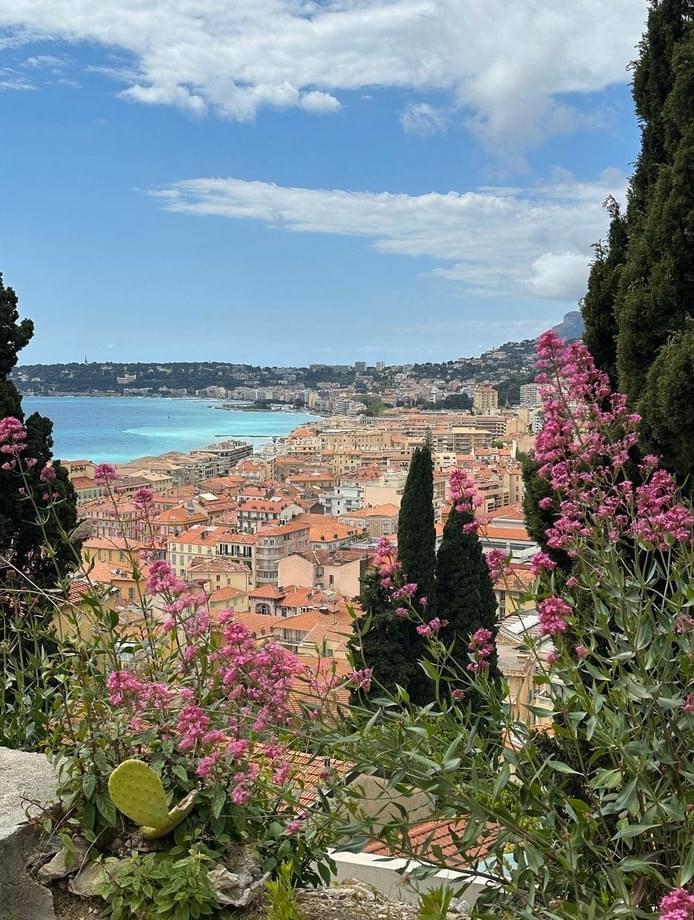
This is Roquebrune Cap Martin

and this is Villefranche-sur-Mer.

It was wet and grey all day today so we stayed at home, at least the forecast is nice and sunny tomorrow.
I found this article about French cheeses the other day, it’s a bit long so I’ll post over two days…
Famous Cheeses in France
Bleu d’Auvergne

The most famous cheese from Auvergne is the Bleu d’Auvergne. This cheese is characterised by the iconic blue veins from which it takes its name.
The Bleu d’Auvergne is a “pâte persillée, non cuite” cheese, which means that it is a pressed and uncooked cheese. This making process gives it a nice, creamy texture.
Made with cow milk, it does have a pungent smell and a spicy but fresh tang.
Great on its own, the Bleu d’Auvergne has a distinct flavour, but it is milder than similar blue cheeses, which is why it is also perfect for dishes.
2. Saint-Marcellin
Saint-Marcellin Cheese

Saint-Marcellin is a “pâte molle” (soft) cheese named after the namesake small town located in the Rhône-Alpes region.
Made with cow’s milk and dusted with white yeast, it’s hard to resist its creamy look.
This soft cheese has three types of ripening: sec, crémeux, and bleu. Saint-Marcellin has a mild and salty taste with a nutty and fruity undertone.
It is perfect to be eaten as it is, served on a cheese board, or smeared on a baguette. This is how you will find it served in the traditional menu of bouchons Lyonnais. Another way to eat the Saint-Marcellin cheese is to heat it, which makes it all nice and gooey.
3. Cantal

This “pâte persillée, non cuite” cheese (pressed, uncooked) is from the town of Cantal, in the Auvergne-Rhône-Alpes region.
It is made with cow’s milk, and the Cantal wheel can reach 45kg. It also has two different appellations, Salers and Laguiole.
Cantal cheese has three varieties, depending on how long it has aged. The Cantal jeune (young) has aged 1- 2 months, the Cantal entre-deux or Cantal doré has aged 3- 9 months, and the Cantal vieux (old) has aged more than 8 months. This cheese’s smell and taste increase with age, and many people say Cantal cheese is quite close to an English farmhouse cheddar.
4. Reblochon
Reblochon Cheese

Reblochon is a raw cow’s milk cheese from the French Alps, specifically from the Savoie department, and it smells really bad.
Reblochon is a soft and washed-rind cheese that is periodically cured in mould-bearing agents, making its odour particularly pungent.
This unpasteurised cheese also has a distinctive flavour, and it is used to make “tartiflette,” a delicious dish usually found in the Christmas Markets in France with potatoes, lardons, and onions, all topped with Reblochon.
Reblochon is banned in the US, so make sure to taste it during your trip to France.
5. Mont d’Or

Cheese of Franche - Comté
Cheeses from Franche-Comté (right to left): Comté – Tome – Mont d’Or – Morbier
Made in the Franche-Comté region, the Mont d’Or cheese is also known as Vacherin du Haut-Doubs cheese, distinguishing it from the Swiss type.
This washed-rind, soft cheese is made with raw cow’s milk and is a rare product, available only from September to May (it wouldn’t resist warmer temperatures).
It has a yellowish exterior and a gooey and creamy texture. Don’t let its funky smell stop you from trying it: Mont d’Or flavour is delicious. It is typically served warm, with it being baked in the oven, and you can enjoy it plain, scooping it directly from the cocotte.
6. Comté

Morbier, Emmental from France, and Comté on top
Comté is one of the most popular cheeses in France, and it also comes from the Franche-Comté region.
A hard cheese made with cow’s milk, Comté is mild and slightly sweet, with a complex, fruity, and nutty flavour. It is classified as an Alpine cheese.
Aged between 4 and 24 months, it develops protein crystals as it ages, providing a unique texture.
You will always find Comté on French cheese boards, but it is also a perfect addition to sandwiches or grated over soups.
7. Crotin de Chavignol

Another incredibly popular French cheese is Crotin de Chavignol. It is produced in the Loire Valley and made with goat milk.
Small, soft-ripened, and crumbly, this cheese is not pasteurised. It has a minimum ageing time of 4 weeks and three stages of maturity. Depending on its age, the cheese’s texture changes from solid to crumbly, and its smell gets stronger.
Crotin de Chavignol’s flavour is subtle and slightly nutty. It is most commonly eaten baked or crumbled over a green salad or as a component of a cheese board selection.



Comments
Post a Comment