Day 3403 (Saturday) 3rd October 2026
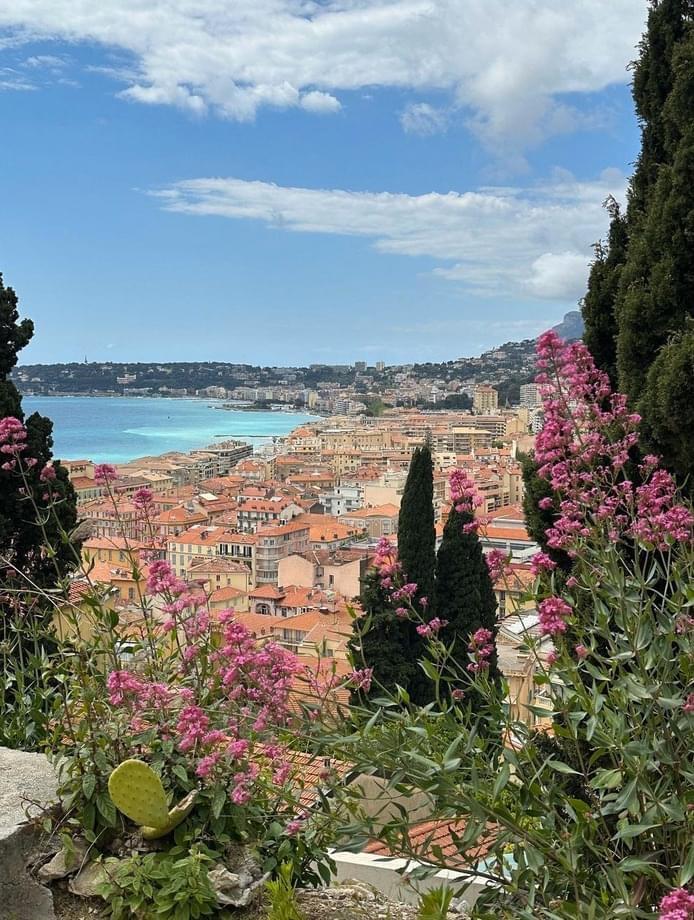
This is Eze Village

and this is Saint-Jeannet, which is a hilltop village in southeastern France, located about 20 kilometres (12 miles) northwest of Nice.

Here is the rest of the article comparing the French with Anglo-Saxons…
Individualism: Here you will observe a major difference between Anglo-Saxon and French cultural behaviour. In general for North Americans, the British, Australians and New Zealanders, teamwork is not only a skill but an innate way of behaving with others. For the French, individualism is far more important. Of the three guiding principles of France: liberté, égalité, fraternité, liberté is by far the most important. To the Anglo-Saxon, this is perceived as a general disrespect for authority, which can and does degenerate into total anarchy (experience une grève (strike) to see this at its best). It can be best summed up in the statement ‘rules are for everyone else’ and is known as the famous ‘exception française’. Unfortunately, even though customers provide one with one’s livelihood, in general they are perceived as a form of authority, and as such, treated like all other things that infringe on ones freedom.
Personal Interaction
To speak or not to speak: When visiting rural areas or smaller cities, speaking basic French is crucial. Few people in the country speak English and consider it as discourteous to be addressed in English, so if you do not speak French, apologising for your lack of knowledge will smooth communication. A simple phrase such as: Je suis désole, je ne parle pas français. (pronounced ZHUH zwee DAY soulay, ZJUH nuh pahrl PAS fronsay) or Bonjour! Parlez-vous anglais? (pronounced bon-jouh, pah-lay VOOZ ahn-GLAY) will generally assist in paving a way to communication.
Be sensitive to the volume of your voice. Americans generally have much louder voices and strident laughter, which is noticeable and perceived as rude in both France and the United Kingdom.
The Art of Conversation: The French value the art of conversation and often protest that North Americans lecture rather than converse. They will seem very direct and brusque in the way in which they speak. Yet while the French value their privacy and their belief that they can converse on any topic, they routinely ask seemingly personal questions or make generalised unworldly comments.
Since the culture is a combination of the logical North and the passionate South, they are often able to process and explain their points quite logically, however when an issue arises of which they are passionate about, they can be highly dramatic. Argument and debate, as we have already noted, are seen as a form of entertainment, as well as a proof of conviction, so do not be surprised when you see them frequently interrupt each other (a similarity to North Americans, but conversely not to the British), nor when things heat up and appear to be boiling over.
Good topics of discussion are seemingly quite opposite those of most Anglo-Saxon countries, with politics, issues of controversy and anything that results in a good debate being foremost; however, current events, sports, the arts and food are always acceptable and less threatening. Bad topics of discussion would be the common American question of “what do you do?” which is considered rude and too personal and commenting on specific “French” things unless you are an expert on the topic.
The French as a rule prefer intelligent and satirical wit. Funny stories of real life situations are appreciated.
Body Language
The French tend to be very direct in the way that they speak. They have relatively little reserve in showing emotion, and will often articulate and accompany their speech with large gesticulations. In some cases, especially when engaged in discussion or debate, this spirited emotiveness may come across as insistent or slightly aggressive, but usually is not meant as such at all.
Eye contact is important and is frequent and intense, which can often be intimidating to North Americans; however try and maintain it when in a conversation or being introduced to a French person as it is polite and shows you are interested in the person.
Smiling is not the default behaviour in France as it is in most Anglo-Saxon cultures. Until you are formally introduced, you remain an unknown. “To the French, indiscriminate smiling at people…is the worst sort of hypocrisy” per Donald Carroll, so do not expect this form of “tail wagging” as you will generally encounter the impassive stare.
Meeting Etiquette
In general when meeting someone new, the French prefer to be introduced to strangers, particularly by someone they know. You are expected to say bonjour or bonsoir (good morning and good evening) with the honorific title Monsieur or Madame when entering a shop and au revoir (good-bye) when leaving.
First names are reserved for family and close friends. Wait until invited before using someone’s first name. The handshake is a common form of greeting. As to kissing or faire le bise, friends may greet each other by lightly kissing on the cheeks, once on the left cheek and once on the right cheek. Following the lead of the other person to avoid embarrassing situations is always best but it doesn’t always eliminate them.
Waiting in Lines/Queues
In general the French are not known for observing the Anglo-Saxon custom of waiting their turn in a line/queue. Line jumping is an art form they have perfected. However, if someone complains, they generally will refrain from insisting on doing it.




Comments
Post a Comment