Day 3382 (Saturday) 12th September 2026
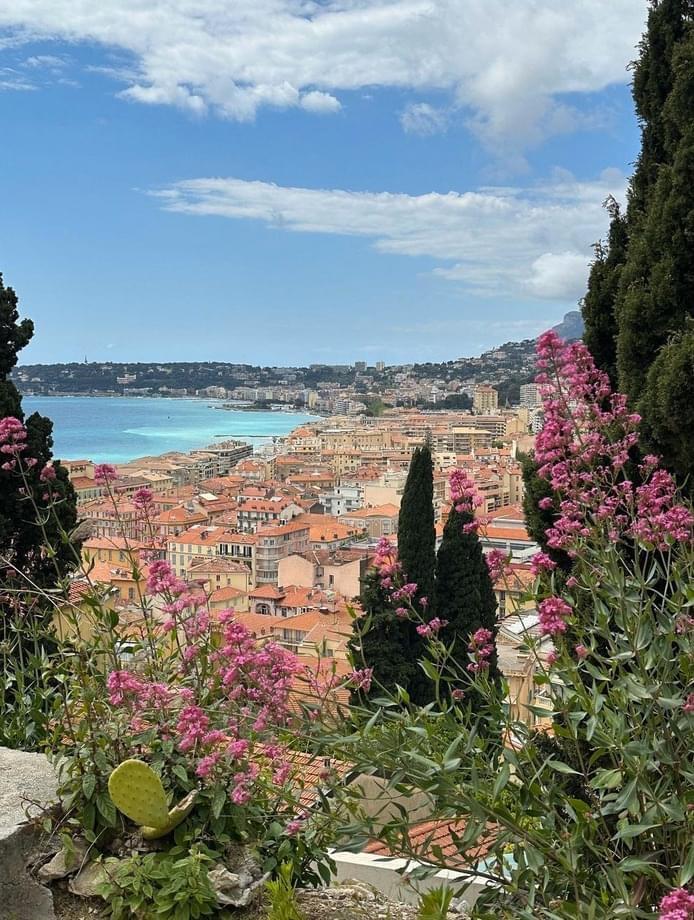
This is Peillon which is 20 kilometres (12 miles) north-east of Nice

and this is Eze Village.

The weather cleared up beautifully and it was hot and sunny again with very little humidity. We went to Le Phare at lunchtime but there was nobody there.
Here are some more ‘Contemporary fiction books about France’
French fiction books before, during and after World War II
All the Light We Cannot See
by Anthony Doerr

All The Light We Cannot See is a beautiful book, as it should be, written as it is by a Pulitzer Prize winner.
The story is about a blind girl hiding in Saint-Malo and a German boy, forced to fight in the war, whose destinies meet. It deals with the war, with the intensity of the characters' thoughts and feelings, but also provides a captivating look at Saint-Malo during World War II.
Bonjour Tristesse
by Françoise Sagan
The author was a shocking 18 years old when she wrote what became a cult novel of growing up, love and the Riviera: a young wealthy girl spends the summer with her partying father and his mistresses. New love interests are involved, with complex relationships of an unexpected maturity. A very French novel.
Nightingale
by Kristin Hannah

A New York Times bestseller about love and resilience and war. "With courage, grace, and powerful insight, bestselling author Kristin Hannah captures the epic panorama of World War II and illuminates an intimate part of history seldom seen: the women's war."
Gay Paree and the 1920s: Between the wars
A Moveable Feast
by Ernest Hemingway
I'm not going to say much about this classic vision of Paris in the 1920s by an outstanding American writer. It's not so much about the plot and story but about the extraordinary writing.
What's interesting about this particular edition is that it contains some sketches we haven't seen before – including some events we didn't know about, and portraits of other expat writers. It was a heady time in Paris between the wars, a time of high energy and even greater creativity, especially among the throngs of Americans who discovered how inspiring (and incredibly inexpensive) Paris then was.
Jean de Florette
by Marcel Pagnol

Jean de Florette (and its companion book Manon of the Springs, Manon des Sources) is a deep and epic excursion into small-town Provence, its landscapes and its characters. Both were made into exceptional films. These are classics of modern French literature and if you happen to read French fluently, read the originals but if not, go for the translations. You may never want to part with your copy. One of the best novels about France.
Lovers at the Chameleon Club
by Francine Prose
A uniquely stylish novel of Paris between the wars, with a nightclub, colourful characters, a bit of decadence, homosexuality, artists, politics, tragedy, collaboration – fiction, but based on someone who existed.
From French Revolution to First World War
Bel-Ami
by Guy de Maupassant

Guy de Maupassant was an astute observer of late 19th-century Paris and this second novel, all about human foibles − sex and power − takes place against a backdrop of France's North African colonies. In it, he traces the ascension of a corrupt journalist, and his observations about betrayal and manipulation would work just as well today. Add to this his sharp and critical gaze at the emergence of the city's bourgeoisie and you have a classic.
The Discovery of France
by Graham Robb
Billed as an historical geography, The Discovery of France covers the history of France from just before the Revolution to the First World War, the period where France moves from a collection of "pays" with quite different languages and ways of life to a (more or less) unified nation during the Belle Epoque. You'll learn about the first tour de France — not a bicycle race — the cagots, and the murder of Cassini's geometer.
La Bête Humaine
by Émile Zola

This is the 17th novel of Zola's 20-volume Rougon Macquart epic but it is apparently one of the most powerful, and explicit. As with the rest of the books in the series (they all stand alone, by the way), Zola takes apart every detail of the time and place and describes individuals as though he were using tracing paper on their every feature. Passion, jealousy, murder − and the railway all feature prominently in this late 19th-century tale of violence and corruption.
The Horseman on the Roof
by Jean Giono
Set in the mid-1800s, a romantic Piedmontese nobleman flees Italy and travels through Provence on his way back home – but a cholera epidemic is raging, along with mistrust and imprisonment of foreigners. A slow read of beauty. "Perhaps no other of his novels better reveals Giono's perfect balance between lyricism and narrative, description and characterization, the epic and the particular."
The Ladies' Paradise
by Émile Zola

The Ladies' Paradise is a love story, of course, but also a snapshot of French 19th-century history. It is the 11th of the 20 books in Zola's Rougon-Macquart series (to which we've already been introduced) and there's little better if you want to get a feel for the Second Empire under Napoleon III. To say that it is the story of a department store won't do it justice, but that is at the heart of this story, along with the many relationships between shop staff and customers.
Letters from my Windmill
by Alphonse Daudet
I know it as 'Lettres de mon Moulin', which my mother used to make me practice dictation as a child. The author tells us stories of 19th-century Provence in a light-hearted and folksy voice, bringing an already vivid landscape even more alive through its everyday people.
Les Misérables
by Victor Hugo

First published in 1862, this famous tale focuses on the Parisian underworld and the fascinating history of the revolutions and social reform that occurred during that time. It is a timeless classic, and I dare you not to cry.
"Introducing one of the most famous characters in literature, Jean Valjean − the noble peasant imprisoned for stealing a loaf of bread − Les Misérables ranks among the greatest novels of all time."
L'Education Sentimentale
by Gustave Flaubert
Passion and romance and revolution are the backdrops of this other classic by Flaubert, at a time when the world as he knows it is in full turmoil. In the words of the author, this is "the moral history of the men of my generation". One of the great French novels of the 19th century.
Murder on the Eiffel Tower (Victor Legris Mysteries)
by Claude Izner

It is the 1889 World Exposition and a woman drops dead of what seems an accidental cause. But is it? Perhaps there was something more nefarious at play? Victor Legris, a bookseller, plans to find out, casting light not only on the mystery but on 19th-century Paris. Complicated plot but great portrayal of the city. The first of six books in the series.
The Red and the Black
by Stendhal
This historical novel is set during the Second Restoration, that time between the end of Napoleon's empire and the restoration of the Bourbon monarchy with Louis XVIII. It is the story of Julien Sorel, a young French provincial man, who rises in French society through both talent and cunning. This is truly a classic of French literature, which exposes the social structure of 19th-century France, its manners and classes and behaviour.
I’ll post the rest of this list of books tomorrow…




Comments
Post a Comment