Day 3372 (Wednesday) 2nd September 2026
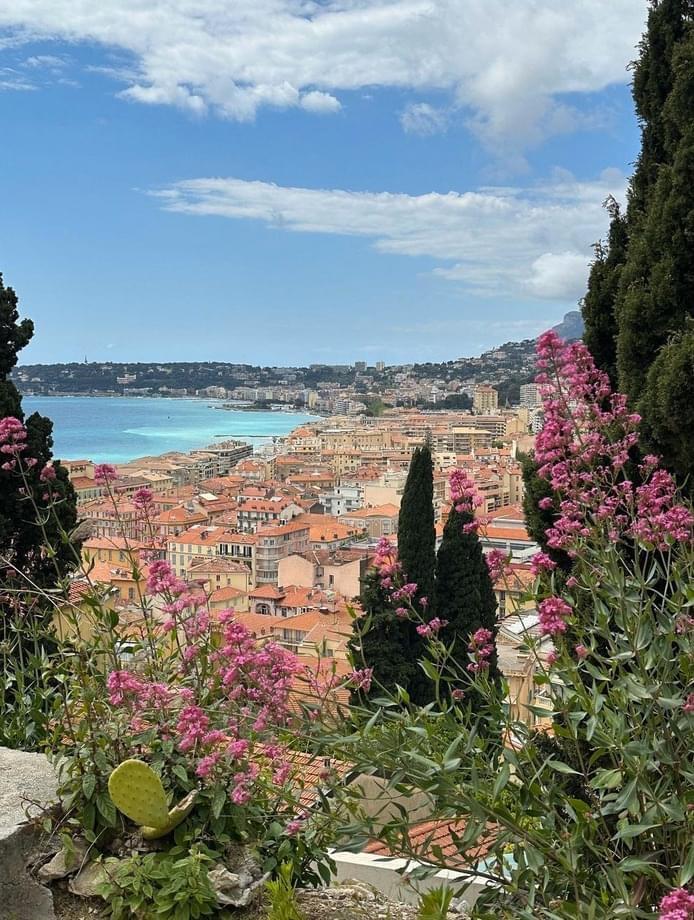
This is Menton

and this is Saint Agnes above Menton.

It was another beautiful day, it’s still hot and sunny but there is no humidity.

This is the forecast for September…
Hot and dry September forecast across the Côte d’Azur
September is expected to remain warmer and drier than usual across the Côte d’Azur and the wider Provence-Alpes-Côte d’Azur region, extending the hot conditions experienced throughout the summer.
Temperatures are forecast to remain several degrees above seasonal averages, particularly during the first half of the month, with highs potentially exceeding 35°C in parts of the region.
High pressure is expected to dominate southern Europe during the beginning of September, bringing prolonged periods of sunshine and relatively little rainfall.
Forecasters say local temperature records for September could even be approached or broken.
The Alpes-Maritimes should see temperatures regularly reaching around 30°C to 34°C, while parts of the Var, Bouches-du-Rhône and Vaucluse could experience temperatures above 35°C.
Despite the daytime heat, nights are expected to become more comfortable as the month progresses, generally ranging between 16°C and 22°C.
Longer nights and slightly cooler Mediterranean waters should prevent temperatures from remaining as high overnight as they did during the peak of summer.
No significant Mediterranean storm episode is currently expected during the first part of September, although isolated thunderstorms remain possible over higher ground.
Temperatures could begin to fall more noticeably during the second half of the month.
The prolonged sunshine and heat could also lead to poorer air quality.
AtmoSud says stable conditions can cause pollutants to accumulate, while strong sunshine encourages the formation of ozone.
Urban areas are likely to be particularly affected, although sea breezes can carry pollution further inland towards the Vaucluse and the Alps.
Overall, September is expected to begin hot, sunny and predominantly dry across the region, with more seasonal conditions potentially returning later in the month.
Huw also saw this article about weather…
Météo-France introduces more localised weather warnings
Météo-France has introduced a more precise warning system allowing dangerous weather conditions to be highlighted within individual departments rather than applying the same alert level across an entire area.
Since 1 September, localised warnings can be issued for thunderstorms, strong winds, rain and flooding, and snow and ice, giving residents and local authorities a clearer picture of where the greatest risks are expected.
The familiar green, yellow, orange and red departmental warning map will remain in place.
However, a second map can now show different levels of risk within the same department when forecasts are sufficiently precise. The change is particularly relevant to areas such as the Alpes-Maritimes, where conditions can vary considerably between the coast, the hinterland and mountainous areas.
In the past, an entire department could be placed under an orange warning despite severe weather being expected in only part of the territory.
Météo-France says improvements in forecasting technology have made the new system possible.
Weather models that operated at a resolution of around 10 kilometres in the early 2000s can now work at kilometre scale, although forecasters stress that this does not mean individual weather events can always be predicted with that level of accuracy.
Thunderstorms and sudden flooding remain particularly difficult to locate in advance.
When there is too much uncertainty, Météo-France may therefore continue to use larger warning areas rather than provide a more detailed local map.
The move follows repeated calls for greater precision from local authorities, including elected officials in the Alpes-Maritimes.
The issue was highlighted after severe flooding hit Cannes in September 2024 while the department was under a yellow warning, prompting criticism of the existing system.
The change has been welcomed by Anthony Brunain, founder of Nice Météo, although he believes the new zones could go further.
He suggested that clearly defined areas similar to those already used for wildfire warnings could make it easier for individual municipalities to understand whether they are affected. Météo-France already uses localised warnings for avalanche and coastal flooding risks and says it is also working on extending the approach to heatwave warnings.
It’s high time this was done because we keep getting warnings about storms and high winds but they very rarely reach us by the sea.
This morning we went into Nice for our weekly kebab, which was as delicious as ever and it was very pleasant sitting in the shade in the park. I wish the weather would stay like this all year round. I’ll never complain about the heat but it is nicer without the humidity.
'Right to French' : When is it illegal to use English in France?
It is never illegal for an individual to speak, write, or converse in English in private life in France. However, under the Toubon Law (Loi Toubon) of 1994, using English—or any foreign language—becomes illegal in specific commercial, public, and workplace contexts if it is not accompanied by a clear, readable, and intelligible French translation.
Where French is Strictly Required
Consumer Goods and Advertising: Product packaging, user manuals, warranties, service offerings, and public advertisements must feature the French language. An English-only slogan or label is unlawful.
The Workplace: Employment contracts, internal company announcements, job offers, and labour-related documents must be provided in French so employees are not disadvantaged.
Public Services and Official Spaces: Government publications, state school classrooms, and official public signs must use French.
Media and Radio: Broadcasters must follow strict quotas, requiring a significant percentage of French-language songs to be played on public radio rather than continuous foreign music.
Penalties and Enforcement
Translation Rules: Foreign text is permitted as long as the French translation is just as visible, readable, or audible as the English version.
Fines: While individual everyday speech is completely free, corporate violations can theoretically carry fines up to €7,500 or much higher for corporate entities depending on the breach, though strict enforcement with heavy fines is rare.




Comments
Post a Comment