Day 3367 (Thursday) 27th August 2026
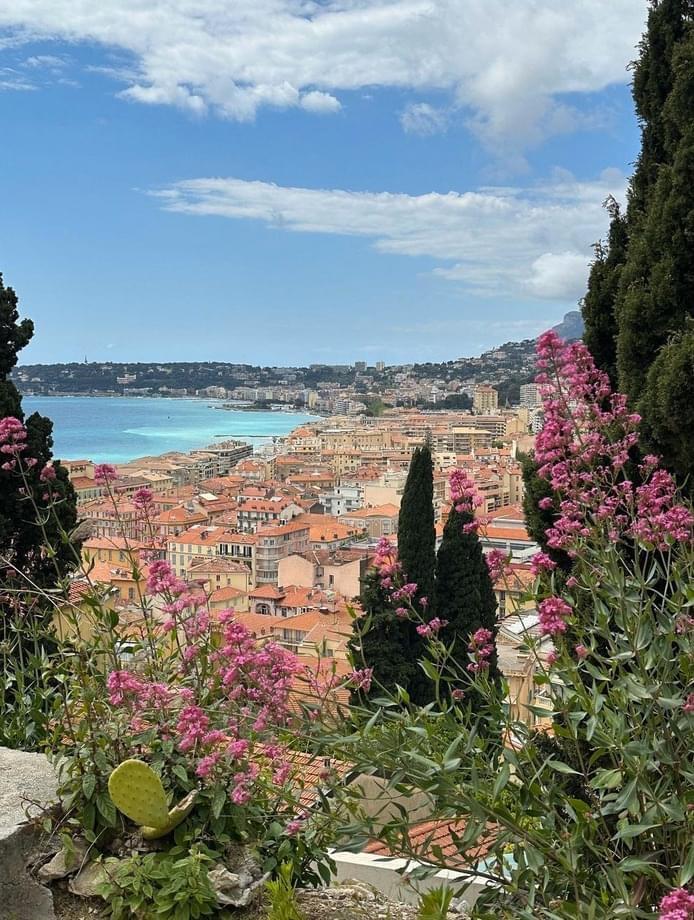
This is Villefranche

and this is the exotic garden in Monaco.

Happy birthday to me!
It was bit cloudy today but it was still very hot and we went into Nice for our weekly kebab in the park. After the kebab we went into the old town to find some soaps for my birthday.


We found a lovely soap shop and they had small bars of soap made to look like macarons, they were beautiful.

On the way back to the bike we saw some beautiful big red flowers and my 'Picture this' app tells me that they are called 'Swamp Rose Mallow.'

Do French waiters really tell customers what they can order?
It's a fairly regular event that someone will go viral with their story of a French waiter flatly refusing to serve a certain item, blithely ignoring any special requests or simply telling the customer that they are wrong. So is it true that French waiters tell customers what they can and cannot order?
A recent example of this concerns a request for an oat milk latte in Paris, but over the years there have been numerous other stories of waiters refusing a request for a steak 'well done', plonking down a bowl of meat in front of a vegetarian or simply informing the diner that their request for coffee with their meal is wrong.
I’m in Paris and I ordered an oat milk latte and the waiter said no.
Not to mention of course, The Local's Europe editor and his quest to get
beaufort cheese for his fondue.
We're not doubting the veracity of these stories of course, but how common
actually is this? And how can you ensure that you get what you want?
Go local
The first thing that visitors need to remember is that France is its own country
with its own (proud) culinary traditions.
Outside the big cities there's not much on offer in the way of non-French food,
so if you particularly want something from your home country you might need
to accept that it's either not available or it might not be a particularly good
version of the dish.
If you want top quality food, it's better to stick to the local offerings, prepared
with care, pride and local ingredients.
This also applies to coffee - all countries in Europe have their own distinct
traditions when it comes to coffee and creations like pumpkin spiced lattes are
really not common outside the anglosphere.
French coffee usually means a short espresso-like drink, or a milky café au lait or café crème. If you want something different you might need to look for somewhere that serves US-style coffee (there's always Starbucks, if you insist).
Stick to the menu
It's common in some countries to look at the menu and then tell the waiter
how you want the dish made differently, but this is not a tradition in France,
where's it's assumed that the chef knows how s/he wants things to taste.
If something is not on the menu then that probably means it's not available.
If you want a dish made differently you can make a polite request for this to
happen, but don't assume it's an option - many French waiters will simply be
baffled if you tell them you want the goat's cheese salad without the goat's
cheese, and suggest that you order something else instead.
Trust the experts
It can come over as rude or high-handed (and grumpy waiters exist, without a
doubt) but consider that your server is actually trying to help you.
Working in hospitality is quite a high status job in France and many servers
will have expert knowledge of which wines pair well or how a dish is best
served. If they hear you ordering something that they think will not be a
pleasant dining experience, they will have no hesitation in telling you, and
suggesting something else.
Likewise people who work in food shops are often experts in their field, so if they tell you that a certain combination will not be good, or a certain cheese is too good for a fondue, they are probably right.
Be polite
One of the most frequent complaints about French waiters is that they are
rude and undoubtedly rude waiters exist, particularly in the more tourist areas
of Paris.
But they may be reacting to what they see as rude behaviour from you - have
you greeted your waiter with a bonjour/bonsoir? It's considered rude to fail to
greet someone politely and instead just start barking out your order.
French waiters are skilled professionals and expect to be treated like equals,
rather than servants.
And if they think you are rude, they won't hesitate to be rude back - there is no
concept of 'customer is king' in France (probably just as well when you
consider what they did to their king).
On a related note - while English language skills are pretty common among
serving staff in tourist areas, don't assume that your waiter speaks English.
Even if you don't speak any French at all it's considered polite to begin with
a bonjour/bonsoir before asking Parlez vous anglais ?
Flag up dietary requirements
There's obviously a big difference between having specific dietary
requirements and/or allergies and just being fussy.
If you have an allergy or a dietary requirement it's best to flag this up in
advance so that your waiter knows your needs and why you are making your
request.
J'ai une allergie et je ne peux pas boire de lait du tout. Avez-vous du lait
d'avoine ? - I have an allergy and cannot drink any milk at all. Do you have
oat milk?
Some waiters are just rude
But sometimes you can do all of this and still find a grumpy, surly or unhelpful waiter. Maybe they're just having a really bad day.




Comments
Post a Comment