Day 3359 (Wednesday) 19th August 2026
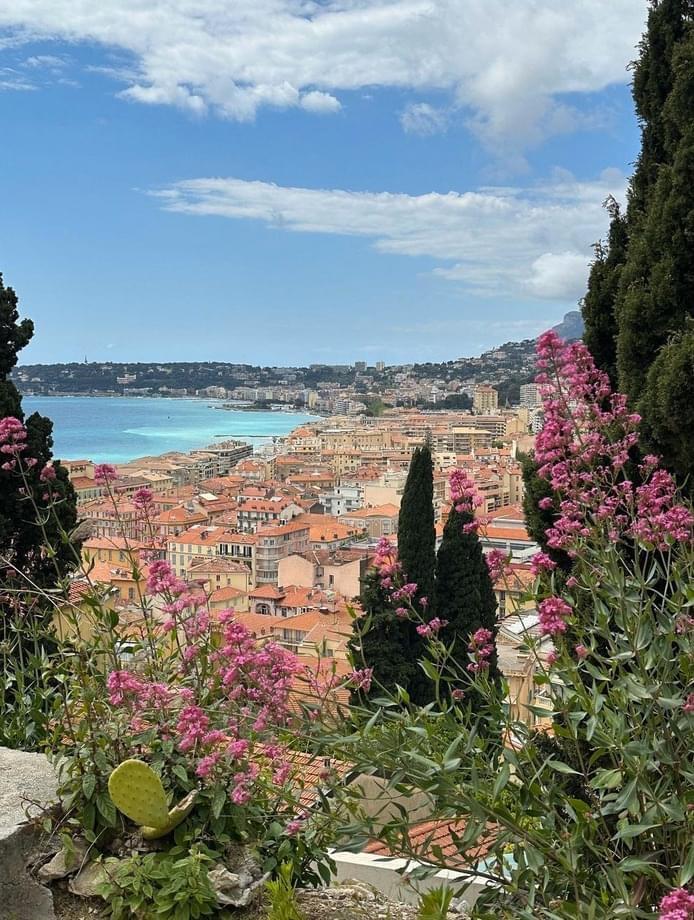
This is the port in Nice

and this is Villa Ephrussi de Rothschild in Saint-Jean Cap-Ferrat.

There seems to be no end of the heatwave here at the moment and there are lots of articles around about saving water and what you can and can’t drink – here’s one of them…
Is it safe to drink tap water in France during heatwaves?

Throughout France’s five heatwaves this summer, tap water has sometimes been coming out of faucets surprisingly warm. Is it still safe to drink?
During France's heatwaves this summer, many householders have noticed that the water coming out of the cold tap is distinctly warm - or even hot, in several Paris apartment blocks 'cold' water coming out at 31C was recorded.
After repeated periods of extreme heat, temperatures in tap water can rise, particularly in buildings where pipes are exposed to warmer conditions.
At the same time, France is dealing with an exceptionally severe drought. As of mid-August, around 40,000 people had already experienced drinking-water cuts linked to the drought.
Is warm tap water safe to drink?
The short answer is yes, generally - provided no specific warning or restriction is affecting your local water supply.
French health authorities recommend drinking water at temperatures below 25C. Above this, the temperature serves as a warning sign for authorities responsible for water quality checks.
But Nathalie Davoisne, director of the Centre d'information sur l'eau (CIEau), told French regional media Midi Libre that "warmer water does not automatically mean water that is unfit for consumption".
Tap water is subject to extensive official monitoring in France. The national health authorities carry out more than 18 million analytical tests each year as part of drinking-water controls.
Households should be contacted by email or text message if there is a problem with the water quality in their area.
Letting the tap run
The French health ministry recommends letting cold water run for a few seconds before drinking it when it has been sitting in the pipes, extending this to around one or two minutes after prolonged periods of stagnation, such as when you have been away from home for several days.
During periods of extreme heat, the same principle can be applied if the water initially comes out unusually warm. The idea is not necessarily to make the water "safe" by cooling it down. Rather, running the tap allows the water that has been sitting in your household pipes to be replaced by fresher water from the supply network.
For reasons of taste and refreshment, most French households have a jug or bottle in the fridge which they use to refrigerate tap water and make it cooler and more appetising to drink.
If you do this, however, keep the container clean and avoid leaving the water sitting around indefinitely.
What about bacteria?
Temperature is one of the factors that can influence microbial growth. This is why French guidance calls for increased monitoring when cold-water temperatures exceed 25C.
The main concern when tap water comes out warm is the potential for microbiological contamination, including bacteria such as Legionella and E.coli. Higher temperatures can encourage microorganisms to multiply, which is why water temperature is an important factor for health authorities to monitor.
However, immunologist and health professor Yves Lévy also told Midi Libre that temperature alone does not mean bacteria will automatically proliferate. Bacteria also need nutrients to grow, and if the water is of good quality, "they have nothing to eat". There is also some good news when it comes to viruses, according to Lévy, "they do not like hot temperatures".
The quality of drinking water depends on numerous factors, including the source, treatment, distribution system and condition of the plumbing.
During heatwaves, water treatment operators can also adapt their processes and monitoring. Increased chlorination may sometimes be used as a precaution. This is why you may have noticed a slightly more noticeable taste of chlorine during periods of high heat.
Why does tap water get warm during a heatwave?
Around one-third of the water used to produce drinking water in France comes from rivers and other surface sources. So when rivers become unusually warm during prolonged periods of hot weather, the water entering treatment plants can also be warmer.
The distribution network is less immediately affected by air temperatures because many pipes are underground. But during prolonged heat, underground temperatures can rise too.
The situation can be particularly noticeable inside apartment buildings - pipes often run through walls, basements, garages or other poorly insulated areas and can become considerably warmer, meaning that the first water to emerge from the tap may have been sitting in a heated section of pipe.
What about hot tap water?
This is different, and you should not use hot tap water for drinking or cooking. Hot water can remain stagnant for extended periods. Higher temperatures can encourage microbial growth and can also increase the transfer of metals from plumbing.
The French health ministry therefore advises using water from the cold-water tap for drinking, cooking and preparing food.




Comments
Post a Comment