Day 3354 (Friday) 14th August 2026
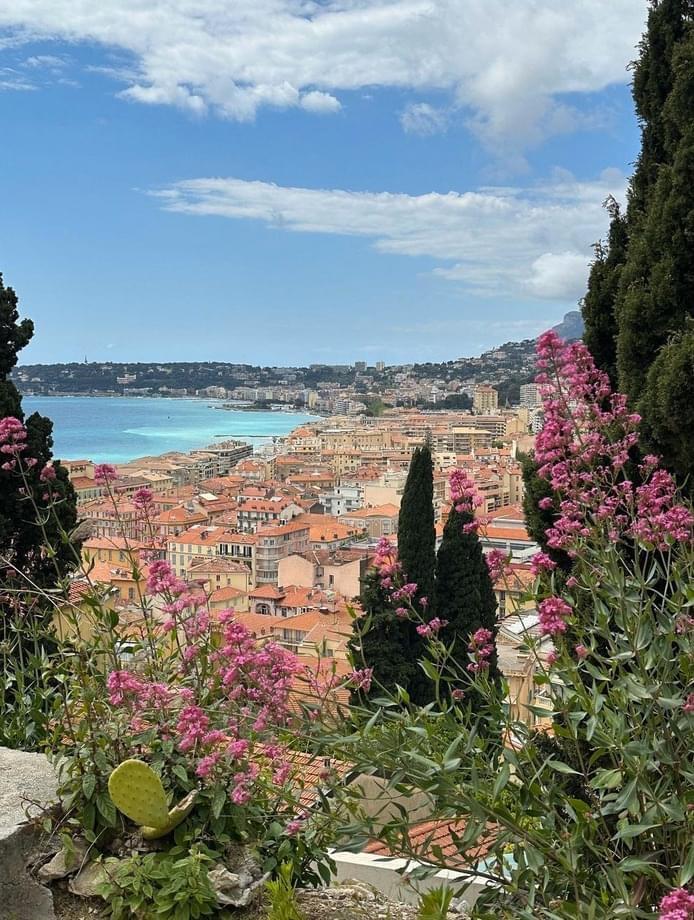
This is Villefranche-sur-Mer

and this is Nice.

Elton John is staying in his house in Mont Boron at the moment and we’ve seen him going out on his boat a few times. He went out for lunch yesterday and when he came back ashore one of the other boats played ‘Your Song’ to welcome him back – it was a lovely moment.
It was very hot and humid again today but apparently it’s going to cool down to just hot over the weekend getting rid of the canicule. We went down to the square for some lunch in Les Palmiers, which was very nice. Town was quite empty which is very strange seeing that it’s high season.

I found this article about French expressions, it’s quite long so I will post it over two days.
12 French expressions and their commonly used counterparts

From 'bonjour v. salut' to 'désolé v. pardon' the French language has many pairs of phrases that mean basically the same thing, but have important differences in context, tone and formality. Here are 12 of the most common.
It's often the case in French that you'll be presented with a pair of words that the dictionary assures you have the same meaning - but it can be hard to know which is appropriate for a certain situation.
Here are 12 of the most common pairs, and the differences between them.
Bonjour v. Salut
While both of these are perfectly acceptable greetings, salut is best used in informal situations while bonjour is acceptable just about anywhere.
If you are saying hello to a friend or colleague you might say salut instead of bonjour. However, if you are approaching a store clerk or you are entering a professional meeting, bonjour would be the better choice. Likewise bonjour would usually go down better if the person is significantly older than you.
It is unlikely that mixing up bonjour or salut would cause any offence, but there is a difference in formality between the greetings. For instance, you could start a casual email with 'bonjour' but you would be unlikely to start an email or formal correspondence with 'salut'.
That being said, salut unlike bonjour can double as an informal 'goodbye'.
Examples
Salut Clara, je suis en bas. Tu peux me laisser entrer? - Hi Clara, I'm downstairs. Can you let me in?
Bonjour Monsieur, vous pouvez me laisser votre manteau - Hello sir, you can leave your coat with me.
Pardon v. Excusez-moi
Both of these can be used after accidentally bumping into someone on a crowded bus.
There are a few small differences between pardon and excusez-moi, though both roughly mean 'excuse me'.
If you want to get someone's attention - perhaps a store clerk - you should begin by saying 'bonjour' and then you can say 'excusez-moi' followed by your query. As such, you probably would use excusez-moi before an action - either prior to politely informing someone they are in your seat (excusez-moi, je pense que c'est ma place) or before pushing past a crowd.
Pardon is usually reserved for the aftermath. If you have already bumped into someone, you might say pardon.
Examples
Bonjour, excusez-moi. Vous savez où se trouvent les toilettes ? - Hello, excuse me. Do you know where the toilet is?
Oh, pardon, je ne vous ai pas vu - Oh excuse me, I did not see you there.
Pardon v. Désolé
The French translation of 'sorry' is désolé, and if you want to be more deliberate in your apology you can say the full phrase: je suis désolé(e).
However, unlike Anglophones, a French person would be more likely reserve the word sorry (désolé) for situations where real harm or discomfort has been caused. Small inconveniences or mistakes are usually covered by a simple pardon, which is less formal and more frequently used.
Examples
Pardon, je me suis trompé de numéro - Sorry, I have the wrong phone number
Désolé d'avoir manqué votre concert. J'ai dû travailler tard. - I'm sorry I missed your concert. I had to work late.
Bonne soirée v. Bonne nuit
Both of these expressions tell the audience that 1) it is nighttime and 2) you are leaving. However, the typical audience for these two expressions is probably quite different.
Bonne soirée simply means 'have a nice night' or 'have a nice evening'. You would use it when leaving a party, or walking out of the office at the end of the day.
On the other hand bonne nuit means 'goodnight'. You would only use this expression if you are about to go off to bed, so the audience would likely be your family members. As such, saying bonne nuit when making your exit from a bar would be a bit strange.
Examples
Je vais rentrer chez moi, je suis un peu fatigué. Bonne soirée ! - I am going to head home, I'm a bit tired. Have a nice night!
Je vais me coucher. Bonne nuit - I am going to bed. Goodnight.
Je m'en fiche v. Je m'en fous
Both of these expressions are informal ways to say 'I don't care', but one is a bit more offensive than the other.
Your French friend might casually say je m'en fiche when asked about which restaurant to test out over the weekend. It is a bit colloquial, but not really vulgar.
In contrast, je m'en fous might not go over so well with your boss. It would best be translated as 'I don't give a shit' in English (or something a tad ruder). It's perhaps wise to refrain from using it in front of French in-laws, old ladies, or others who potentially could take offence, but it's pretty safe to use among friends.
Examples
As-tu une préférence pour le choix du film à regarder ? / Non, je m'en fiche. - Do you have a preference for which movie to watch? / No, I don't care.
Il s'est excusé ? Je m'en fous. C'est un con. - He apologised? I don't give a shit. He's a jerk.




Comments
Post a Comment