Day 3352 (Wednesday) 12th August 2026
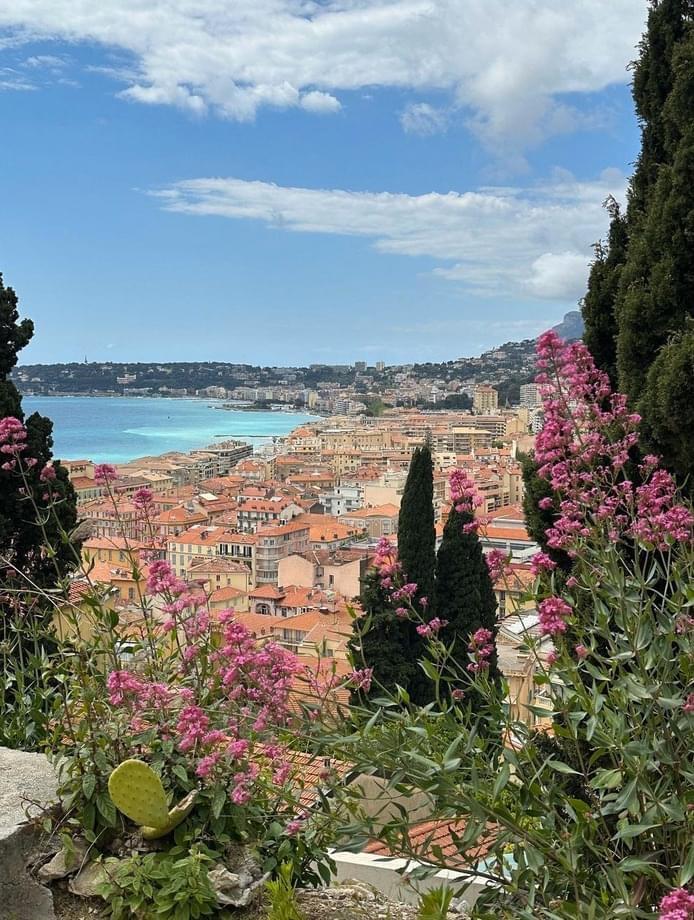
This is Villa Ephrussi de Rothschild.

and this is Grasse.

It was extremely hot and humid this morning but it clouded over a bit and the temperature was quite comfortable in the afternoon.
We’re hoping the clouds will clear so that we can see the solar eclipse later on…
How and when to see this month’s solar eclipse in France

France will witness its first solar eclipse in 27 years on Wednesday, August 12th - here's how to get the best view.
The eclipse will happen when the Moon passes between the sun and the Earth, blocking part of the Sun’s disk from view and casting its shadow on the ground.
Celestial happenstance has given our planet a satellite that is almost exactly the right distance and size from us to appear to be the same size as the star we orbit, which means that when the sun, moon and Earth are in the right alignment, the moon blocks out almost all of the sun.
We won’t quite get to see a total eclipse in France – totality will pass over the Arctic, Greenland, Iceland, the Atlantic, northern Spain and north-eastern Portugal – but the event will still be very impressive, with many still able to see more than 90 percent of the sun blocked by the moon.
When and where
The phenomenon will begin at around 7.20pm in France on Wednesday, August 12th and reach its peak around 8.20pm, when the sun will be low on the western horizon.
The sun will be more than 99 percent obscured in the Basque Country, around 92 percent in Paris, and around 90 percent in northeastern France.
Clear skies in that direction will be essential to fully enjoy the spectacle, hopefully by then smoke from the wildfires will have cleared.
CNES also offers the following advice to observe a solar eclipse safely.
Safety advice
If possible, wear CE-certified eclipse glasses – ordinary sunglasses do not offer sufficient protection.
Similarly, binoculars, phones or cameras without solar filters amplify the danger.
In the absence of suitable protection, observation methods exist: projecting through a small opening: punch a small hole in aluminium foil or cardboard and project an image of the Sun on to a light surface on the ground. Indirect vision: observe the shadows cast on the ground by natural “slits” – during a total eclipse, tree leaves, for example, cast small round images of the Sun.
The next total solar eclipse visible directly from France will be September 3rd, 2081. But, an annular eclipse – the one with the famous ‘ring of fire’ beloved of photographers – will cross southern France and Spain on January 26th, 2028.
A partial lunar eclipse, meanwhile, takes place in the early hours of August 28th.
I found this article about funny names of communes in France and some of them are very funny…
From butts to scams: France's funniest commune names

France is home to more than 34,000 communes, and while most have very ordinary names, others have become famous for a very different reason - they make people laugh.
France has its fair share of place names that are quite funny, whether because of their meaning in modern French or because they sound amusing to English speakers.
Montcuq
Perhaps France's most famous funny place name is Montcuq, in the Lot département. The commune is pronounced Mon-ku, the final "q" is silent, which sounds almost identical to mon cul (my arse/butt).
The village's reputation was cemented in 1976 when French comedian Daniel Prévost visited for a television sketch in which he repeatedly played on the double meaning while insisting he was simply talking about the village.
Corps-Nuds
In Brittany, the commune of Corps-Nuds in Ille-et-Vilaine literally means "naked bodies" (spelled correctly it's corps nus).
Perhaps disappointingly, this is not a nudist village. In fact the name is believed to derive from an ancient Breton place name that gradually evolved into its current French spelling over the centuries.
Arnac-la-Poste
The commune of Arnac-la-Poste in Haute-Vienne has an unfortunate similarity to the French word arnaque, meaning "a scam" or "rip-off". The 'poste' in the name indicates that it was probably originally a stop-off point for dispatch riders and couriers, it's from the original meaning of a poste that the modern national mail service La Poste gets its name.
But the combination of the names means that this village now sounds like 'post office scam'.
Le Fion
In Haute-Savoie, the tiny hamlet of Le Fion also attracts amused motorists because fion is a rather vulgar French word for someone's butt - history does not record how the village came by its name and whether it references anyone in particular.
This small farming hamlet, which produces Abondance, one of Haute-Savoie’s delicious cheeses which is perfect for fondue, is home to around 100 residents.
Angoisse
The Dordogne commune of Angoisse literally means "anxiety" or "anguish" in modern French. Despite its somewhat "stressful" name, the village is a peaceful rural community with the Parc Naturel du Périgord nearby.
Sallespisse
Another commune whose name often provokes laughter is Sallespisse in the Pyrénées-Atlantiques.
To French ears, it sounds like sale pisse (dirty urine), although the name actually comes from the Germanic word 'saal' which means castle.
Anus
Near Dijon in Côte-d'Or lies the tiny village of Anus.
For English speakers, no explanation is needed. French visitors also find it amusing (because the word anus means the same in both languages) but apparently the inhabitants aren't bothered by having to tell people they live in Anus. Maybe they're relaxed about life because they live in one of France's most famous wine-producing regions?
Bourré
The commune of Bourré, in Loir-et-Cher, has another name that makes French people smile.
Être bourré is common slang for being drunk, making the village's entrance sign a favourite for photographs after wine tastings in the Loire Valley.
Trécon
This commune located in the Marne, resembles the French insult très con (very stupid).
According to Patrick Lasseube, co-founder and president of the Association of French Communes with Burlesque Names, the name Trécon has entirely respectable origins. He told Le Parisien in 2016 that it derives from the expression "three corners", referring to the three small hills that surround and define the village.
The favourites among English speakers
Some commune names have become particularly popular with English-speaking tourists because they resemble English words or swear words.
The best known is Condom, in the Gers, another one is Bitche in Moselle. Pronounced "beech", it is perfectly ordinary in French but often prompts giggles from English speakers unfamiliar with the pronunciation.




Comments
Post a Comment