Day 3334 (Saturday) 25th July 2026
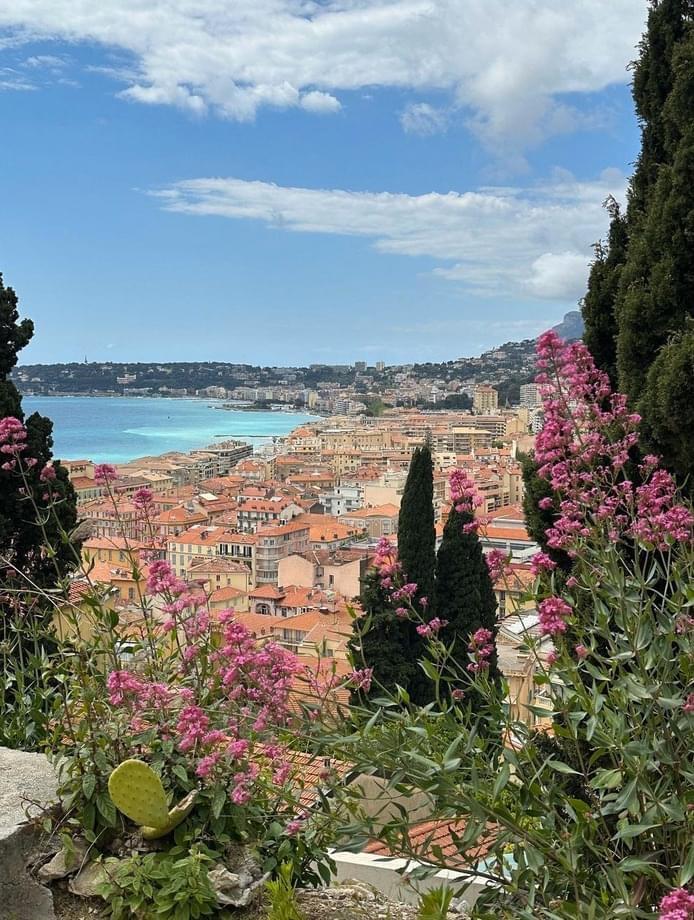
This is Cap d’Ail

and this is Mandelieu-La Napoule.

Here are the rest of the interesting facts about France…
The Millau Viaduct is the tallest bridge in the world at 343 metres (1,125 ft)

This breathtaking engineering feat stands taller than the Eiffel Tower and gracefully spans the Tarn Valley in southern France. Construction used some 290,000 tonnes of steel and concrete, and it is held up by 1,500 tonnes of steel cable.
The hot air balloon was invented in France

The Montgolfier brothers, Joseph-Michel and Jacques-Étienne, demonstrated the world’s first public, untethered flight in 1783. The first passengers in this historic flight were a sheep, a duck, and a rooster.
The Michelin Guide originated in France in 1900
What does the tyre company have to do with the world’s elite restaurants? Well, it was started by the Michelin brothers to encourage early motorists to burn some rubber – fast forward to today, and Michelin – and its stars – are the world’s most influential restaurant rating system.
France is home to the world’s perfume capital
The town of Grasse, in the south of France, remains the epicentre of global perfumery. Here they cultivate flowers like jasmine and rose that form the base of countless luxury fragrances.

Strasbourg Cathedral was once the world’s tallest building
From 1647 to 1874, more than two centuries, Strasbourg Cathedral’s soaring Gothic spire dominated Europe’s skyline and it remains one of France’s most striking medieval landmarks.

Napoleon crowned himself emperor in 1804 at Notre-Dame Cathedral
Rejecting tradition, Napoleon Bonaparte placed the crown on his own head to assert that his authority came from himself, not the Pope. This day marked France’s shift from a republic to an empire.
The longest French baguette measured over 140 metres (461 ft)
Bakers in Suresnes, a suburb of Paris, made the big baguette in 2024, which officially measured 140.53 meters (461 feet). This effort successfully reclaimed the Guinness World Record for France.
France holds the record for the most Nobel Prize winners in Literature
While 16 French authors have been awarded the prize, philosopher Jean-Paul Sartre famously declined the honour in 1964. He stated that a writer should not allow himself to be turned into an institution. Officially, France has 15 Nobel Prize winners in Literature.
Marseille is the oldest city in France
On the southern coast, Marseille was founded around 600 BC by Greek sailors from Phocaea. Originally called Massalia, it is one of the oldest continuously inhabited settlements. Marseille has served as a major Mediterranean trading port for over 2,600 years.

France is the birthplace of the metric system
To replace the confusing array of traditional measurements, the French National Assembly officially adopted the metric system in 1795. This system, based on the metre and kilogramme, was made compulsory for all French citizens by 1840.
The first Tour de France was almost entirely accidental
It was created in 1903 by a newspaper, L’Auto, to boost sales. The Tour de France offered a huge cash prize that caused some competitive carnage and launched the world’s famous bike race.

The TGV is one of the world’s fastest conventional trains
France’s high-speed rail, the TGV (Train à Grande Vitesse), has operating speeds up to 320 km/h (200 mph). Plus it holds the world speed record for a conventional train, reaching 574.8 km/h (357.2 mph) during a 2007 test run.
Photography was invented in France
You can thank French inventor Joseph Nicéphore Niépce the next time you snap a selfie. He’s credited with taking the world’s oldest surviving photograph of a real-world scene, taken around 1826-1827 from his estate window in Burgundy. It likely took several days to develop.
The French can legally marry a dead person
Under rare circumstances, French law permits a posthumous marriage. It usually only happens when a civilian or military partner dies before a wedding, after the couple has completed all necessary administrative procedures.
Bastille Day commemorates two events
You might have heard of Bastille Day – or the French National Day, celebrated on July 14th (La Fête Nationale). It commemorates not only the Storming of the Bastille in 1789 (a major event of the Revolution) but also the Fête de la Fédération on July 14, 1790, which celebrated the unity of the French people
French radio stations legally have to play French music
French radio stations are legally required to dedicate a minimum quota of their airtime to French-language songs, with the general requirement being 40% of songs in French (or a regional language). This law, from 1994, aims to protect French linguistic heritage.
The French consume 41L of wine per person every year
While France is the second-largest wine producer after Italy, French people consistently rank among the world’s highest per capita consumers. While in recent years the figure has been dropping – from 51 litres per year down to 41.5 – wine consumption with the French remains high.




Comments
Post a Comment