Day 3314 (Sunday) 5th July 2026
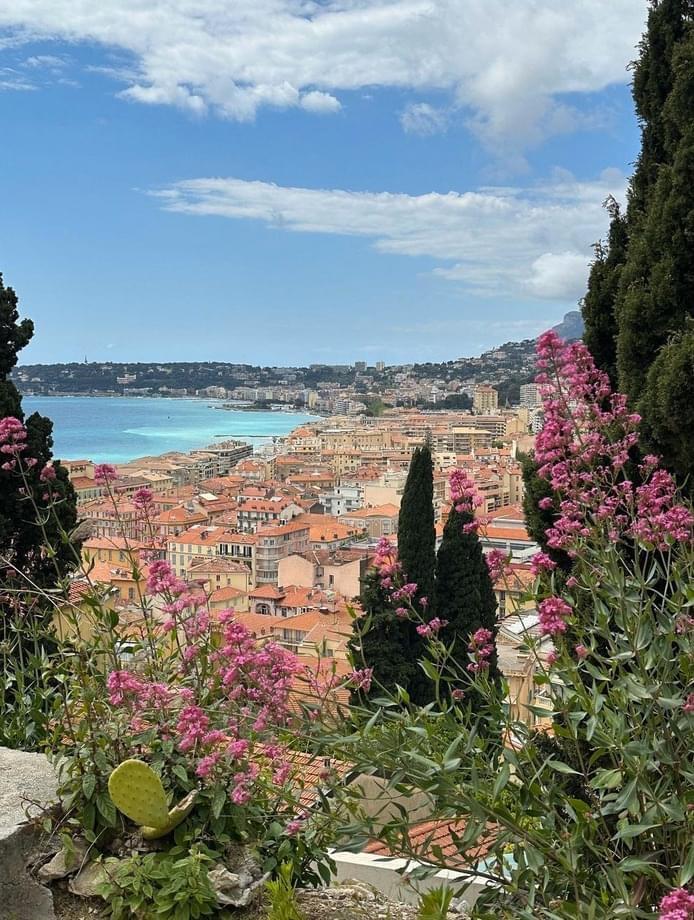
This is Saint Tropez

and this is Petite Afrique in Beaulieu.

Yesterday afternoon we went into town to see the jeeps, the pin-up girls and to listen to some music – the atmosphere was quite electric. Villefranche put all the American flags up to celebrate 250 years of Independence Day.


The stage was ready for the music later on

and then the line dancing started and at the end the ladies asked the crowd to join them and they were pretty good.
Today is the festival of Saint-Pierre and this is what happens in Villefranche-sur-Mer.

This was the vicar and the brass band going out in a boat to throw a wreath into the sea, and they play La Marseillaise on the way back, read on to find out why.

About Saint-Pierre
The Festin de la Saint-Pierre is a traditional maritime festival celebrated every year at the end of June in Villefranche-sur-Mer, in honour of Saint Peter, patron saint of fishermen. This ancestral celebration combines a religious ceremony, a sea procession, the throwing of flower wreaths into the waters of the bay, and popular festivities. Mass is celebrated in the Saint-Pierre chapel decorated by Jean Cocteau, followed by a grand service at the Saint-Michel church, in an exceptional setting between the sea and the hills.
A Centuries-Old Maritime Tradition
The Festin de la Saint-Pierre in Villefranche-sur-Mer perpetuates a centuries-old tradition shared by many Mediterranean ports. Every year, around June 29th, the feast day of Saints Peter and Paul, fishermen and inhabitants of this town in the Alpes-Maritimes pay homage to Saint Peter, apostle and patron saint of fishermen, through a series of ceremonies blending religious fervour and popular conviviality.
The Saint-Pierre Chapel and Jean Cocteau
The spiritual heart of the festival beats in the Saint-Pierre chapel, a jewel of the old port of Villefranche-sur-Mer. This 14th-century building, entirely decorated by Jean Cocteau in 1957, hosts the opening mass of the festivities. The frescoes by the poet-filmmaker, illustrating the life of Saint Peter and the fishermen, give the place a unique artistic dimension. The chapel, classified as a historic monument, is one of the rare examples of a religious building entirely painted by a 20th-century artist.
The Procession and the Throwing of Wreaths at Sea
After the mass celebrated in the chapel, a procession accompanies the statue of Saint Peter from the church to the port. The most moving moment of the festival is the throwing of flower wreaths into the sea, carried out from the quays in memory of lost sailors. This gesture, both of remembrance and hope, recalls the dangers faced by fishermen over the centuries. A solemn high mass is then celebrated at the Saint-Michel church.
Popular Festivities
Beyond the religious ceremonies, the Festin de la Saint-Pierre is also a major popular festival. An aperitif is offered by the Association of Old Sailors on the port, followed by communal meals, music, and dancing. The 'pointus', these traditional Mediterranean boats, are decorated for the occasion. The bay of Villefranche-sur-Mer, considered one of the most beautiful in the world, offers a spectacular setting for these celebrations which continue late into the evening.
A Living Heritage
The Festin de la Saint-Pierre testifies to the deep maritime identity of Villefranche-sur-Mer. In a port where artisanal fishing still continues today, this festival keeps alive the link between the community and the sea. It is part of a set of similar traditions celebrated all along the coast of the Alpes-Maritimes, from Cagnes-sur-Mer to Menton, with each port honouring Saint Peter in its own way.
The bay was quite busy all day today

We both love the French national anthem and I found this short history of it and a translation of the words…
After France declared war on Austria on April 20, 1792, P.F. Dietrich, the mayor of Strasbourg (where Rouget de Lisle was then quartered), expressed the need for a marching song for the French troops. “La Marseillaise” was Rouget de Lisle’s response to this call. Originally entitled “Chant de guerre de l’armée du Rhin” (“War Song of the Army of the Rhine”), the anthem came to be called “La Marseillaise” because of its popularity with volunteer army units from Marseille. The spirited and majestic song made an intense impression whenever it was sung at Revolutionary public occasions. The Convention accepted it as the French national anthem in a decree passed on July 14, 1795. “La Marseillaise” was banned by Napoleon during the empire and by Louis XVIII on the Second Restoration (1815) because of its Revolutionary associations. Authorized after the July Revolution of 1830, it was again banned by Napoleon III and not reinstated until 1879.
Allons, enfants de la patrie,
Le jour de gloire est arrivé.
Contre nous, de la tyrannie,
L’étendard sanglant est levé; l’étendard
sanglant est levé.
Entendez-vous, dans les campagnes
Mugir ces féroces soldats?
Ils viennent jusque dans nos bras
Égorger nos fils, nos compagnes.
Aux armes, citoyens!
Formez vos bataillons,
Marchons, marchons!
Qu’un sang impur
Abreuve nos sillons.
Amour sacré de la Patrie,
Conduis, soutiens nos bras vengeurs.
Liberté, liberté chérie,
Combats avec tes défenseurs; combats
avec tes défenseurs.
Sous nos drapeaux, que la victoire
Accoure à tes mâles accents;
Que tes ennemis expirants
Voient ton triomphe et notre gloire!
Aux armes, citoyens! etc.
Let us go, children of the fatherland,
Our day of glory has arrived.
Against us the bloody flag of tyranny
is raised; the bloody
flag is raised.
Do you hear in the countryside
The roar of those savage soldiers?
They come right into our arms
To cut the throats of our sons, our comrades.
To arms, citizens!
Form your battalions,
Let us march, let us march!
That their impure blood
Should water our fields.
Sacred love of the fatherland,
Guide and support our vengeful arms.
Liberty, beloved liberty,
Fight with your defenders; fight
with your defenders.
Under our flags, so that victory
Will rush to your manly strains;
That your dying enemies
Should see your triumph and glory!
To arms, citizens! etc.)
Pretty aggressive words eh?




Comments
Post a Comment