Day 3306 (Saturday) 27th June 2026
This is Saint Tropez

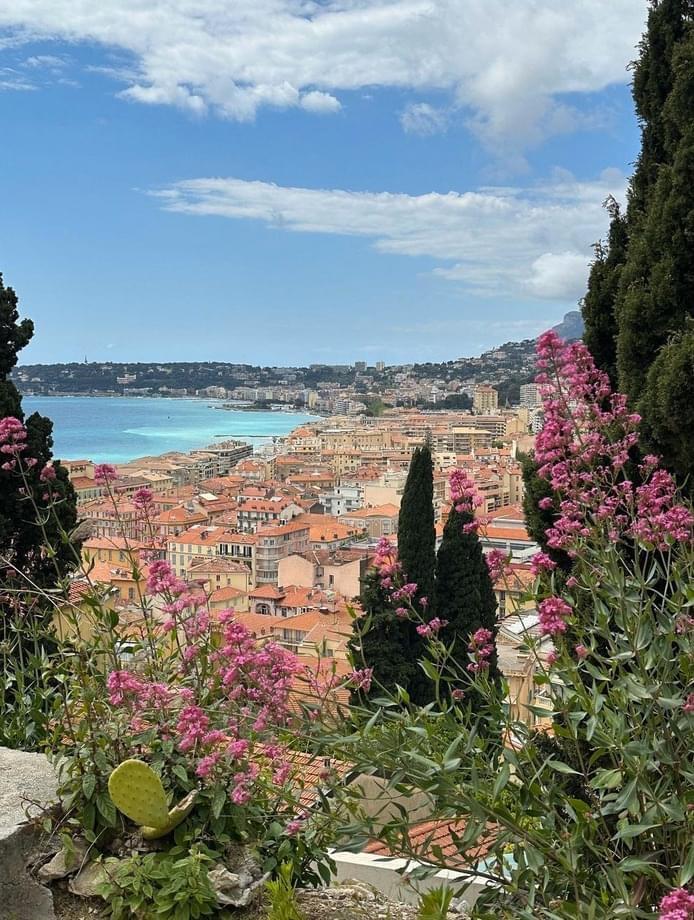
and this is Menton.

We went to Le Phare for a few yesterday evening and the local French men were getting the bar ready for the football later on in the evening. It was very funny; they moved the TV to the other side of the road, put out some tables and chairs and it looked good. It was only about 7pm and kick off wasn’t until 9

Then one of them decided it was all wrong and they all moved the furniture again.

There was a lot of fuss and noise with loud talking – it was like something out of ‘A Year in Provence.’ It was so French.
In the end they moved the TV back to the usual place on this side of the road – a spot where it’s always been.

It was 40 degrees today and Huw couldn’t face going out so we had a day at home and I sunbathed for about 40 minutes. This ship was in the bay and was moored up much closer than usual, I’d love to know what it does but Huw’s app doesn’t show its name.

Time for some more French food stories.

Author: Kate Stinchcombe-Gillies
Having a basic grasp of French food terminology goes a long way when it comes to deciphering the French menu at your chosen eaterie. In some of the more touristy parts of the country, you might find an English translation of French cooking vocabulary. But more often than not, you’ll be faced with French only or an English version that does little justice to the French cuisine on offer.
To help you understand what’s available and more importantly, what to expect on your plate when it arrives, read on for our guide to what to look for in a French menu.
Discover 20 iconic dishes on French menus
A French menu – la carte

First and foremost, the menu itself. This is known as la carte in French and comes in many shapes and forms: from a humble hand-written piece of paper to a leather-bound ledger. Or la carte may be chalked up on the wall or a board (see our vocab tip below). Or possibly have no written record at all leaving the waiter to ‘sing’ the dishes of the day instead.
À la carte refers to a non-set meal where you choose your dishes from the menu.
Know your French menu terminology – the ardoise is the French word for slate or blackboard with the daily specials chalked on it.
The different courses

A typical French menu includes some or all of the following courses:
Apértif – literally something to whet your appetite, also known as an amuse-bouche or amuse-gueule (taster).
Entrées – starters that are also called hors d’oeuvre in some restaurants.
Plats principaux – main dishes, usually including fish or meat.
Plat du jour – today’s special, literally: ‘plate of the day’
Fromage – the cheese board.
Note that if you order dessert as well, the cheese will come first and usually with bread not biscuits.
Desserts – desserts.
Digestif – a little something to help all the delicious food go down, perhaps cognac
Know your French menu terminology – if an item (e.g. pommes frites) comes à volonté, you can have as many as you can eat.
Avoir du pain sur la planche – translates literally as ‘to have your bread on the board,’ but is actually used to mean ‘to have your work cut out for you’
French restaurant pop-ups
Not all French restaurants are fixed; some are seasonal and known as guinguettes, pop-ups. One of our favourites is Les Voiles right on the sands at Portiragnes on the Mediterranean. This seafood restaurant pops up around mid-May and serves fresh local seafood, salads and tapas in the sunshine or under the stars.
French set menus

Many establishments in France including some of the finest restaurants in the country offer a set menu. This is known as a le menu du jour or la formule. It usually consists of a starter, main dish and dessert with perhaps a drink as well.
Choice is limited to a few items per course (there may just be two main dishes) and the menu du jour is generally only available at lunchtime. Some restaurants offer a pared-down menu du jour e.g. entrée + plat or plat + dessert. Bread and tap water are standard accompaniments.
Know your French menu terminology – an assiette is a plate of something such as cheese. An assiette anglaise is a plate of cold cuts.
Mettre du beurre dans les épinards – literally to put butter on your spinach, actually to improve your financial situation
A fancy French menu

The best restaurants in France and the majority of those with a Michelin star serve a tasting menu, known as le menu de degustation. There are no rules for the number of courses in this type of menu, which might include ‘just’ 6 or as many as 15.
But although there might be lots of courses, a menu de degustation is always about quality rather than quantity – each course may be little more than a soupçon.
Know your French menu terminology – relevé is the French term to mean a dish comes spicy or well seasoned.
Ordering meat in a French restaurant

If you go for a steak, duck breast or burger, expect the waiter to ask you how you would like it done:
bleu (blue)
saignant (rare)
à point (medium rare)
demi anglaise (medium)
cuit (medium well)
bien cuit (well done)
Four French food terms used frequently in English recipes

bouquet garni – a bundle of herbs tied together and immersed in a slow cooking dish or in stock making (typically thyme, bay leaf and parsley stalks)
au gratin – sprinkled with breadcrumbs or grated cheese and browned
en croute – ‘in a crust’ or more delicately put: wrapped and cooked in pastry
beurre noisette – an unctuous browned butter oozing flavours (not to be confused with ‘noisette’ of lamb or a hazelnut flavoured ‘noisette’ chocolate)
How to finish a meal at a restaurant in France

Our last section of what to look for in a French menu brings us to the end of your meal, to l’addition, A.K.A. the bill. Some will say service compris meaning that the service charge is included. But if you want to tip your waiter as well, leave some small change or 5 to 10% of the bill if it’s an up-market restaurant.
Couper la poire en deux – literally, to cut the pear in half, actually to split the bill or reach a compromise.




Comments
Post a Comment