Day 3289 (Wednesday) 10th June 2026
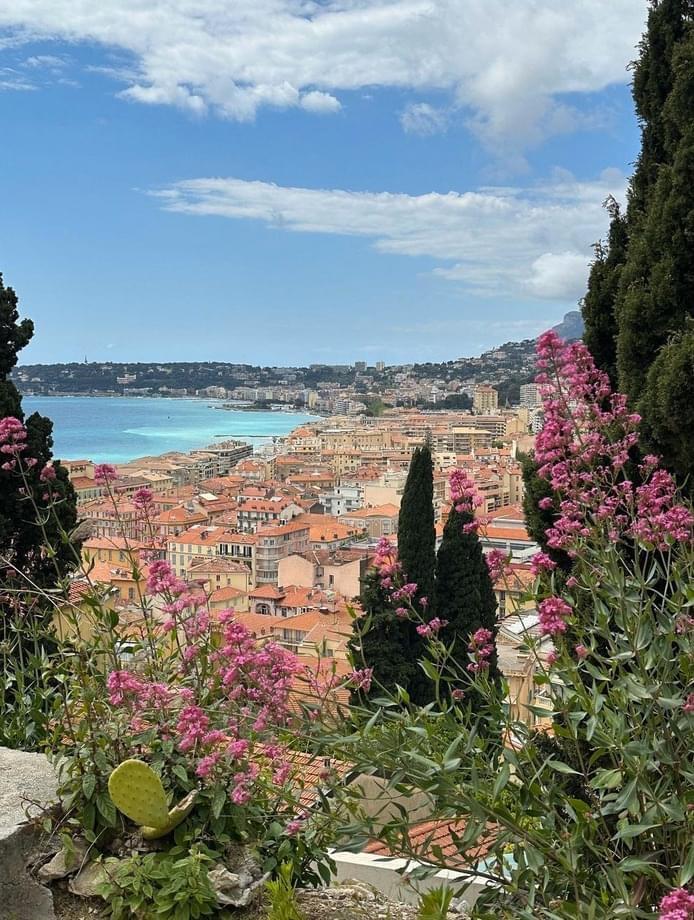
This is Plage Passable in Saint-Jean Cap-Ferrat

and this is Cap Roux, the other side of Cannes.

Huw had to clean Ken’s pool this morning and took these lovely photos on the way.


I promise this is the very last of the weird French foods, warning to vegetarians not to read on…
14. Brains (Cervelle or Cerveaux: sayr-VELL or sayr-VOH)

Like other offal – kidneys and tripe, for example – brains are losing popularity in France.
Lamb and mutton brains are the most popular and delicate, but they have to be exceedingly fresh.
They’re reputed to be good for your health, packed with vitamin B12 and phosphorous. But they won’t make you smarter.
As a child, I remember my mother frying them up, breaded, with lemon squirted on top, and it was always a treat.
Today, I probably wouldn’t buy them to cook at home but if I trusted the restaurant, I might order them. I do understand, though, that some people might consider this one of the more disgusting dishes around.
15. Pike dumplings (Quenelle de brochet: kuh-NELL duh bro-CHAY)

This isn’t really weird – but it’s different. Pike dumplings, shaped like an American football.
Their taste tends to be delicate, and they’re served with a crayfish sauce, Sauce Nantua. I mention it because it is typical of my region near the Jura mountains but not necessarily common everywhere else.
16. Smelly cheeses (Fromages puants: fro-MAHJ pew-ON)

If you’re accustomed to mozzarella or mild cheddar, France’s cheeses will indeed stun you with odour. Cheeses like Epoisses or Langres are renowned for their pungent aromas, even though their taste is often far milder than their smell.
These include such cheeses as Pont l’Evêque, Camembert or Munster, but not all of them. Each smells the most after a specific amount of refining, different for each one.
Why the smelly cheese?
During production, the bacteria and fungus are left to proliferate, giving the cheeses their powerful sour smell.
Even stranger french foods (which I haven't even tried)
17. Sweetbreads (Ris de veau: ree-duh-VO)

You may know them as sweetbreads (also called the thymus or the pancreas, and if that doesn't stop you cold...)
This is a dish popular on several continents and it is particular loved in France, hard to prepare and rare enough on menus to be pounced upon the second it is spotted. It is often braised, served in a butter sauce or breaded and fried.
I'd like to tell you more about it but I've never tried it so I'll reserve judgment. Just know that I won't be moving heaven and earth to taste it.
18. Calf's head (Tête de veau: tet-duh-VO)

To me, the weirdest French food is calf's head, or tête de veau, and with that name it's no surprise I haven't tried this one either.
It can be served in several ways, most often in one of two ways, either deboned and rolled and tied with a string (this might be acceptable) or still boned, with the entire head presented at the table. No thank you, and if you want to call this one a "nasty food", go right ahead.
Yet this is a dish that generates plenty of loyalty in France, and several culinary brotherhoods and calf's head clubs each claim to hold the "authentic" and highest quality product. This dish gained traction when the late French President, Jacques Chirac, called it an "honourable dish" and said he would be happy to eat it often.
Each year, on 21 July, a calf's head meal commemorates Louis XVI's beheading, a tradition that dates back to the period of terror during the French Revolution, during which pigs' heads were used to symbolise the much-hated king. At some point, the pig morphed into a calf... So if you're looking for unique French foods, go no further.
19. Head cheese (Fromage de tête: fro-MAHJ-duh-tet)

Made with pork or veal or wild boar, this dish is made with the animal’s head and tongue, a sort of pressed terrine or slice. Everything is boiled, and then pressed (like cheese, hence the name), and cooked with onions, carrots, turnips, white wine and herbs.
20. Horsemeat (Viande de cheval: vee-OND-duh-shuh-VAHL)

For years, horse meat was seen as a budget-friendly and healthy alternative to other red meats, and was considered more humane a death for the horse than being worked to death.
The advent of the automobile reduced the need – and therefore the supply – of horses so prices shot up and desire for what had often become a pet and a friend waned.
Horsemeat was sold in specialised butcher shops, but these days it can be sold anywhere meat is sold. I have it in my supermarket. But I’ve never tried it. Or if I have, it was accidental.
21. Sheep’s testicles (Couilles de mouton: cooey-duh-moo-TOH)

Couilles are testicles. Indeed, this part of the animal (sheep or lamb) is considered a delicacy far beyond France. I’ve tasted them in Spain but not here, mostly because they are a specialty of western France, in the Limousin region, across the country from me.
To cook, drain and boil, then slice thinly and sauté. Served with a bit of parsley and lemon.
Unlike some things on this list, these I would be willing to try.
22. Lamprey (Lamproie: lump-RWAH)

This particular dish is to be found in the Bordeaux region (and in case you don’t know lamprey, it’s an ugly fish with teeth).
It’s a seasonal dish, with the fish caught in the Gironde River from Christmas until after Easter.
Basically it is a stew, with red wine, a local type of leek, onions and shallots, some garlic, and cured ham. And herbs, of course.
It is considered a delicacy and even has its own festival but frankly, one look at that face and any desire I might have had to taste it vanishes. It looks too much like a menacing snake…
23. Farci Poitevin (far-SEE pwah-tuh-VAN)

Farci means stuffed, and that’s what this is: a huge cabbage leaf stuffed with diced vegetables (and eggs and flour). Usually it is steamed or braised or baked in the oven – the leaf prevents all the other ingredients from falling out.
Often touted as vegetarian, I’ve seen quite a few recipes that incorporate lard, so beware.
24. Insects... (Insectes: an-SECT)
If you've ever walked down a Bangkok street, you've seen stalls with fried or roasted crickets, grasshoppers and any number of other insects. You may have been brave and tried them, or you may have rushed by quickly and averted your eyes (that was me).
Either way, insects have become fashionable as a protein source: they're cheap and they're abundant, they are easy to raise, they don't contribute to climate change and farming them doesn't pollute. The World Food Programme has even suggested they might help solve the world's hunger problems.
That doesn't mean we have to like them...
In Europe, until now, selling insects as food has been illegal, although a few countries do sell whole insects for consumption within their borders.
But that isn't stopping the French from marketing what some see as the salvation of the planet and others simply call gross French food.
You can easily order such delicacies as onion-flavoured crickets or whole crunchy insects with chillies online, and some companies offer such delicacies as insect-based burgers. These restaurants give them pride of place on their menus...
But no, I realise these aren't traditional foods but let's face it, they are weird.
Tomorrow will have no food entries whatsoever.




Comments
Post a Comment