Day 3286 (Sunday) 7th June 2026
This is a Jacaranda tree in Nice

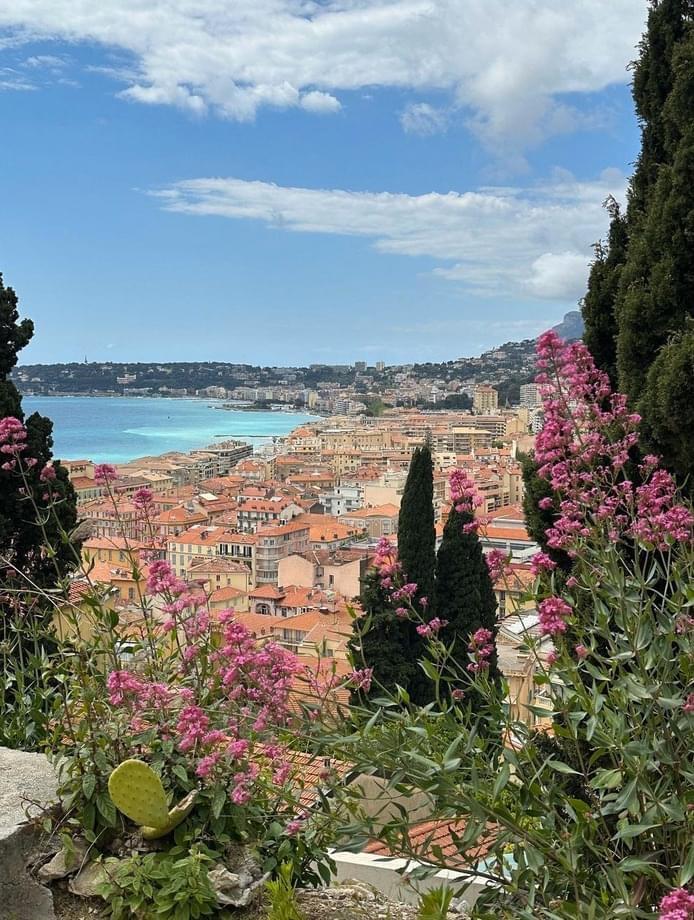
and this is Menton.

It was another lovely sunny day and we went into town for lunch in Bobby’s. There were two cruise ships in the bay again today – so much for the mayor’s threats of banning them.

We went to Le Phare first and met a couple of locals and had a beer before going to the square for lunch.

I found this article about weird French food, which is quite interesting. The first few options are ok but as the article goes on the food gets really weird and I wouldn’t advise vegetarians to read some of them…enjoy.
24 Weird French Foods We still love in France
Updated 03 August 2025 by Leyla Alyanak — Parisian by birth, Lyonnaise by adoption, historian by passion.
There are many stereotypes about the French, and quite a few centre around this question; "What do the French eat?"
Weird French foods, that's what.
And the things we eat are not always gourmet, either. You'd be surprised to know this French cheese is one of the nation's most popular!
Yes, we do eat things that may seem like strange French food to you.
But to us, they are no stranger than other weird foods around the world: haggis in Scotland, Vegemite in Australia or root beer or deep-fried candy bars in the USA. We all enjoy dietary oddities to which we cling.
Why did I say we "still" love them?
Because our parents and grandparents used to eat them, and some have gone out of style (while others are making a comeback).
No one likes all foods, so obviously not everyone in France will like everything on this list. But every item will be loved by someone...
A word of warning: if you're vegetarian or vegan, this article is not for you. The same goes if you have a deep-seated aversion to offal...
More unusual French food traditions
Back to the food, and I should say there are some French "delicacies" that make even me (and plenty of French people) cringe. You'll find those further down this list.
But mostly, that supposedly disgusting food we are accused of eating is, actually, sublime. Go on, make the effort. (I've tried haggis, vegemite and root beer... and I'm still here...)
What do people eat in France that you won't try? Ever?
I've started this list of so-called weird French dishes with my favourite delicacies and worked my way down the ladder of bizarre food ickiness — so this is a personal and subjective list.
I have every faith you will disagree with my choices (and possibly run screaming before you finish reading this entire page).
1. Snails (Escargots: es-car-GO) sure to be on your list of strange French food
This little critter is much maligned but, I admit, one of the delicacies of France, at least in my humble opinion.

To those who think they are dirty or dangerous, the answer is no, at least not if you eat them from a reputable source. A properly prepared escargot is washed several times, purged, salted and boiled before it ever reaches your plate.
According to legend, the first escargots de Bourgogne, or Burgundy snails, as the best ones are known, appeared in 1814 during a visit to France by the Russian czar, Alexander I.
He was to dine with Talleyrand, Napoleon's chief diplomat, but they were running late and the restaurant – yes, it was in Burgundy – was out of food. The innkeeper had to think on his feet so he rushed out to the garden, where some snails caught his eye.
He quickly transformed them into a meat dish and voilà, a French delicacy was born. (Please don't follow his example: as I mentioned, there is plenty of preparation that goes into making an escargot ready for consumption.)
Yes, they do seem a bit icky, even to me, if I sit and think about them. So I don't. Instead I focus on the essentials: creamy butter, fresh parsley, and mounds (no, hills) of fresh garlic.
In the end, these French snails are merely supports for the sauce. It wouldn't do to simply slurp butter so escargots help us pretend we're being civilized about all that butter, helped along by little broken chunks of baguette (normally one would avoid dipping bread into a sauce by hand but when it comes to escargots, everyone else will be too busy doing the same thing to look at you.)
I should add that our 'snail-eater' label is a little misplaced. We do eat them, and love them, but it's not an everyday dish and if you walk into a French restaurant for the first time, don't worry, no one is going to force half a dozen little snails upon you.
2. Frogs Legs (Cuisses de grenouille: kwees-duh-gruh-NOOee)

Along with escargots, many people believe frog legs are the most popular dish the French eat every day.
I know this falls under the banner of "weird French food" but wait... why is it any weirder than eating chicken or quail? The taste is certainly similar.
And frogs' legs aren't even French...
Originally they were eaten in China, around the first century BCE, and traces have been found in food stores belonging to the Aztecs, which would take us to the 13th century or so.
They only appeared in France during the Middle Ages, in monasteries, and fame followed when they were included in a cuisine dictionary written by Alexandre Dumas, of The Three Musketeers fame.
Now this is one of those interesting French foods you must sample in a top restaurant, not because they make them better, but because of the frogs they use.
In cheaper venues or at the supermarket, frogs' legs (usually frozen) come from Indonesia, where our appetite for them is threatening their survival.
In France, frogs are a protected species but there are farmed frogs, delicious and super expensive and usually only found in the best eateries. Alternatives are farmed frogs' legs from Turkey or Vietnam. Just stay away from the wild ones.
As for preparation, my favourite is — as with snails — butter, parsley and garlic (the more garlic the better), and lots of lemon. Some restaurants serve them breaded, or in a tomato sauce, but I'm a purist. Butter and garlic.
And by the way, this isn't a daily dish but one we have on special occasions or just once in a while.
3. Sea Urchin (Oursin: oor-SAN)

I'm not sure why these would be considered unusual foods: they're just normal seafood, albeit expensive and delicious. To me and thousands of others, this is a French delicacy. It can be an acquired taste, though.
But yes, oursins do look a little odd, what with all those little spikes, and they are extremely hard to open without physical injury. If you don't wear thick gloves, you will inevitably end up with a needle lodged in your skin — hence the need to eat these in a professional establishment that takes all those physical risks for you.
You can eat these like oysters, on the half shell, or experience the tender coral interior separately, mixed into a delicate sauce or scrambled with eggs, as you would do with caviar.
If you haven't tried these French food items, you must. Trust me on this one. We don't eat these often because of their cost, but when we do, we lick our fingers and wish for more.
More of these tomorrow…
This was Badger last night playing with his box of toys.

and this was him sleeping with Huw last night -he seems to have so many feet




Comments
Post a Comment