Day 3265 (Sunday) 17th May 2026
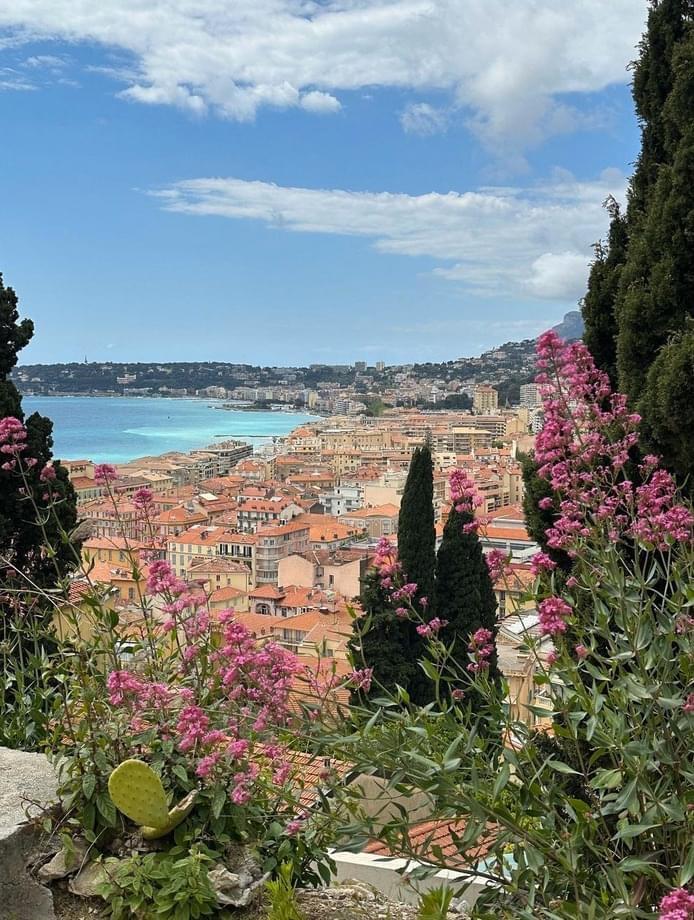
This is the Promenade des Anglais in Nice

and this is the cathedral in Monaco.

Huw took this very dramatic photo of clouds in Beaulieu when he was getting petrol.

Thankfully the clouds soon cleared up and we had a lovely blue sky for the rest of the day although that chilly wind is still blowing but not as strong as it has been.
7 reasons to visit France in 2026
Cave art. (Photo by Philippe LOPEZ / AFP)

France has something for everyone in 2026, whether you love sport or music, sea and sand, or mountains and lakes, culture and history, or food and drink … or all of the above.
Music
So, you like good music? Good is a subjective term, but France in 2026 has just about every preference covered.
For lovers of classical music — the OG rock and roll — Nantes hosts La Folle Journée at the end of January; the Monte Carlo Spring Arts festival in March and April is a must-visit; Saint-Denis hosts a classical music festival in June, while The Chorégies, in Orange, is France’s longest-running classical music festival. The Menton Music Festival follows hard on its heels in August, while Strasbourg’s Musica Festival arias on well into autumn.
If your preferences are more modern, the Bourges Spring Festival gets the rock and pop party started in France in April. Hellfest, in June, is a must for heavy metal fans, and the whole country dances to the sound of all kinds of music on June 21st’s Fête de la Music.
Then, over the warmer months, there’s the Nîmes Festival, Carcassonne, Solidays, Pause Guitare in Albi, La Route du Rock in Saint-Malo, and the ever-popular Rock-en-Seine, the last big rock festival of the summer, before the beat rises at the Techno Parade in Paris.
Meanwhile, the Lorient Interceltic Festival, Les Escales in Saint-Nazaire, Festivoce in Pigna, on the island of Corsica, or the Festival de Cornouaille in Quimper will keep the smiles on the faces of traditional music fans; and jazz fans can enjoy events across the country from Normandy to Nice and back to La Rochelle from May through to October.
Sport
France’s men’s national football team — ranked number three in the world by Fifa, so one of the favourites for the title — have qualified for the 2026 World Cup. While that’s in USA next June and July, expect France to be in football party mode for as long as the team is in action.
Meanwhile, there’s Roland Garros in May and June for tennis fans; the Paris-Roubaix in April; the Critérium du Dauphiné in June and the Tour de France in July for fans of cycling; the Six Nations and November internationals, plus the apparently never-ending Top 14, Elite 1, ProD2, Nationale, Champions Cup and Challenge Cup for rugby fans.
And there’s handball, surfing, motorsport — the Monaco Grand Prix will be a highlight, but there’s also Le Mans, and the Bol D’Or for fans of motorcycling.
Plus, marathons, from Paris to the rather more leisurely and alcoholic Médoc — and there’s also the Gois Run, a race against the sea in Beauvoir-sur-Mer. There’s also equestrian and horse racing events throughout the year.
The alcoholic Médoc marathon.

Cinema
Think France, think cinema, think New Wave, think Cannes. But the glitziest, glammiest Gallic gala of all things movie in May is far from the only one in France in 2026.

There’s the International Fantasy Film Festival and the International Short Film Festival in Gerardmer and Clermont-Ferrand respectively, which both start in January; the International Animated Film Festival in Annecy, in June; the La Rochelle International Film Festival and FID Marseille a month later; the American Film Festival in Deauville in September; and the British and Irish Film Festival in Dinard in October. Just to get you started.
Food and Drink

It’s a trope, but French gastronomy is revered for a reason. Every region adds something to the pot.
And, yes, there are those who will insist it’s overrated sauce over substance – but, frankly, you can safely ignore them because they don’t know what they’re talking about.
Put it this way. We have actual festivals dedicated to food and drink here. There’ll be several in every département throughout the year.
The great outdoors
France is so unfair. It is frequently too pretty for its own good – and just when you think it can’t legally get any more breathtaking, it goes and does.
Some villages, for example – especially in the south-west of the country – go the extra mile and are officially recognised as the ‘most beautiful villages of France’.

Meanwhile, it is estimated that there are 100,000 kilometres of walking trails in France, crossing the country in all directions offering spectacular views, and lungfuls of healthy fresh air.
Many of them have romantic-sounding nicknames like the Chemin de Stevenson, or the Customs Men’s trail. Some don’t — arguably the toughest, in Corsica, is known only by the ominous-sounding GR-20.
Be aware, however, that an increasing number of France’s most popular tourist attractions are bringing in maximum quotas for visitors, while others are only available with advance reservation.
If you are planning a trip to France this summer and you are looking to visit tourist hotspots, then you may want to start planning ahead of time.
Several attractions, including natural parks and islands, have imposed limits on the number of people who can visit per day, in order to limit environmental damage from visits.
The beaches
France boasts 5,500 kilometres of coastline and beaches on three different seaboards, there’s plenty of room for seekers of sun, sea and sand.
And don’t confine yourself to the edges of the country, either. Inland, you’ll find accessible beaches at any number of lakes and even rivers that have supervised swimming access — definitely don’t assume you can swim just anywhere.
Heck, even Paris gets a Plage every summer — and you can even swim in the Seine now, thanks to the big river clean-up for the Olympic Games in 2024.

History and Culture
France is overflowing with both. Cave art dating back to the Upper Paleolithic period, around 22,000 years ago has been found.
You can’t see the originals at Lascaux, but breathtaking copies of the paintings — and the caves — get you as close as humanly possible. And, honestly, there are other prehistoric art galleries that you can still visit.
There’s Roman history aplenty on show, particularly in the south of the country. There are the Loire Valley châteaux. In fact, there are more châteaux of various sizes and shapes up and down the country than you could shake a stick at.

Leonardo Da Vinci is buried in beautiful, historic Amboise. His most famous work of art is housed at the Louvre, in Paris. King Louis XIV’s pleasure dome at Versailles is a must-visit. Notre Dame, Les Invalides, the Eiffel Tower and Arc de Triomphe are on every visitors’ list for the capital.
But don’t confine yourself to Paris. It’s no exaggeration to insist there are plenty of places to visit just about everywhere in France.
A gallery dedicated to Toulouse-Lautrec is in the shadow of the imposing St Cecile’s Cathedral in Albi — just up the road from the World Heritage Site of Saint-Sernin Basilica in Toulouse, where you can also bring yourself bang up to the frontiers of science at the Cité de l’Espace.
Cathar history is everywhere in the south-west. The German influences in the north-east are evident in Colmar and Strasbourg. Everywhere you go there’s a new identity to enjoy. Brittany is a world away from the Basque Country in more ways than mere geography. Provence has a bucolic, lavender-scented mood all its own.
And this is really rather the point. Of the millions of people who visit France, 80 percent of them visit sites in just 20 percent of the country: largely Paris, the Riviera and certain well-known Alpine towns.
And that’s a real shame, because France is much more than that.




Comments
Post a Comment