Day 3252 (Monday) 4th May 2026
This is Saint Tropez

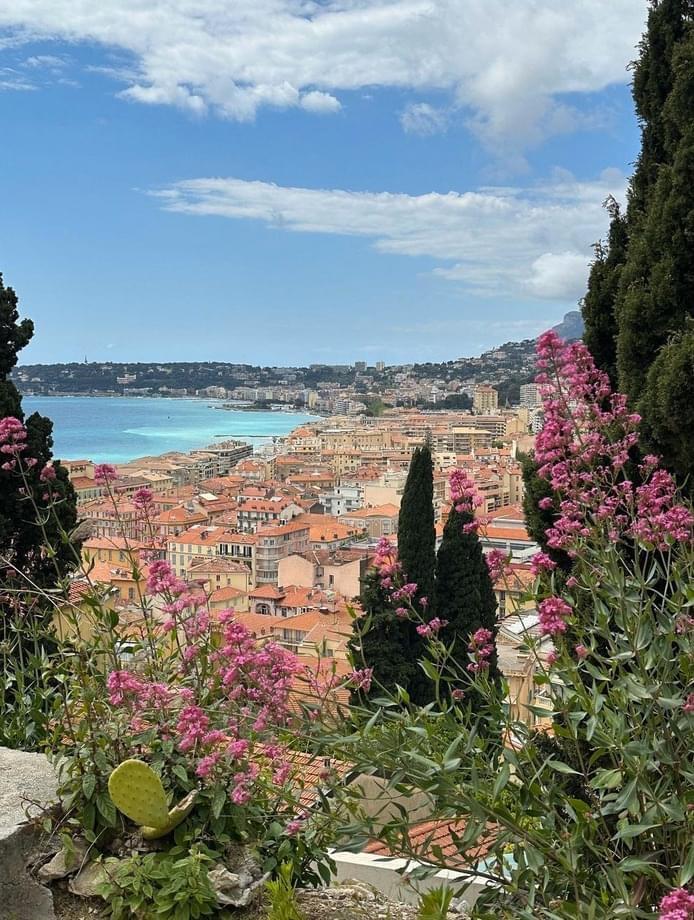
and this is Monaco.

As always on a Monday, here is What’s happening in France this week. The Local France.
Flags fly under the Arc de Triomphe at sunset following the ceremony for the 80th anniversary of VE Day, on May 8, 2025. (Photo by LEO VIGNAL / AFP)

Staff at medical laboratories are set to strike, France marks VE Day - and Paris Saint-Germain are in action in the Champions League semi-final
Monday
Back to school — The final phase of French schools’ staggered Spring holidays ends as children attending establishments in Zone C, including Paris and Toulouse, head back to classes after their fortnight’s break.
Likewise the adults will be back at work after (for most) a three-day weekend.
People trafficking case — 19 alleged members of a network facilitating migrants’ Channel crossings will be formally charged in Lille.
Strike — An open-ended strike by non-medical staff in medical laboratories has been announced in a wage dispute. It starts on May 4th.
Driving licence exchange fees - from May 4th, anyone applying to exchange their foreign driving licence for a French one will have to pay a €40 fee. This is part of the same bill that also raised the fees for getting or renewing a carte de séjour residency permit, those fees came into effect on May 1st.
Wednesday
Football — The second leg of the Uefa Champions League semi-final between Bayern Munich and Paris Saint-Germain kicks off at 9pm. The French side hold a 5-4 lead from a dramatic first leg in Paris last week.
Friday
VE Day — France marks the anniversary of the end of World War Two in Europe with a public holiday, while solemn parades and events in towns and villages across the country will honour those who died in the conflict.
Saturday
Europe Day — EU institutions across the bloc, including Strasbourg, open up to the public as part of Europe Day, which marks the anniversary of the Schumann Declaration, in 1950, when French Foreign Minister Robert Schuman delivered a historic speech and plan for deeper cooperation in Europe.
Rugby — After a mid-tournament break, the Women’s Six Nations returns. Italy host England in the opening match of the fourth weekend, followed by Scotland v France, then Ireland v Wales. Meanwhile, the men’s domestic Top 14 competition is also back after a week’s break for the Champions and Challenge Cup semi-finals.
5 things to say instead of 'de rien' when someone thanks you in French
All the ways to say "you're welcome" in French (Photo: Chris Liverani/Unsplash)

Language classes will likely teach you 'de rien', but depending on the context and who you’re speaking to, there are several alternative expressions to say 'you're welcome' in French.
The most common way of saying "you're welcome" in French and the phrase that is commonly taught to those learning the language is de rien (pronounced duh ree-ehn).
It literally translates to "of nothing". It implies a sense of modesty, a service rendered is minimised to the point of making it unnecessary to mention. By responding this way, you downplay the reason why someone is thanking you.
But in France this one is most commonly used in casual conversation, with a friend or family member, while other circumstances require a more formal response.
Let's take a look at other ways of saying "you're welcome" that are used in different contexts.
Il n'y a pas de quoi (roughly pronounced eel nee ah pah duh kwah)
This one translates to "it was nothing". You might also hear an abbreviated version in spoken French: y'a pas de quoi. The pronoun il is rarely pronounced when speaking quickly.
This means: "there's no need to thank me". This is informal, and you're more likely to hear this expression among friends or family. In other words, don't use this in a professional context.
Use it like this: Merci de m'avoir aidé à cuisine Il n'y a pas de quoi, j'adore faire des gâteaux. - Thanks for helping me cook./Don't mention it, I love baking cakes.
Il n’y a pas de problème (roughly pronounced eel nee ya pah duh pro-blem)
This expression translates to "no problem", and you'll often hear it in spoken French. Just like the one above, the abbreviated version is pas de problème.
This again is quite informal, but can be used in an interaction with a stranger. Like if someone holds the door open for you and you thank them, they will say something like pas de problème or pas de souci (which is a synonym of the French word problème).
Use it like this: Merci de m'avoir attendu/Pas de problème. - Thanks for waiting for me./No problem.
They are both casual and some French speakers, especially older, more conservative types, are not keen on 'pas de souci', which they see as displaying an unacceptable anglophone influence.
Je vous en prie (roughly pronounced zhuh voo anh pree)
You can use this in formal contexts with strangers and professional situations.
It’s one of the safest, most polite responses in French and is widely used in customer service settings - when you thank the waiter for bringing your coffee, he is likely to reply Je vous en prie.
There's always the vous and tu to remember as well, for strangers use vous, but if it's someone you know, you can also say je t'en prie (zhuh tahn pree).
This is also the one to use in any form of formal, written French, such as a business letter.
The word prie in French means "to pray", but just like in old-fashioned English it can also mean be used to make a request - eg I pray of you, I beg of you. But Je vous en prie translates as 'you're welcome'.
Use it like this: Je vous remercie pour la lettre de recommandation Je vous en prie, ce n'est rien. - Thank you for the letter of recommendation./You're very welcome, it was nothing.
Avec plaisir (roughly pronounced ah-vek pleh-zeer)
This one translates to "with pleasure" in English. It's quite formal, warm, polite and can be used in a context with strangers. Sometimes, if you call customer service in France to ask for information and you thank the person at the end, they will often say avec plaisir.
But it's also more than just "you're welcome" as it suggests you took pleasure in doing someone a favour. You can use it with friends and family.
Use it like this: Merci pour le restaurant./Avec plaisir! - Thank you for the meal./My pleasure.
C'est moi qui vous remercie (roughly pronounced say mwah kee voo ruh-mer-see)
This one translates to "I'm the one who should be thanking you". It's considered to be a polite, slightly formal way to respond as it flips the gratitude back onto the other person. It is used in customer service, professional settings, or polite conversations.
Use it like this: Merci de m'avoir raccompagnée./C'est moi qui vous remercie pour cette soirée. - Thank you for bringing me home. /No, thank YOU for this evening.




Comments
Post a Comment