Day 3245 (Monday) 27th April 2026
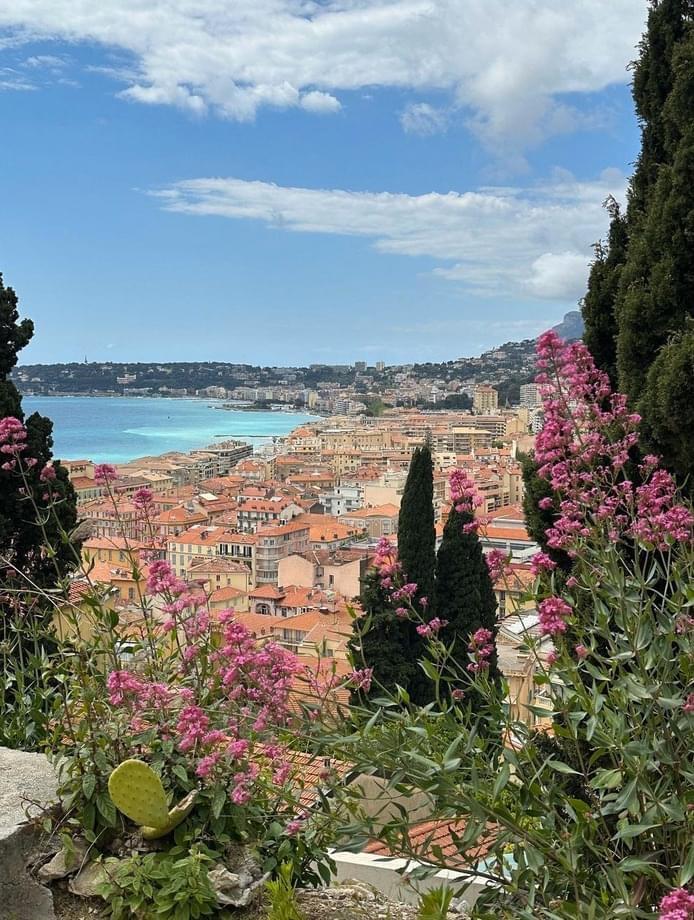
These photos were taken in Villefranche-sur-Mer.


It was lovely and sunny today, why couldn’t it have been like this yesterday for the petanque picnic? We went to Nice to enjoy our weekly kebab in the the park.

The port is getting busy with all the tourists coming in on their private yachts and the rent-a -boats.

As usual on a Monday here’s What’s happening in France this week. The Local, France.
There may be flowers ahead. (Photo by GEORGES GOBET / AFP)

The first of May’s numerous public holidays, a big week for sports fans, new fees for driving licences and carte de séjour kick in — and household gas prices are set to rise
Monday
Back to school — Children attending schools in France’s Zone B, which includes Aix-Marseille, Nice, and Strasbourg, return to classes after their Spring break, as do children at schools in Corsica. Children at schools in Zone C (Paris and the south-west) are the only ones on holiday now. They return to school next Monday, May 4th.
Art — An exhibition of works by Michelangelo and Rodin begins at the Louvre.
Tuesday
Football — Paris Saint-Germain host Bayern Munich at Parc des Princes in the first Champions League semi-final first leg. The match kicks off at 9pm France time, and will be broadcast on Canal Plus. The opening leg of the second semi final between Atletico Madrid and Arsenal kicks off at 9pm on Wednesday.
Language — A new 12-week online beginner French course, created specially for The Local’s readers starts.
Holiday I
May Day — Labour Day is a public holiday in France — the first of several in May — and one with very special status. Expect to see marches in towns and cities across the country, and muguet (lily of the valley) for sale on street corners.
Household gas prices — Due to the war in Iran, the benchmark price for natural gas is rising significantly. According to the Commission de Régulation de l'Energie (CRE, France’s energy monitor), the benchmark retail price for gas will rise by an average of 15.4 percent (including VAT) from May 1st.
Driving licences — A law requiring foreigners living in France who need to swap their driving licence for a French one to pay a €40 ‘administration fee’ in order to get their new licence comes into force. As it is a public holiday, it will affect applications submitted on or after May 4th.
Residency and citizenship fees - Also on May 1st, higher fees come into effect for getting or renewing a carte de séjour residency permit, or to apply for French citizenship.
Saturday
Rugby — Irish giants Leinster host Top 14 side Toulon in the first of the weekend’s Champions Cup semi-finals. The match kicks off at the Aviva Stadium at 4pm, and will be broadcast on free-to-air France Télévisions and pay-TV broadcaster beIN Sport.
The Challenge Cup semi-final between Ulster and Exeter, meanwhile, kicks off at 6.30pm, and will be broadcast on beIN.
Sunday
Rugby II — Champions Cup holders Bordeaux host Bath at the Stade Atlantique in the second semi-final to see who will face the winners of Leinster-Toulon in Bilbao on Saturday, May 23rd. The match kicks off at 6.30pm, and will be broadcast on France Télévisions and beIN Sport.
At 1.30pm, another Top 14 side, Montpellier, host Welsh side Dragons at the Septeo Stadium in the second Challenge Cup semi-final. The match will be broadcast on France 3 and beIN Sport. The winners of Ulster-Exeter and Montpellier-Dragons will meet in the final in Bilbao on Friday, May 22nd.
Climate change threatens France's 'lucky' May flower

Lily of the Valley or Muguet. (Photo by GEORGES GOBET / AFP)
May 1st in France isn’t just a celebration of workers’ rights, it’s also tied to a floral tradition. But with climate change causing the 'muguets' to bloom earlier, the flowers may no longer be in bloom for May Day celebrations.
In Loire-Atlantique in western France, the annual harvest of lily-of-the-valley (muguet) has begun significantly earlier than usual, highlighting a growing trend linked to climate change.
This year, growers started picking as early as April 13th, around ten days ahead of the traditional schedule, after an unusually warm start to the month.
The département produces the vast majority of France’s muguet, a crop worth an estimated €20 million annually. Once harvested, the delicate white flowers are stored in large refrigerated units to preserve them until May 1st, when they are traditionally sold and gifted across France for Labour Day.
Gifting lily-of-the-valley on May 1st, thought to bring good luck for the year ahead, is a very old French tradition, going back to the days of the royal court.
These days they are widely sold on temporary stalls, often run by volunteers in aid of good causes.
Muguet: France's lucky May flower
New strategies
Producers say adapting to earlier flowering seasons is becoming essential to ensure the long-term viability of the sector. Warmer springs are slowly shifting production timelines, raising concerns that traditional methods may no longer be sufficient.
This affects all flowers, but only the muguet is tied to a specific day in the calendar.
One strategy being explored is spreading sales over a longer period rather than concentrating them around May 1st.
“We sell earlier, for example, in pots, in supermarkets,” Régis Chevalier told French regional media Ouest-France.
Data from Valhor, the French organisation for horticulture, shows that purchases made on May 1st have declined sharply over the past decade, falling from 62 percent of annual sales to just 40 percent.
Despite these changes, professionals say prices are expected to remain stable this season.
Nantes as the capital of the 'muguet'
The city of Nantes on the Loire River in the Upper Brittany region was once considered the capital of lily of the valley production. In the 1960s, local growers used the “Nantes frame technique”, small glass-covered wooden structures acting as mini-greenhouses, to bring crops to market earlier.
Traditionally, many market gardeners maintained small plots of lily of the valley to supplement their income and keep workers employed year-round.
Today, however, the sector has shrunk considerably. The wider Pays de la Loire region now counts just 12 producers, down from 120 in 1992. The crop covers around 150 hectares, a tiny fraction of the region’s agricultural land, making it a niche but culturally significant production.
As climate patterns continue to evolve, growers face increasing pressure to adapt while preserving one of France’s most enduring springtime traditions.




Comments
Post a Comment