Day 3243 (Saturday) 25th April 2026
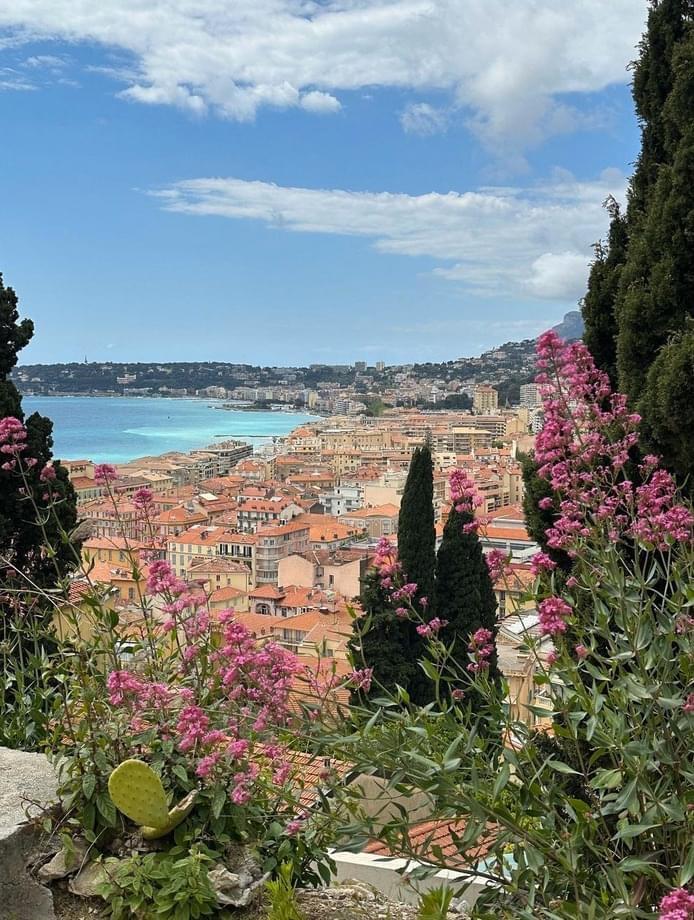
These are lovely old photos of Villefranche.


We’d planned on going into town for lunch today, calling in on Le Phare on the way but as we were having a beer in Le Phare it got colder so we went home. The spring is taking so long to arrive, it should be much warmer by now.
Here are the rest of the fun facts about France…
Waterway fun facts about France

We couldn’t possibly compile a list of fun facts without some reference to these:
When it’s a sleeve
And not the English Channel at all because the French call it La Manche (the sleeve). The shortest distance between France and England across this sleeve is around 33km. Anyone else wondering why they don’t call it the French Channel?
Two words for river
French has two words to refer to a river. Those that flow into the sea are called fleuve and those that flow into another river, rivière. The Rhône is the only fleuve to empty into the Mediterranean.
Plenty of canals
So many, in fact, that you can travel via canal between all river basins in France. The longest is the Canal du Rhin au Rhône with 324km, while probably the most famous is the Canal du Midi (240km).
Best way to see the country
We’re obviously a little biased, but we think the best way to experience France is from its waterways.
Weird and wonderful fun facts about France

And lastly on our list, those facts that are purely and simply wonderful.
Marrying a ghost
Well, not quite a ghost but you can hitch up with someone who’s deceased in France. ‘All’ you need to do is prove that the deceased intended to marry you while they were alive and once this is confirmed, the French President approves your marriage.
Just the one stop sign
Despite having over 6,100 streets, Paris only had one stop sign and even this one has since been removed. Now you know why it’s so difficult to cross the road in the City of Light.
Is it one or four?
Faire le bise is the standard way of greeting in France. Most people kiss each other twice, but in some parts of the country you could find yourself receiving three or four. It doesn’t actually matter if you go left or right first, but most French naturally start on the left. And don’t be offended if the one, two, three or four are merely air kisses.
But not on train platforms
Especially if you’re a couple because French law has prohibited kissing on train platforms since 1910.
Do thank them for…
As well as number plates, bikinis and Michelin stars, we must also thank the French for the hairdryer, cinema, canned food, Braille, mobile phone camera and pencil sharpener.
But maybe don’t thank them for…
The roundabout, invented by Eugène Hénard in the early 20th century. His first creation was the Place Charles de Gaulle in Paris, which has no less than 12 avenues branching onto it. The French embraced the invention and today French roads have around 30,000 roundabouts.
Not French at all
Paris and France are not French words. Paris comes from a Gaelic-Celtic tribe called Parisii, who lived on the banks of the River Seine during the Iron Age. The jury is still out on whether Parissi meant warrior, fighter or the less glamorous ‘he of the cauldron’. We reckon we can guess which one Parisians prefer…
France comes from the Franks, a Germanic tribe who invaded much of present-day France in the 5th century.
Left or right?
Road traffic flows on the right-hand side in France as it does in the rest of mainland Europe. But French trains run on the left, a leftover quirk from the English expertise used to build the railways.
Linguistically speaking fun facts about French

Naturellement, the French language also has fun facts, including:
6th-most spoken language in the world
Over 274 million people speak French in the world and it’s the official language in 29 countries.
It’s all in a word
Salut means hello, goodbye and cheers! As always, language is all about the context.
It’s all in a sound
As learners of French know to their frustration, many words in French sound tantalisingly similar but mean something completely different. Take “As-tu vu le vert ver allant vers le verre en verre vert?” for example. (Have you seen the green worm going towards the green-glass glass?, that essential everyday French phrase.)
What no ‘w’?
Nope, there are no genuine French words with a ‘w’ in them.
Ask the Academy
Their language is so important to the French that they even have an institution to defend it. The Académíe Française, founded in 1635, defines the language, grammar and punctuation. It has just 40 members, known as les immortels, so not an exclusive club at all.
Monumentally fun facts about France

France certainly packs in the monuments, so it’s fitting to include a few fun facts about these iconic buildings.
The most in Europe
France has over 45,000 officially listed monuments, the most in Europe. And possibly the longest bucket list in the world for visitors.
Charming chateaux
Many of these monuments are castles or châteaux. No one knows exactly how many châteaux there are in France, but the Centre de Monuments Nationaux agency lists 6,450 of them. Many of the finest are in the Loire Valley, but you’ll also find stunning châteaux in Aquitaine, Burgundy and along the Canal du Midi.
More than just an iron lady
The Eiffel Tower, aka la dame de fer, ranks among the most-visited monuments in France. It’s also the tourist attraction with the highest number of appearances on Instagram. That’s what we call an influencer.
The oldest monument
If you’re looking for the oldest monument in France, head for the Obélisque de Louxor in the Place de la Concorde in Paris. This giant sculpture is more than 3,300 years old and comes from Luxor in Egypt where its matching twin still stands. France acquired the obelisk in 1833 in exchange for a French clock, now in a mosque tower in Cairo. We’ll leave it up to you to decide which country got the better deal.
Culturally curious fun facts about France

France is one of the world’s cradles of culture, but did you know these facts?
The longest tome in the world
Marcel Proust’s Search for Lost Time takes the prize at the world’s longest book. It runs to a full seven volumes, which between them have over 3,000 pages. Not one for your book group.
All those strikes and protests
The French motto, liberté, egualité, fraternité could be the reason the French are so often out on the streets making such a noise. The fight for justice and equality runs deep within the French psyche and probably explains all those strikes and protests. And why they’re already on their fourth republic.
More Nobels
France has the highest numbers of winners of the Nobel Prize for Literature, with 16 to date. They include Annie Ernaux who won the accolade in 2022.
Prestigious prize but rubbish money
The Goncourt prize (Prix Goncourt) goes to the best French novel of the year and counts as the most coveted literary award in the country. However, don’t start your winning novel in French in hope of rich pickings, because the prize money is a symbolic €10.
Da Vinci in France
Although Italian born, Leonardo Da Vinci fled to France in 1516. His luggage included the Mona Lisa, which explains why it’s in the Louvre.
The highest fashion
Paris is the world’s fashion capital and, of course, France has given us haute couture and prêt-á -porter. We can also thank France for denim, created from a silk mixture in Nîmes at the end of the 19th century, and the bikini, invented in 1946.




Comments
Post a Comment