Day 3215 (Saturday) 28th March 2026
This is Agay, a village district of Saint-Raphaël in the south-east of France in the Var department in the Provence-Alpes-Côte d'Azur region.

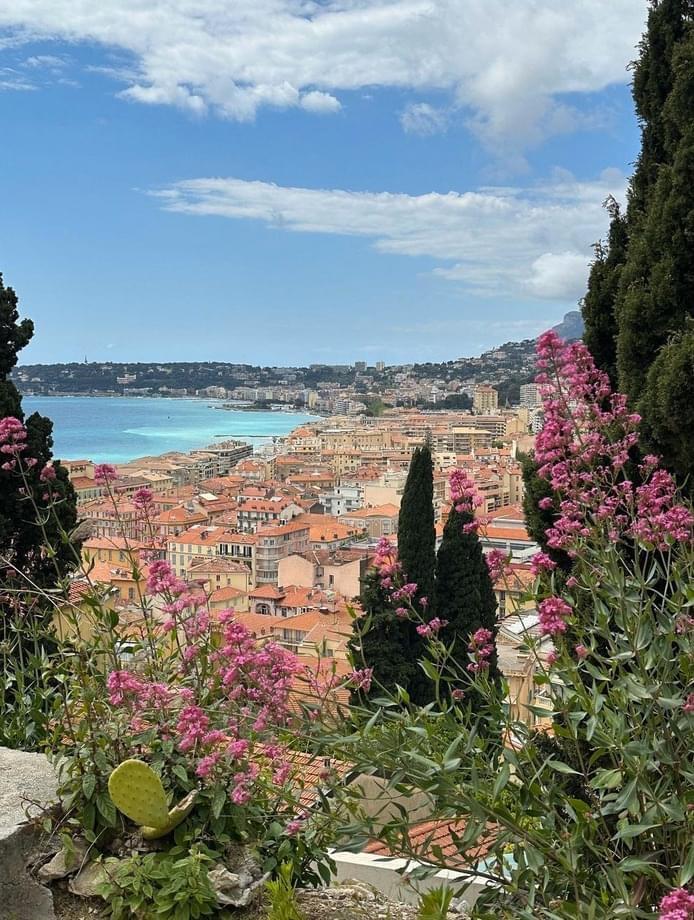
and this is Menton.

The clocks change tonight and the French think 'It's pointless' - Why the French want to end the changing of the clock.
A visitor walks near the clock in the Musee d'Orsay in Paris. Photo by Ludovic MARIN / AFP

French people will mostly be getting an extra hour of sleep on Sunday - but not everyone is happy about it.
The switch to winter time will take place in the early hours of Sunday, October 26th this year - when 3am will become 2am.
The twice-yearly changing of the clocks has become a hot topic in the EU with repeated proposals to end the practice altogether. But while most EU member states now agree that the hour change should be scrapped, finding agreement on which time zone to stick with has proved more difficult.
So what do French people think about this bi-annual tradition?
Sitting at a Parisian café, Camille, 31 years old, chuckles and says "ça me fait ni chaud ni froid" (I'm neither hot nor cold - or more precisely 'I don't care').
"My phone changes the time automatically so I don't even notice it," she adds.
A sentiment shared by Jeanne, an aspiring comedian: "I notice it maybe for two days and then I move on with my life."
Lucienne and her 80-year-old mother Genevieve, both didn't know the winter time change is coming up. "I'm retired and free now!" says Genevieve. "I don't have time constraints so I'm not bothered!"
But others find the adjustment more difficult.
Victoria, 31 years old, says it takes up to two weeks for her body to tune in to the new time.
Indeed, there are health side effects with time changes. The French government website mentions how it can "temporarily disrupt your biological clock," resulting in "fatigue, sleep disturbances or mood swings" during the first few days.
The government recommends "anticipating" the time change by "gradually adjusting your rhythm a few days beforehand."
"It's actually my dad's ultimate anxiety, because it takes him a week to get over it," says Léa, a 24 year old law student.
Compared to her father, Léa cares so little about the time change that she thought she'd "leapt into the future" after falling asleep during a 15-minute Uber ride home at night only to wake up and see that "an hour had passed on the car clock."
"It took me ten minutes to realise it was the time change!" she says, laughing.
She also remarks that: "France is the country with the most time zones in the world" and time changes can make it more difficult for French people to keep in touch with family living in the overseas territories.
Pauline, a 25-year-old marketing assistant, is from the French Indian Ocean island of Réunion and says the time change is "annoying" because it adds a bigger time difference with her family.
With the exception of the islands of Saint Pierre et Miquelon, off the coast of Canada, French overseas territories do not have a time change. This means that the time difference with mainland France varies depending on the time of year.
"We've had time changes for the past 30 to 40 years. It's so tiring, it really needs to stop. We don't even know what time it is anymore, it's pointless," says Jean, a 71-year-old retiree.
Jean's 75 old year friend, Jérôme, agrees. "I don't really see the point of time changes, I don't see the difference when it comes to saving energy."
The time change was introduced in France in 1976 following the oil crisis of 1973, mainly to save energy by reducing the need for artificial lighting.
In 2019, the French National Assembly organised an online survey on whether French people were in favour of ending time changes. The survey received two million responses, with the overwhelming majority (83.7 percent) in favour of ending daylight saving time. More than 60 percent of participants said they had had a "negative or very negative experience" with the change.




Comments
Post a Comment