Day 3196 (Monday) 9th March 2026
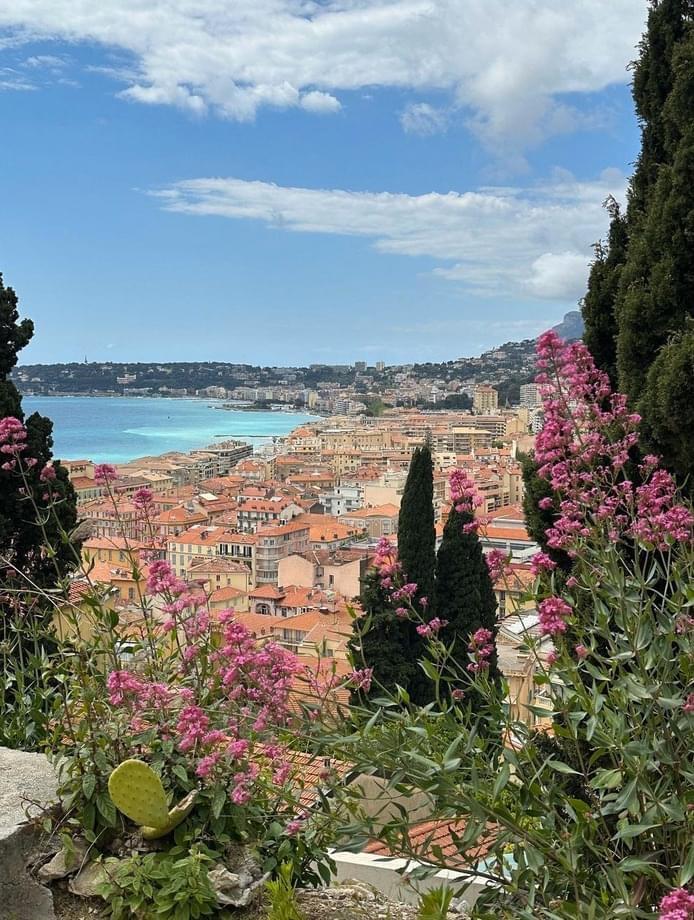
This is Paillon above Menton

and this is Cannes.

It was quite overcast again today and I felt a bit sorry for the passengers on this cruise ship.

Huw worked on Ken’s place this morning but my Zoom lesson was cancelled because Bertran is on a business trip in Brussels.
So as always on a Monday here’s What’s happening in France this week. The Local France.
France celebrate with the trophy after winning the Six Nations international rugby union tournament in 2025. (Photo by STEPHANE DE SAKUTIN / AFP)

A lucky day, back to school for the last of the holiday hordes, and why a strike in Belgium will have knock-on effects in France.
Monday 9
Court — Trial begins of British payment solutions giant Worldpay, accused of being part of a vast online scam.
School — Children attending schools in Zone C (Créteil, Montpellier, Paris, Toulouse and Versailles) head back to classes following the end of their winter holidays.
Reopening — The RN20 in Ariège, a main route between France and Andorra, will reopen several weeks earlier than scheduled following a rockfall at the end of January.
Tuesday 10
Climate — Europe’s Copernicus Institute is due to publish its climate bulletin for February.
Wednesday 11
Sport — Champions League holders Paris Saint-Germain host English Premiership side Chelsea in the round-of-16 first-leg match.
Thursday 12
Strike — A nationwide strike in neighbouring Belgium is expected to have knock-on effects on flights and international rail services in France and Europe. The walkout is expected to cause cancellations, delays, and force flights to reroute, affecting passengers across a wide travel area.
Friday 13
Lucky day — Unlike some countries, Friday the 13th is regarded as a lucky one in France, so if you’re out and about, take the opportunity to step in some dog poo — though use your left foot…
Saturday 14
Sport — Men’s World Cup skiing moves to France, with the roving competition shipping up in Courcheval.
Super Saturday — The Men’s 2026 Six Nations signs off with its now-traditional triple-bill of Saturday matches. Ireland host Scotland at the Aviva in the day’s opening match, then Wales entertain Italy at the Principality Stadium, before the final match of the tournament, France v England at Stade de France, affectionately known as Le Crunch.
Sunday 15
Elections — It’s the first round of voting in France’s municipal elections.
The French carnival that has seagull impressions and herring throwing
Thousands of people parade in the streets of Dunkirk during the city's carnival. (Photo by Philippe HUGUEN / AFP)

If you like wacky local traditions, then this French town is for you - its spring carnival takes in herring throwing, giants and a competition for the best seagull impression, all in the spirit of 'enjoy yourself now, you don't know what tomorrow will bring'.
Celebrated annually, the Dunkirk festival in northern France, brings about massive celebrations for around three months, with tens of thousands of people coming together.
This year's carnival takes place between January 3rd and April 18th and is also accompanied by several smaller celebrations across the region of the Hauts-de-France.
The culmination of the event is the Trois Joyeuses (three joyous days), which takes place during the week leading up to Ash Wednesday, as Mardi Gras approaches. This year it is held from February 15th to February 17th .
So what are the origins of the Carnaval de Dunkerque? In the 17th century, sailors from Dunkirk would set off for months on end to fish for herring in Iceland. Unsure whether they would return alive, they would spend their wages, given in advance, to enjoy themselves before leaving in case it would be the last time.
In Dunkirk, people follow the idea that despite life's challenges, there is always a good ready to celebrate, laugh and sing song.
The carnival is essentially known for its quirky traditions.
Herring throwing

One tradition is the jets de harengs - ‘throwing of the herring.’ This happens on the Sunday before Mardi Gras during the Trois Joyeuses. Crowds of people pack the square in front of the town hall and begin to demand “the herring they deserve.” Then the mayor steps out onto the balcony and throws around 500kg of herring into the crowds.
Yes, real herring.
In this tradition, the herring symbolises good fortune and prosperity, so catching one is good luck - if you don't mind the idea of holding on to a slippery fish.
Seagull squawk competition

Then there's the seagull squawk competition. This event also happens during the Trois Joyeuses and will be held on February 15th this year.
And yes - it's exactly what you think it is. The goal is to convince a jury that your scream is the closest to that of a seagull's. The scream must also be powerful and controlled. You cannot just do a shy little "squawk", your voice must be heard throughout the festival and it's better if you have a costume. Around 10 candidates will be selected for the grand finale after a pre-selection phase and you apply by filling out a questionnaire that will be posted on the event's social media page.
People also come as spectators to the show which is definitely considered a hit with a crowd full of costumes. Last year Michel Polnamouette won the competition (that is not his real name, it's a play on French singer Michel Polnareff's name, with mouette meaning seagull in French).
Meanwhile, at the same time, a second championship is held - the cri du Grisard (cry of the silver gull). Last year's competition was won by an eight-year old boy.
Dunkirk giants

Another famous tradition is the parade of the Géants de Dunkerque (Dunkirk giants).
These huge characters are a famous part of Dunkirk’s cultural heritage, especially connected to its carnival and festival traditions. They are literally giant figures or puppets, often several metres tall, parading through the streets. For example Reuze Papa (dad Reuze) and Reuze Maman (mom Reuze) are a giant couple representing the city’s traditional figures.
Costumes

Participants must dress for the occasion. The focus is usually on homemade designs favouring up-cycling and worn year after year. These include big hats, colourful umbrellas, faux-fur coats, with all kinds of accessories. Face paint is also widely used.
The carnival also offers many street parades, balls, and street parties. There are also a lot of traditional songs everyone knows and sings along to.
For food, the Moules-Frites also known as the classic northern French dish of mussels and French fries can be found anywhere as well as crêpes and waffles.




Comments
Post a Comment