Day 3191 (Wednesday) 4th March 2026
This is the cathedral in Monaco

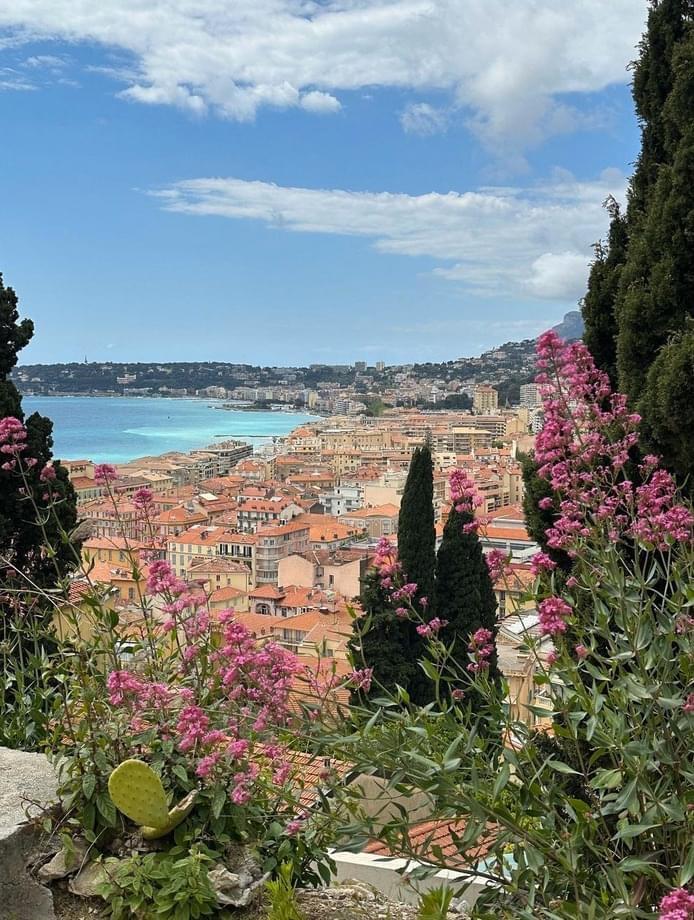
and this is Beaulieu park, where we had lunch today.

Bertran cancelled his Zoom class again today so Huw and I went to Beaulieu to get a delicious roast chicken and roast potato sandwich from our favourite sandwich shop. We went to the beach and ate our sandwich there, there weren’t many people there at all.


The park in Beaulieu is really quite spectacular, the flowers are gorgeous. I wish they’d spend more in Villefranche.


This is the second part of the article on French stereotypes I started yesterday…
We are cultured and sophisticated
That depends completely on your definitions. If by culture you mean cultivation of the mind, the insistence on learning or knowledge and intellect, then yes, that tends to be true of a French person (well, some French people). We prize these qualities and do our utmost to show them off in ourselves.
Our fashion style and sophistication is innate, although modern times and comfort are rapidly taking over and we can be seen wearing Nikes on city streets. Not too often, thank heavens. We can look to the 17th century and the court of Louis XIV to trace our infatuation with beauty and sophistication. Since then, France, and especially Paris, has been a cultural leader within Europe and beyond.
But yes, we like culture (especially French culture) and beauty. Why wouldn't we?
We are deeply democratic but snobbish to the extreme
Absolutely. Everyone wants to be the boss, equally. Everyone wants to be right. Also equally.
Everyone wants equal time in the discussion. And everyone is the best.
Our rules of class and hierarchy are scrupulously defined, no matter how heatedly we might deny it. We know our place: our accent will betray us, with one arrondissement more worthy than another, with Paris lording it over smaller yet stunning cities, with the city classier than the countryside (unless you have a chateau in the provinces), and one region more attractive than another.
When Jean Castex (who is from the southwest of France) a politician who dominated social media was talk of his accent, not his policies.
Yes, we are so formal we may speak to one another as strangers after having known one another for decades.
Test our democracy in a shop. Whereas in some countries the 'customer is king', in France the customer is barely the equal of the salesperson. If I, the sales clerk, am talking on my phone to a friend behind the counter, you will wait until I'm finished and finally ready to attend you. My conversation is, after all, at least as important as your question. If that displeases you, go elsewhere. I don't own the shop anyway — I just work here (and am underpaid whether I'm nice to you or not.)
Remember, the country's motto is "Liberté, Egalité, Fraternité." Egalité, or equality, is a strong contender for the top spot. Yet we never consider ourselves equal to others, we just believe in the principle. Go figure.

We are complainers
This is one of those French cliches that is sad but true, and oh how much has been written about this particular trait.
In fact, it has its own word, beyond complaining: râler, a cross between grumbling, bitching and moaning.
Let's face it, whatever delight we encounter is certain to have an underside that allows us some space for complaint. We are rarely satisfied, perhaps due to aspirations to perfection. The complaints aren't major – they are merely our way of hinting we (meaning you) can do better. But they are automatic and rare is the French exclamation of joy that isn't followed with a 'but'.
We tend to speak our minds
This is mostly true, but not always. It depends on the rapport de force, the balance of power. If we feel it is in our favour, we will immediately grab the higher ground and voice our opinion, often forcefully. If, on the other hand, we perceive we are in a less powerful position, we will bow gracefully and shut up while looking for leverage. What we don't do (yes, there are exceptions) is become violent. We can raise our voices and call each other names but usually we'll each get into our cars and drive off.
We don't like to talk about money
Absolutely correct. Money talk is crass. I don't want to know how much you make or how much your house cost. And if you ask me those questions, chances are it might be our last conversation, ever. As a child my mother always taught me that asking the price of something was rude. Clearly that's a bit outdated, but it does give you an idea of the ingrained reticence about dollars and cents. It also explains why we often cannot balance our budget and why we are hopeless at paying our taxes accurately.
We don't smile a lot
That's not true. We do smile, plenty. But when we have reason to. Say something witty and you'll see me grin from ear to ear. I just don't walk around the streets with a silly smile on my face. You may not think I'm nice. But frankly, I don't give a hoot. That's very French, by the way. On s'en fout! We don't give a toss!
France has the world's best health care system
This is one of those France stereotypes that was once true (a decade ago, the World Health Organisation concluded we had the best health care) but is no longer. We've slipped a few notches but it's still better than many, something we witnessed during the COVID-19 epidemic, where the system somehow managed to hold together through a combination of robustness, decent leadership, the commitment of health workers and pure luck.
Our health system is available to all, and we like it that way. We don't quite understand why anyone could prefer a private system of lower quality and greater expense... You get sick, to go to the emergency or to see your doctor. You pay either nothing or very little, and would never get turned away from care for lack of funds. In other words, income is not a determinant in your health care, except for certain specialists, who are slightly more expensive (but still affordable) – you know the ones, the kind whose waiting rooms look like a page out of Vogue?
If you are foreign, you can still get medical care – your own country health plan or your private health insurance will reimburse you.
The problem will be finding care in English. In larger cities, this will be easier. Your hotel can find you someone, and your embassy or consulate can help. But if you're in a small town and have an emergency, ask anyone and everyone if they speak English. A nephew or colleague will probably be pressed into service for a bit of translation. Your health insurance should also have a hotline where you can reach an English-speaking doctor instantly. And as a last resort, use a translation app on your phone...
We don't do well when it comes to speaking English for health care, although specialists often keep up with science in English and, a bit of good news, more and more French are learning English every day.
But back to health care for a second: hospitals have been closing for budget reasons, some rural areas have no doctors at all, there aren't enough health care workers... so yes, we had a good health care system, but it's disappearing fast.
French drivers are insane
I've seen worse. And I've seen a lot better.
We French do love our cars, but driving in France can be a nightmare if you don't do it right. But, it can also be a breeze. You'll need to learn a few rules, some of which seem to make no sense at all.




Comments
Post a Comment