Day 3187 (Saturday) 28th February 2026
These dolphins were spotted off Nice beach
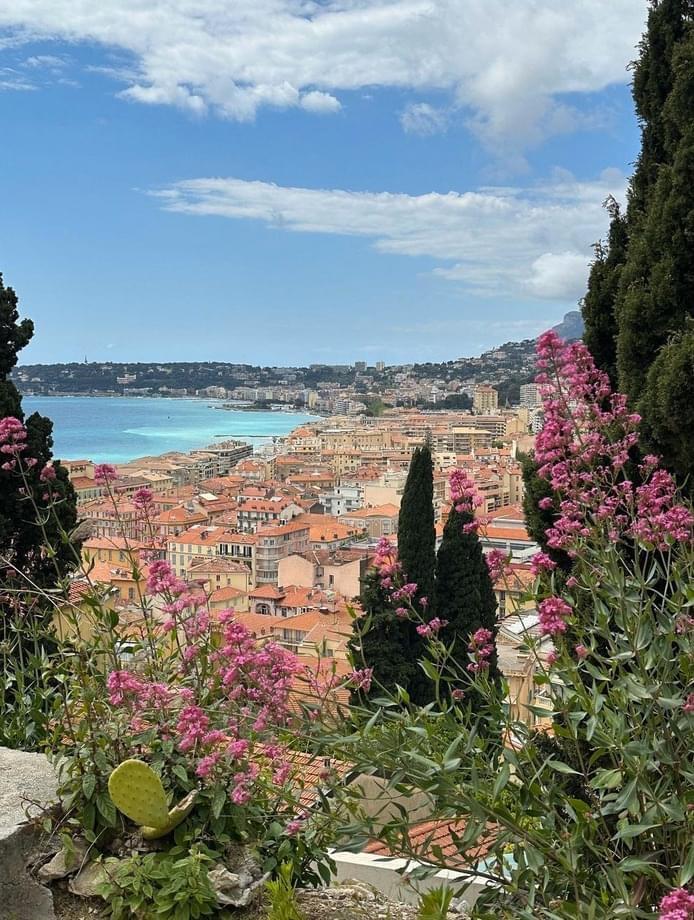
and this is the Viaduct du Caramel above Menton.


It was another warm sunny day and after doing our weekend chores we went down to the square to have lunch in Bobbie’s. There were a lot of English speakers in town, I assume they were off this cruise ship.

There was a new plat du jour in Bobbie’s – an American sandwich – which I ordered and it was bloody enormous. That’s dinner sorted for both of us.


I found this article about French culture which is a bit long so I’ll post it over two days.
10 Things You Need to Know About French Culture
The French are known for their wine, food, and fashion, but there is so much more to French culture than that. Whether you’re visiting France or talking to French people somewhere on the internet, there are many challenges you can come across even during basic daily encounters.
These are, for example: addressing someone correctly, choosing an appropriate topic for conversation, or sticking to basic social politeness. There are many rules for all that, but they can vary depending on the situation and the person you’re talking to. French life is full of details and nuances that foreigners often stumble over – but don’t worry.
To help you get a grasp of French culture and make sure you can fit into French society, we’ll explore some of the main things every person needs to know about France. French culture can be tricky if you are not familiar with it – but thanks to our crash course, understanding it shouldn’t be a problem for you anymore.
Etiquette is Key in France
Generally speaking, the French are very formal people – even among friends, they usually stick to polite formality. There are exceptions to this rule, of course, but in general, you should avoid being too informal when talking to someone you don’t know well.
For example, using the informal “tu” instead of the formal “vous” is not recommended, as it can be seen as impolite. Likewise, discussing personal topics like finances or religion with strangers is not generally considered appropriate. In France, it is important to be aware of the other person’s feelings and always act with politeness and respect.
On the other hand, even though politeness is the key to French etiquette, if you visit France, you will notice many things that go against this statement. For example, cutting lines is basically the national French sport, so don’t freak out if someone pushes you aside to be the first on the bus.
Another thing you might notice is the lack of punctuality and not very speedy service. This is not considered rude, though – doing everything well and thoughtfully, without a rush, is an important part of French culture. This may not apply to Paris, though, where life is a bit more fast-paced.
The French also love to argue – debates are really ingrained in their hearts. Don’t take it personally – a French person can argue even against a point they agree with, just to make life a bit more interesting.
This is probably where another French rule comes into play: the French often say “no” to a request. However, it doesn’t really mean “no” very often – sometimes, it’s just a quirky play that needs you to convince the other person to do something. Try to provide a few arguments, and your wish may be granted.
Liberté, Égalitié, Fraternité
Liberty, Equality and Fraternity are the three core values of the French Republic, as enshrined in the motto Liberté, Égalité, Fraternité which originated during the French Revolution. They are also some of the main values that French people hold dear, and they have a strong influence on French culture that can be seen in all aspects of life.
Liberty is highly prized in France, and it is considered one of the most important rights a citizen has. The French Revolution was fought in part to defend liberty, and it is still celebrated today. In fact, Bastille Day – which commemorates the storming of the Bastille prison during the Revolution – is one of the biggest national holidays in France.
Equality is another key value in France. The country has a strong tradition of egalitarianism, which dates back to the Enlightenment era. Since then, France has been at the forefront of movements for equality, including women’s rights and LGBT rights.
Today, equality remains an important ideal for French society and can be seen in laws that strive to ensure everyone is treated equally regardless of their background or social status.
Fraternity is perhaps less well known to non-French citizens than Liberty and Equality, but it is no less important to French culture. In France, fraternity is often understood in a broader sense as solidarity between people.
It is the idea that everyone should help and support each other, especially those who are less fortunate. This value is reflected in French society through various social welfare programmes and initiatives.
The hate of social injustice and violations of human rights is deeply rooted in French culture, and because of that, a huge number of social movements and protests arise each year. Foreigners may be confused about why so many strikes happen in France, but in reality, it’s just people fighting for what they believe in and executing their rights.

The French Take Family Seriously
The French have strong traditions related to family matters, and they place a lot of importance on family values. In France, you often hear that family is everything – it is the cornerstone of French society and plays a central role in French culture.
When it comes to family, the French are very close-knit, and they often spend a lot of time together. They typically celebrate all major family occasions, such as birthdays, anniversaries, and Christmas, together.
People often maintain relationships not only with their immediate family members but also with extended family, which allows them to learn more about their family’s history and values. Moreover, the extended family often provides financial support to the children.
Gender roles in modern French society are still quite traditional.
French women typically grow up knowing their role within the family and society. They are often taught that they should be beautiful, well-mannered, and modest. This stereotype of the “French woman” can present challenges in further life, since the expectations put a lot of pressure on women.
Nevertheless, the women of France are not afraid to break with tradition and stand up for what they believe in. They are strong, independent, and know who they are – and if someone expects them to fulfil more traditional gender-stereotypical roles such as cooking, cleaning and child-rearing, that’s not their problem.
Today, most French women engage in paid labour, pursue higher education, and climb up the career ladder.
Language is Important in French Culture
France is a country with a rich linguistic heritage. French is the official language of France, but it is not the only language spoken there. In fact, there are several regional languages and dialects that are still spoken in some parts of the country, such as Breton, Catalan, and Occitan, as well as languages from the former French colonies.
Additionally, immigrant languages like Arabic and Vietnamese are also spoken by some members of the French population.
The French language is an important part of French culture, and the country has a long history of promoting it both at home and abroad. Since 1635, L' Académie Française (The French Academy) has been working on regulating the language, limiting the rate at which the language can change.
The French take great pride in their language, trying to retain a unique French identity in light of globalisation and English’s takeover. Because of that, many French people prefer to speak in their own language, even though most of them know English to some extent.
So if you visit France, make sure to speak French when talking to the locals – even if your knowledge of it is quite limited, they will appreciate your attempt.
You can have the rest tomorrow.




Comments
Post a Comment