Day 3165 (Friday) 6th February 2026
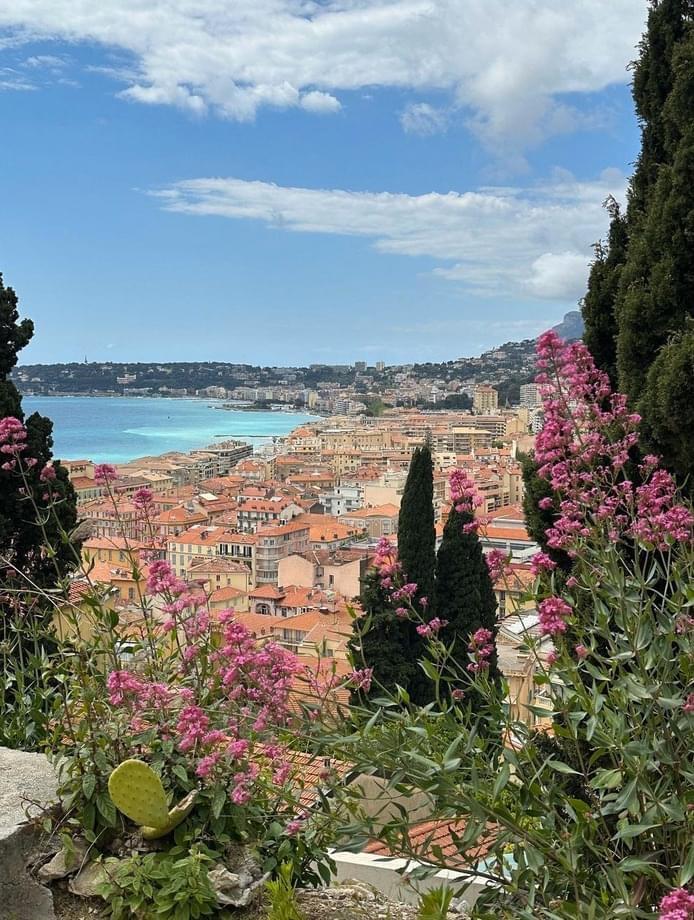
This is Saint Tropez

and this is Saint Paul de Vence.

It was another lovely day with a beautiful blue sky and the sea was quite wavy so it was a beautiful colour.

We decided to walk down to the beach to enjoy the waves.


To get back into town we walked along the seafront and most of the cafés and restaurants were closed and had their storm shutters up. I got my feet very wet when I couldn’t beat the wave that hit me.

A few little boats had washed up onto the shore.


And the road was closed to vehicles because of the high seas.

We stopped in Les Palmiers where we enjoyed some chips and chicken wings in the sunshine.
The best French towns for quality of life in 2026
People sit in front of the beach of "La Grande Plage" in Biarritz, southwestern France. (Photo by GAIZKA IROZ / AFP)

From transport and employment opportunities to green space, leisure opportunities and life expectancy, the French towns association has released its annual ranking of 'towns where life is good'.
The association ‘Villes et Villages où il fait bon vivre’ (Towns and Villages where life is good) has been ranking towns based on quality of life since 2020 - and the 2026 ranking has just been released.
Assessed on categories including the practical matters of health, transport and education and more subjective values such as people's enjoyment of the area plus opportunities for leisure, the ranking concentrates on the places that offer the best quality of life.
It does not take into account the cost of living.
The top 5
In first place comes Biarritz, located on southwestern France’s Basque coast - the second year in a row the town ranks number one.
French media Europe 1 asked locals what they loved about their city and one resident said that it was mainly the scenery, "when you turn your head to the right, you have the sea. And when you turn your head to the left, you have the mountains".
Annecy, an alpine town in southeastern France famous for its beautiful lake, came in second place, rising from fourth in 2024.

Meanwhile, in third place comes the city of Angers

located on the edge of the Loire Valley in Western France, and in fourth place, Bayonne also in the Basque country in southwest of France (less than 10km from winner Biarritz, in fact).

In fifth place is Rodez, a small town with a population of 23,000, in the département of Aveyron.

It has a rich history, with 16th-century mansions and Art Deco buildings. One resident told France Télévision that she believed her town deserved to be celebrated, "there's no stress, no traffic jams. There's greenery in the town and countryside all around. Only good vibes, and the food is good."
Meanwhile, the first place in the Paris region to achieve a high ranking is Boulogne-Billancourt (located in the Hauts-de-Seine), ranking 20th out of 500 cities. Located on the outskirts of Paris, its shopping, healthcare, safety and quality of life appeal to families. "You don't need to go to Paris to find everything you want", says a resident.
As for villages (less than 2,000 inhabitants), first place goes to Épron, located in Calvados in the Normandy region, and the second is Guéthary, in the south west.
How is the ranking decided?
Since 2020, Villes et Villages où il fait bon vivre has been compiling a ranking based on its own methods. The aim is to draw up a comprehensive ranking of the 34,727 municipalities in mainland France, based on 197 criteria divided into 11 categories.
These include quality of life, safety, health, transport, shops and services, education, environmental protection, local finances and taxes, solidarity, sports and leisure, and property attractiveness.
These 11 categories are then also ranked according to an OpinionWay survey (conducted online on a sample of 1,014 people representative of the French population aged 18 and over). Inside the category "Quality of life" which is a bit vague, the association includes criteria such as life expectancy, seaside resorts, green spaces, road and rail networks, airports, unemployment rates, etc.
These are factors used to judge whether a place is "good to live in" and all the data comes from official sources: INSEE, the Ministry of Interior, the Ministry of Ecological Transition, Arcep, Copernicus...
The municipalities were divided according to their population. On one side were villages with fewer than 2,000 inhabitants. On the other were municipalities with more than 2,000 inhabitants.


Huw took a few small videos.


Comments
Post a Comment