Day 3159 (Saturday) 31st January 2026
This is Saint Paul de Vence

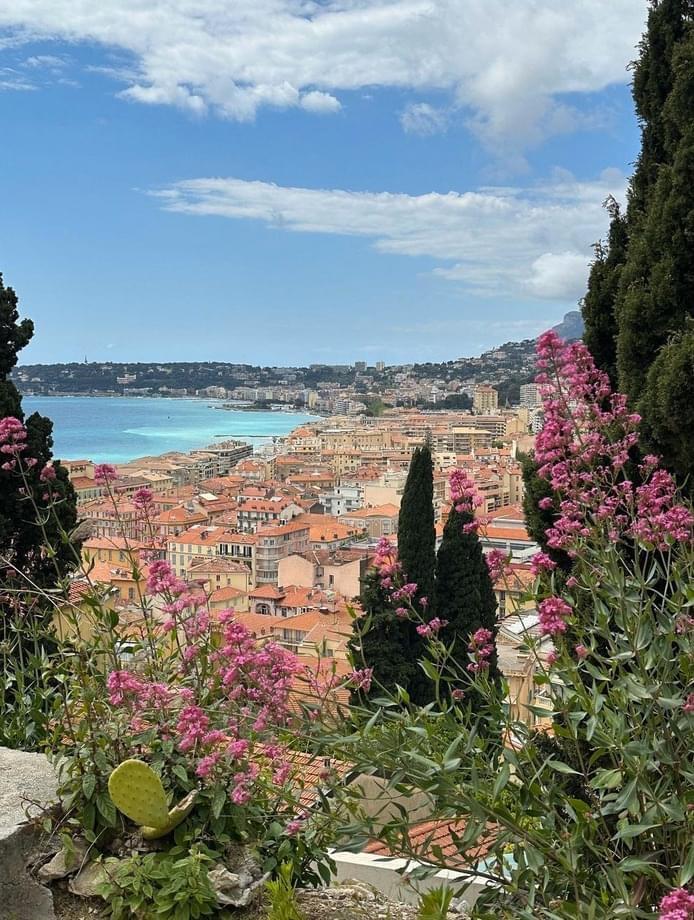
and this is Nice.

It was a bit overcast again this morning, this is the longest spell of bad weather we’ve had since we’ve been here but apparently the sun is going to shine again tomorrow so we can go out for lunch.
As promised yesterday here’s the article about Riviera wines.
French Riviera Wines
The French Riviera is one of the least-known wine producing regions of France. Its production is limited to a few very specific areas. However, the French Riviera has been producing wines since the dawn of time or shortly afterwards, with the arrival of the Greeks. Vines arrived here around 600 BC, brought by the Massaliotes (a Greek population who occupied what became the city of Marseille) who built a fortress in Nice. The Romans, masters of the art of wine-making, continued the tradition. Then, during the Middle Ages, Provence, of which Nice was a part until 1388, developed the wine trade.
Let’s take a tour of the vineyards on the French Riviera and the Alpes-Maritimes.
Vignoble de Bellet

It is on the hills to the west of Nice, on narrow plots of land known as ‘restanques’, that the grapes find the ideal conditions to give birth to the wines of Nice.
The Bellet vineyards are located on sun-drenched hillsides, and the appellation area covers 650 hectares at an altitude of around 300 metres. There are around fifteen winegrowers in the Bellet hills, and organic production is widespread. The appellation d’origine contrôlée (A.O.C.) was awarded in 1941. Speaking of grape varieties, Rolle, a typically Mediterranean variety, is the primary grape for the appellation’s white wines (80-90%), along with Chardonnay. Folle Noire and Braquet are used in blends to produce very good reds, rosés, Grenache and Cinsault.
Bellet wine is world-famous: President Thomas Jefferson was a great Bellet wine appraiser.
Vignoble de Saint Jeannet
On the first heights of the French Riviera, you’ll find a little corner of Tuscany at the foot of the Baous de Saint Jeannet. Around 20 centuries ago, the Romans settled on this hillside, a strategic oppidum for controlling the valley. It was they who planted the first vines.
The wines of Saint Jeannet are like no other. Georges Rasse, owner of Domaine des Hautes Collines, tells us the story: ‘My father used to deliver the beautiful bunches of late Saint Jeannet to the hotels by the sea, but it was in 1948 that he embarked on his wine-making adventure’. The originality of these wines lies in the fact that they are kept in bottles for several months on the cellar’s large terraces. Georges Rasse has transformed an empirical approach – ageing in the sun – into a method that works on the oxidation of the wine.
The results are astonishing, with unique aromas of spices and nuts. An amazing result for this wine that goes very well with grilled meats and spicy dishes.
Le Côte de Provence des Alpes-Maritimes, Villar-sur-Var

Nestling high up in a mountainous cirque north of Nice, Clos Saint-Joseph is the only wine-producing estate in the Alpes-Maritimes to benefit from the Côtes de Provence appellation. In the foothills of the Alps, the vines benefit from a wide temperature range, which contributes to the freshness of the wines. They have a mountain profile in Provence. Constance Malangé and Roch Sassi cultivate this small family vineyard, planted mainly with old vines, including a few native varieties such as Grassenc. Ten varieties make up the estate’s three-colour wines, all with strong character. The 5 hectares are cultivated with the greatest respect for tradition. Most of the vines are of a good age, and most of them are native varieties such as Barbaroux.
Les vins des Îles Lérins

Just 15 minutes by boat from Cannes, its Croisette, its Palais des Festival and its legendary beaches, are the Lérins Islands: the Île Sainte-Marguerite, home to the Iron Mask prison, and the smaller, more secretive Île Saint-Honorat. On this island, the Abbaye de Lérins has been home to monk-winegrowers for 16 centuries. The monks cultivate 8 hectares of vines in a geographical and geological context that is quite simply exceptional. Although they don’t claim to have a PDO, the nectars produced by the monks of Lérins, on the island of Saint-Honorat, are certainly worth the diversions. The unique soils, continuous sunshine and influence of the sea produce wines that can be found on the tables of many Michelin-starred chefs. These very rare wines can only be bought on the island or online via the abbey’s website.
In conclusion, French Riviera food and wines are far more than just delicious dishes and drinks; they are an integral part of the region’s rich cultural heritage. Just like the stunning Mediterranean coastline, the picturesque villages, and the historic landmarks, the culinary traditions of the Riviera tell a story of passion, craftsmanship, and a deep connection to the land. From the fresh seafood and fragrant herbs to the world-class rosés and robust reds, every meal is a celebration of the local terroir and the people who cultivate it.




Comments
Post a Comment