Day 3144 (Friday) 16th January 2026
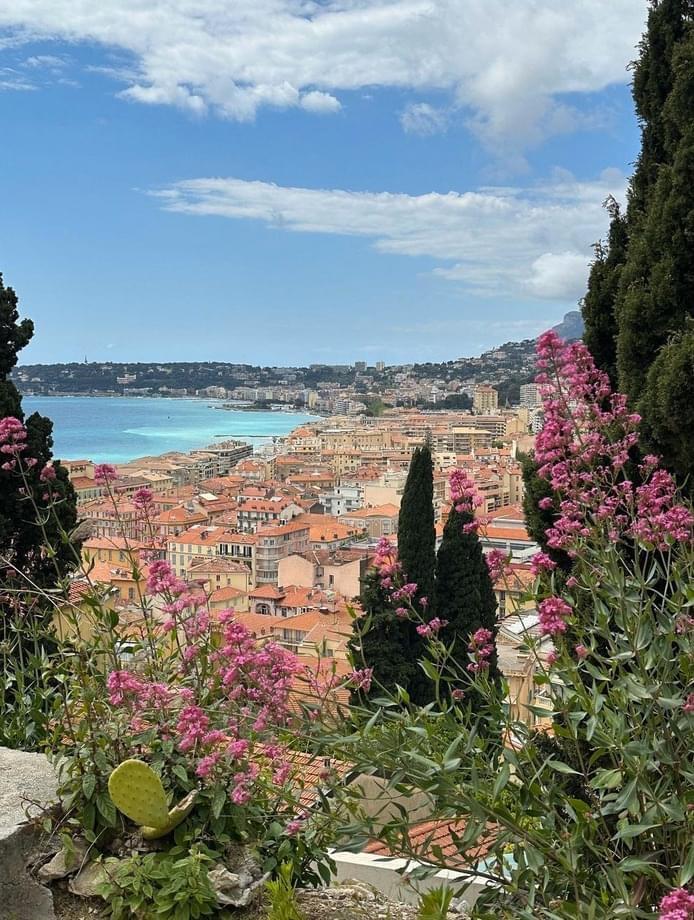
This is Petite Afrique beach in Beaulieu

and this is the view from the Moyenne Corniche.

We both had a day off today but it was cloudy so we stayed at home. I felt sorry for the passengers on the cruise ship in the bay.

13 French wine terms to make you sound like an expert
A member of the "Rouge Provence winegrowers" association tasting his product. Photo by MIGUEL MEDINA / AFP

French wine is pretty famous, so if you're spending time in the country's it's far from unlikely that you’ll want to visit a wine bar or tour a vineyard. Here are some terms that can help you feel like a sommelier.
Vignoble

Starting off simple, vignoble, pronounced veen-yo-bluh, is the French word for vineyard or a wine-growing region. This is a basic vocabulary word for a wine tour, but can also be used in conversation to show off your knowledge of France’s best wine districts.
Cuvage

Cuvage, pronounced coo-vahj, refers to the room of fermentation barrels where wine or cider is stored. You’ll likely see this while touring a winery.
Cépage - pronounced say-paj, is the French word for grape variety, and can help you discuss wine in greater detail.
Terroir - this is a crucial term that you will definitely hear on a vineyard term, but is somewhat hard to translate. It means the locality of a product - and it's used for all kinds of produce, not just wine - and how that affects its taste. For wine it would be a combination of the local soil, the weather, the techniques used during the growing of the grapes and the bottling of the wine - essentially how the partnership of nature and the skills of the wine-maker combine to create the product.
Pronunciation wise it's a bit tricky too - roughly it is tay-wahw.
Savoir-faire - somewhat similar to terroir, savoir-faire (pronounced sah-vwor-fair) means know how or expertise. It's used in all contexts of French life, but wine makers will often discuss how they acquired their skills or expertise, perhaps through having a family connection to wine making.
Élevage - Going hand-in-hand with cépage is élevage, pronounced ay-luh-vaj. This literally translates to breeding, usually in the animal sense so that a livestock farmer or a horse-breeder would be referred to as an éleveur. However in the context of wine, it refers to the process of ageing wine ahead of bottling it.
Œnologue - Pronounced uh-nuh-law-geh, this is the name of someone who specialises in the science of wine, an oenologist in English.
Dépôt - Dépôt, pronounced day-poe, means sediment, which refers to the small grape particles that tend to gather at the bottom of a bottle of wine.
Vendange

Vendange, pronounced vahn-dahnj, is the harvesting of grapes to make wine, and a useful vocabulary word also bound to come up on a vineyard tour. If anyone asks you if you want to help out with the vendange, be aware that this is tough physical work.
Pinard - pronounced pee-nar, is a slang term for wine believed to have been popularised by French soldiers during WWI. This term is good to know for more informal drinking environments where it might come up.
Vinasse - Vinasse, pronounced vee-nuss, is a pejorative term for cheap or mediocre wine. It is used similarly to the term piquette and is also best suited for an informal setting. We advise you not to use this on a vineyard tour unless you really want to offend your host.
Dégustation

the best bit of any vineyard tour - the tasting. Wine tastings happen in all sorts of settings, not just during a vineyard tour, and they can be a nice way to make some friends and also learn a bit. It's pronounced day-goo-sta-sion.
Cracher - Pronounced crash-ay, this word, which means to spit, is not exclusively used when discussing wine. However, it still can come in handy at a wine tasting, given some people prefer to spit out wine (cracher le vin) after tasting in order to better take in each wine's different notes (and not end up totally plastered).
If you're at a wine tasting there will usually be a bucket in the middle of the table - that doesn't mean that you have to spit, most people use it to tip out the dregs from their glass. Most wine tasters will pour out a generous glass of each wine in order for it to properly fill the glass and give you the chance to taste it and appreciate its aroma.
However it's common for a wine tasting to have eight or 10 different wines on offer, so unless you have a good head for alcohol you might not want to drink the full glass of each.
Here are some more books recommended by Leyla Alyanak
A Sport and a Pastime
by James Salter
A rather explicit affair between a young American college dropout and a French girl in provincial France during the 1960s, with plenty of room for rural France to paint pictures in our minds.
Three Strong Women
by Marie NDiaye
This book about France looks at the country differently: it traces the lives of three West African immigrants in France – a teacher in Senegal who follows her boyfriend back to France; a French-born lawyer summoned back to Senegal by her father; and an abandoned widow with little hope beyond a vague contact in France.
The author is the first black woman to ever win the prestigious Prix Goncourt, so it is very French in approach and a challenging, intelligent read.
Zazie in the Metro
by Raymond Queneau
A cult classic about a provincial pre-teen who comes to Paris to ride the Métro and when she finds it (in true French fashion) on strike, proceeds to tumble into a series of adventures that will allow her – and us – to discover Paris. Full of wit and humour, quirkiness and charm. Captivating and endearing.
All the Light We Cannot See
by Anthony Doerr
All The Light We Cannot See is a beautiful book, as it should be, written as it is by a Pulitzer Prize winner.
The story is about a blind girl hiding in Saint-Malo and a German boy, forced to fight in the war, whose destinies meet. It deals with the war, with the intensity of the characters' thoughts and feelings, but also provides a captivating look at Saint-Malo during World War II.
Bonjour Tristesse
by Françoise Sagan
The author was a shocking 18 years old when she wrote what became a cult novel of growing up, love and the Riviera: a young wealthy girl spends the summer with her partying father and his mistresses. New love interests are involved, with complex relationships of an unexpected maturity. A very French novel.
Every time I look at this list I want to read them all.




Comments
Post a Comment