Day 3132 (Sunday) 4th January 2026
This is mimosa, which is in season from January to early March. Mimosa can be recognised by its clusters of bright yellow flowers and its delicate scent. Although for many of us the mimosa is a symbol of the French Riviera, it is actually a species native to Australia.

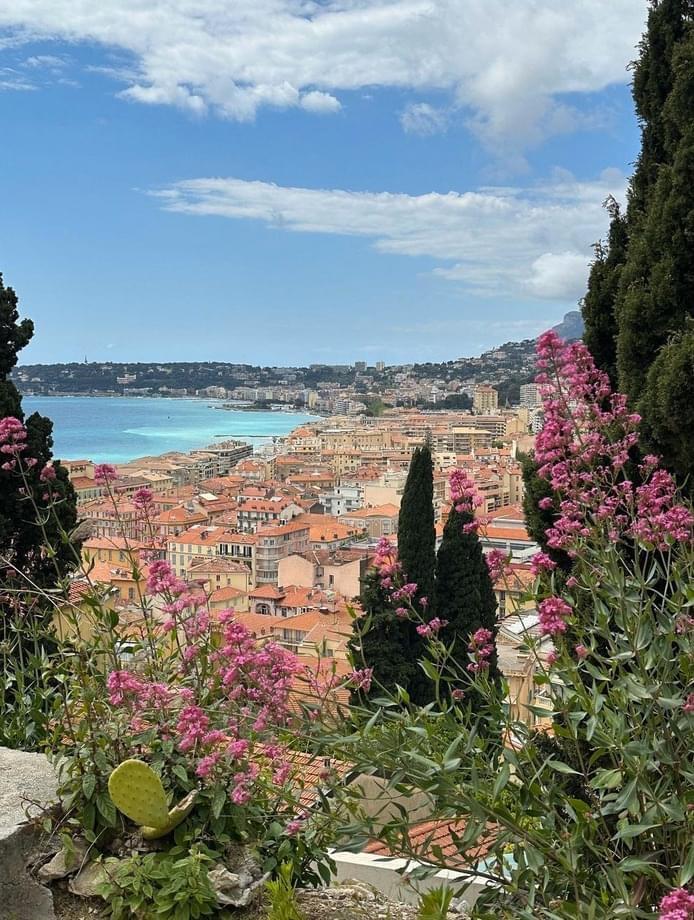
and this is the view from the Moyenne Corniche (the middle road between Nice and Monaco.)

We had planned on going to Bobbie’s for lunch today and even though the sun was shining the wind was quite cold so we went to Le Phare for a beer instead, there were quite a few people there but we didn’t stay long.
Here are the rest of the unspoken French customs…
11. Don’t worry about tipping servers—even if you sit for two hours.
“Tipping is not expected and is factored into the price of the meal,” said staffer Abby, who spent a year studying and living in France. While you can round up to show that you appreciated good service, you’re not obligated to leave a tip.
That’s even true if you linger over your meal while visiting France—which is expected. “Don’t go to a restaurant with the American mentality of quick in and out”. “Eating is a pleasure in France, so if you go to a restaurant, the waiter isn’t going to rush and you should expect to be there for two to three hours.”

12. Leave your leftovers behind
This one goes back to those time-honoured food rules the French have in place. According to French culture and traditions, a good meal should be eaten at its best: freshly made, delivered promptly to your table, and just as the chef intended it. So, taking any leftovers in a doggy bag and eating them cold or reheated later is frowned upon.
With that said, cultural views about taking leftovers are changing a bit. As of 2016, larger restaurants are required by law to give doggy bags to patrons who ask for them, which is an effort to cut down on food waste.
13. Don’t expect to see café au lait on the menu
Here’s a fun fact about French culture: If you’re heading to a French cafe and would like an espresso-based coffee with a generous amount of foamed milk, use the term “café crème” to sound like a local. Even though your server will likely know what you mean if you order a “café au lait,” that’s usually used to describe the milky coffee that locals sip during mornings at home.
While you’re sure to get your coffee in a cup when out and about, locals sip their café au lait from small bowls at home (which is one of the unique customs of France). What’s with the bowl, you ask? The café au lait cools more quickly, and there’s more room to dip buttery, jammy bread (la tartine) or a breakfast pastry into the brew. We love any French custom that leaves more room for a morning slice of buttered baguette.
14. Put your cell phone away in restaurants
Yep, we’re back to the culinary traditions that you’ll encounter in France. The French take mealtimes seriously, and nothing can spoil the enjoyment of a perfect cassoulet like chatting on your phone while you eat.
“Don’t use your cell phone when you’re in a restaurant,” said staffer Kelly.“It’s considered impolite in America, but downright rude in France. Also, holding your phone in front of your face on speakerphone like a walkie-talkie is also considered rude whether you’re in a restaurant or outdoors.”

15. Save room for lunch—and dessert
“Lunch is typically the biggest meal of the day in France,” said staffer Abby, who shared her tips for eating in France. “Dinner is a smaller plate, usually followed by a cheese course. The French are big on courses.”
Plus, “Dessert after dinner is a custom.” You read that right—the French almost always eat something sweet after dinner, which can be anything from yogurt to fresh fruit to dark chocolate. Now, that’s one of the traditions in France that we can get behind.
16. Don’t order omelettes for le petit-déjeuner (breakfast)

If you love starting your day with eggs, not to worry—the included daily breakfast in the hotels on our France tours will likely have them as an option in most cases. But, if you want to eat according to traditions in France, save les œufs for lunch or dinner.
While only eating eggs later in the day is one of the unique customs of France, times are shifting, and there’s now a budding brunch scene in big cities like Paris.
17. Greet friends and family the way French people do: with a cheek-to-cheek air kiss
This is a common way to say “hey” while exploring France and other parts of Europe. “It is custom when meeting a friend, family member, or host family to ‘faire la bise,’ which is when you kiss each cheek of the person you’re greeting,” said staffer Abby, who studied in France. “In different parts of the country, they might kiss one cheek, both, or alternate three times.”
Just remember: This greeting doesn’t involve touching your lips to someone’s cheek. Instead, touch cheeks while making a soft smooching sound, then turn your head and do the same on the other side. You can even lightly put your hands on the other person’s shoulders while you go through the air-kiss motions.
18. Know when to use “madame” vs. “mademoiselle”
Here’s a helpful France culture tip to keep in mind: Traditionally, you will address married women as “madame,” and unmarried women and young ladies as “mademoiselle.” This comes in handy during polite interactions with locals, say, in a shop (“Merci, madame”). It’s not a perfect science, but you can either look to see if the woman is wearing a wedding ring, or try to guess if she is old enough to be married.
If you want to be a bit charming, take staffer Andy’s advice in very special cases: “Calling a much older woman ‘mademoiselle’ is totally incorrect but can delight her, especially from a much younger man.” he said.
19. Arrive to dinner parties fashionably late
If you’re invited to a dinner party in someone’s home, it’s best to be at least 15 minutes late. Arriving right on time (or worse, early) might rudely catch your host by surprise as they put the finishing touches on their outfit or meal.

20. Don’t bring wine to a dinner party
Food is king in France, and dinner party hosts go to great lengths to carefully plan a meal paired with the perfect wine. So, gifting a bottle of your own wine might come off as rude, as if you're suggesting that the host hasn’t already picked out the ideal pairing to go with their meal.
So, what do you bring if a French person has invited you to their home for dinner? A box of high-quality chocolates is always well received. If you must bring a bottle of something, some Champagne, Cognac, or Calvados is the way to go.
I think this has been staged but it’s very cute




Comments
Post a Comment