Day 2729 (Wednesday) 27th November 2024
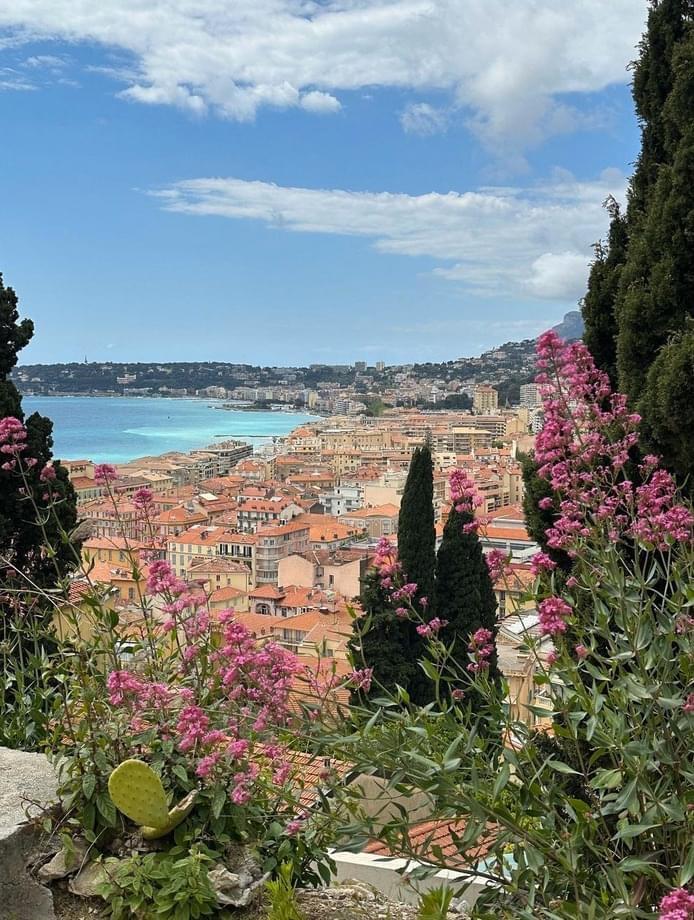
This is Menton

and Huw took this early this morning.

As promised yesterday here are the rest of the traditions and celebrations in France…
Baptisms or first communions are sweetened with ‘dragées’, almond candies symbolising purity, while weddings feature the magnificent ‘pièce montée’, symbolising marital unity.

Each of these celebrations, deeply rooted in French culture, showcases the country’s love affair with food, where every holiday is an opportunity to gather, feast, and revel in the joy of culinary heritage.
Global Influences on French Festive Traditions
The landscape of French celebrations, steeped in rich traditions, has been subtly yet significantly reshaped by globalisation. This blending of global and local has led to intriguing cultural adaptations.
Anglo-Saxon holidays
Halloween, initially an American import, now sees French children donning costumes and partaking in trick-or-treating, a stark contrast to France’s historically subdued autumn celebrations.
Black Friday, another American export, has surged in popularity, altering the traditional French shopping calendar with its focus on deep discounts and holiday sales.
In recent years, St. Patrick’s Day has begun to capture the French imagination. While not traditionally celebrated in France, this Irish holiday has gained attention, especially in larger cities, with pubs and some communities embracing the festive spirit, green decorations, and perhaps a pint of Guinness, symbolising a growing appreciation for multicultural festivities.
Christmas traditions evolving in France
The essence of Christmas in France, too, has evolved. Since the mid-20th century, the traditional values of this beloved holiday have been infused with new influences, most notably the figure of Santa Claus, a concept popularised by American culture. This jolly, gift-giving Santa has become central in French Christmas celebrations, merging with the country’s ‘Père Noël’ tradition.
Moreover, the appearance of German-style Christmas markets in every large town in France marks a significant cultural import. These markets, with their quaint wooden chalets, twinkling lights, and an array of handcrafted goods and traditional foods, offer a festive atmosphere reminiscent of the German ‘Christkindlmarkt.’

This adoption adds to the holiday charm and reflects a broader openness to cultural exchange and the blending of European traditions.
Easter traditions: Bell or Bunny?
Furthermore, in a subtle yet telling shift within Easter traditions, many French households are increasingly embracing the chocolate bunny, a symbol more commonly associated with Anglo-Saxon Easter celebrations, alongside or in place of the traditional chocolate bells, reflecting a broader trend of cultural exchange and the adoption of international symbols in French festive practices.
These changes highlight a dynamic interplay between preserving French cultural identity and adapting to global influences. They underscore how French celebrations evolve, mirroring broader trends in an increasingly interconnected world.
The way the French spent their holidays in France
Summer holidays and celebrations in France are synonymous with the great exodus.
Indeed, for eleven months of the year, the French think about the twelfth month, when they will take their annual holidays.
Some people like skiing and going on winter holidays, but most prefer the summer months. August is the big holiday, and many companies and businesses close for one to four weeks. In fact, in the big cities, especially in Paris, the place is deserted except for tourists.
In summer, around 70% of the French people surveyed go on holiday for an average of two weeks.
Holidays in France, a country of great variety
For 56% of them, their favourite destination remains… France.
This is the highest rate of residents staying in their country for holidays in Europe and the two other countries surveyed (the United States and Brazil).
How do I explain this?
Well, most French people are satisfied with what their country offers and, therefore, do not wish to travel abroad.
Mountains and rivers, sandy beaches and beautiful countryside are all available in France.
The French like to spend their holidays in another region of France
The French appreciate inter-regional tourism for their holidays (including the summer).
For example, between 2014 and 2016, there was an average:
4.4 million departures per year from the Paris region to Normandy.
4.1 million departures per year from the Paris region to Auvergne-Rhône-Alpes.
2.7 million departures per year from the Paris region to Provence-Alpes-Côte d’Azur.
2.1 million departures per year from Provence-Alpes-Côte-d’Azur to Occitania.
0.9 million departures per year from Hauts-de-France to Auvergne-Rhône-Alpes.
France Map of Regions © French Moments

What types of accommodation do the French use during their holidays?
Camping is very popular, especially with the less well-paid. The better-off tend to rent villas for the holiday period. Moreover, country people and city dwellers overwhelmingly arrange to stay with friends or relatives.
The type of accommodation is as follows:
Hotels: 10.6%.
Campsite: 5.4%.
Rental, gîte or bed and breakfast: 11.1%.
Secondary residence: 9%.
Family and friends: 57.4%.
Other: 6.5%.
When do the French spend their holidays in France?
More than a quarter (26.2%) of French people’s holidays are taken in July-August.
August is thus the month when the number of French people taking holidays in France is highest (14.7%).
These tourists generate over 80% of the overnight stays recorded in Metropolitan France.
The average time spent elsewhere in France for holidays or to visit a loved one lasts an average of 5 nights.
Corsica is an exception, with more than 11 nights spent per stay (due to its island location the Mediterranean)
Where do the French spend their holidays in France?
The following figures show how the French passed their holidays in 2016 if they stayed in France.
In towns: 30.2%
In the country: 23.9%
By the sea: 22.2%
In the mountains: 20.2%
Other: 3.5%
In addition to travelling in the region, the French appreciate foreign destinations, with a preference for neighbouring countries. Thus, Spain and Italy have been the two favourite destinations for the last few years, with more than 7.6 million departures in 2017.
Of course, the pandemic crisis of 2020-2021 has momentarily upset these trends. With a succession of lockdowns and curfews, holidays and celebrations in France have come to a halt.
School Holidays in France
The school year in France stretches from “La Rentrée” ( back to school) to “Les Grandes Vacances” (Summer recess).
School holidays (les vacances) play an essential part in the tourism industry in France.
The dates are set by the Ministry of Education (Ministère de l’Éducation Nationale).
They vary depending on the zones in which the schools are located.
There are three school zones in France. They are not contiguous in facilitating access to sports resorts and tourist sites.
Therefore, whether a school is based in Paris, Strasbourg or Toulouse, the winter and spring holidays don’t coincide.
Thus relieving the pressure on skiing and Mediterranean resorts.
The zones gather regional education authorities known as “académies” in French.
Académies of France © Chabe01 – licence [CC BY-SA 4.0] from Wikimedia Commons
![Académies of France © Chabe01 - licence [CC BY-SA 4.0] from Wikimedia Commons](https://lh7-rt.googleusercontent.com/docsz/AD_4nXe8NjtQoFQ6WD3S-xnyOzB6aZcwgho2gSrkvwy2FWx8TcOR9N_xgzxdGNK9sp4lICVLyjYCVn0IsmTgxFOCYUSYOdny4k2uU63ewVdzaruhPpSkGOfc7XesDlNwlZ5K9RJ0mdM-9iiEeLZKye1UGpc?key=v5byD3m9xe60X0W5zcGaLVaT)
Zone A includes the “académies” of Dijon, Besançon, Clermont-Ferrand, Grenoble, Lyon, Poitiers, Limoges, and Bordeaux.
Then Zone B includes the “académies” of Aix-Marseille, Amiens, Caen, Nancy-Metz, Lille, Limoges, Nantes, Nice, Orléans-Tours, Reims, Rouen and Strasbourg.
Zone C includes the “académies” of Toulouse, Montpellier, Créteil, Paris and Versailles.
Corsica and the Overseas départements and territories of France apply different school holiday times.
Like in Australia and New Zealand, the school year in the French territories of New Caledonia and Wallis and Futuna starts in late January and finishes in early December.
Five periods of holidays in France
The school calendar includes five periods of holidays in France:
The Summer holidays (les vacances d’été or les grandes vacances) are the longest and the most awaited by pupils and teachers. The two-month break starts at the beginning of July and ends early September.
Autumn holidays or All Saints holidays (les vacances d’automne or les vacances de la Toussaint) last two weeks around the beginning of November.
Christmas holidays (les vacances de Noël or les vacances de fin d’année) last two weeks and include Christmas and New Year’s Day.
Winter holidays (les vacances d’hiver) are two weeks long and occur between the second week of February and the first week of March.
Spring holidays (les vacances de printemps or les vacances de Pâques) do not always encompass Easter. They occur between the second week of April and the first week of May.
The Four Seasons of the Year in France
France is situated in the Northern Hemisphere. Like its fellow European neighbouring nations, it goes through a cycle of four distinctive seasons:
Spring – le printemps
Summer – l’été
Autumn – l’automne
Winter – l’hiver




Comments
Post a Comment