Day 2577 (Friday) 28th June 2024
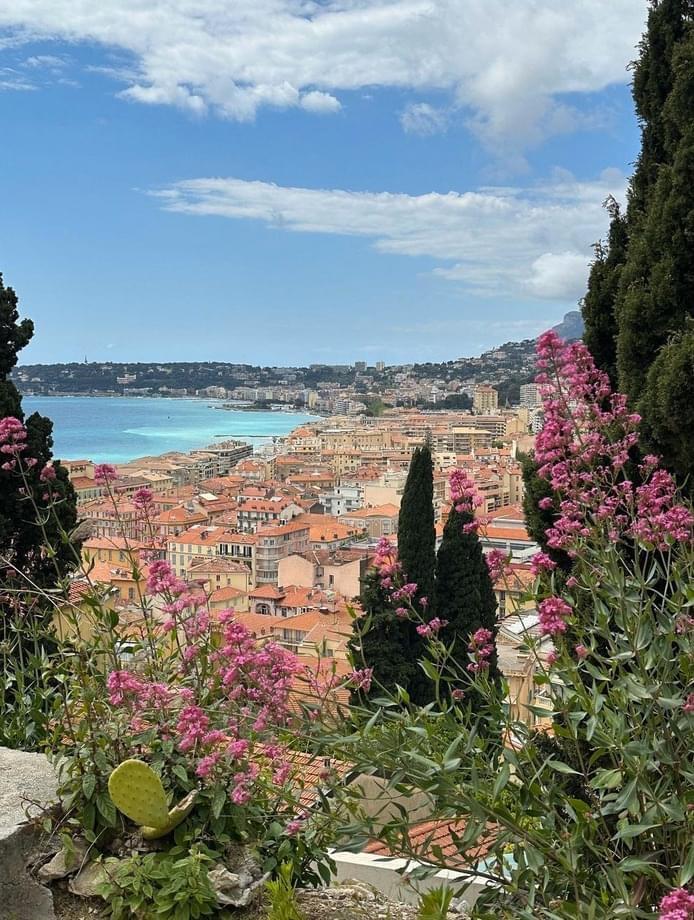
This is Cap d’Antibes

We had a lovely firework display in the bay last night – not sure what they were for but we enjoyed them.


Huw went up to the apartment to finish things off and I did some sunbathing, it wasn’t hot but it was warm enough. Let’s hope summer will be here properly soon.
Discover 22 ways to say hello and good-bye in French
French greetings are one of the best places to start when you learn French. After all, how can you start a conversation if you don’t know how to start a conversation?
A friendly bonjour – and au revoir – will be well received when travelling in French speaking countries. But just like English has hello, hey, what's up, hi, g’day and howdy, there are plenty of ways to greet someone in French. And, just like in English, they’re not all right for every situation.
So, if you’re ready to level up your learning, let’s say allô to the right French greetings for every context, from your best friend to your boss.
Hello in French
1. The slangy one: Coucou!
Meaning: “Hi!”
About: Coucou is a sweet, sincere way of saying hi, normally reserved for close friends and family. It’s a little like saying “darling!” or “hey babe!”. It’s warm and fuzzy – and, while not in the least bit offensive, typically a bit too cuddly and casual for work.
2. The casual one: Salut!
Meaning: “Hey!”
About: This is a casual greeting used amongst friends, most like an English “hey!” While you can pull this off at work or in school, it’s fairly casual and may not be right for talking to a boss or attending a formal event.
3. The formal one: Bonjour!
Meaning: This failsafe greeting literally means “Good day”.
About: It’s suitable in every situation, from boss to baker to bestie, and is used from the morning until around 5pm. When in doubt, go for a simple bonjour! And if it’s after 5, bonsoir will work, since it means good evening in French.
Pro tip
While you may have learned bon matin in school as a way to say good morning en français, it’s actually not typically used. It’s generally considered an anglicism – a direct translation of an English phrase that, while technically correct, isn’t actually in use by many native French speakers. If you want to say good morning in French, simply say bonjour!

French greetings and introductions: how are you?
1. The slangy one: Wesh, wesh ma gueule
Meaning: “Yo”, “Hi, my friend”
About: This is one of those greetings you definitely won’t learn in school. It’s super casual, so you’ll only want to use this around friends (and even then, with prudence – think of it as comparable to greeting your friends with a “Yo, yo, yo!” – you may risk sounding a little cheesy). This slang phrase came to French via immigrant communities in the suburbs of Paris and takes its roots from “wech rak?” – “how are you?” in Algerian Arabic.
2. The casual one: Eh, ça va?
Meaning: “Hi, how’s it going?”
About: Often shortened even further to a simple ça va?, one could argue that this is evidence of American pop culture rubbing off on the French. Traditionally, a French person asked how they were doing would respond earnestly or be surprised by the question. However, in the last few decades it's become much more common, especially among younger generations, to greet each other with a casual “ça va?” (answered with a perfectly cool “ça va!”) the way you might say, “what’s up?”
3. The formal one: Comment allez-vous?
Meaning: “How are you?”
About: This is the “how are you?” for more formal situations or when you want to make sure you sound respectful. But, word to the wise: with older French people and in more formal situations, it can be a little too familiar to ask at all. While it’s not uncommon in English to toss out a casual “how are you?” to start a meeting, in many other countries – including France – it can be taken as a serious question.

Saying goodbye in French
Now that you’ve mastered a few French hellos, let’s take a look at a few ways to say goodbye in French. After all, it can be hard to say goodbye, right?
1. The slangy one: À plus!
Meaning: “Later!”
About: This is a shortening of à plus tard – literally “until later” – which is also commonly used as a casual “Bye!” among friends. There are actually several variations of this, all of which are acceptable, including à la prochaine (until next time) and à bientôt (see you soon).
2. The casual one: Salut!
Meaning: “Bye!”
About: Kind of functionally a French ciao or aloha, salut is a general greeting that can be used for both hello and goodbye. It’s a word with many meanings (including salute, salvation, and cheers), and is generally informal but not rude or slangy. Salut works well for casual work environments, acquaintances, and friends.
3. The formal one: Au revoir!
Meaning: “Goodbye!”
About: Finally, we have the most formal version of goodbye, the one you probably learned in school, au revoir. Like bonjour, there’s nothing wrong with a good old-fashioned au revoir. It may be a little stuffy to use with friends, but it’s great for work, formal occasions, or saying goodbye to a shopkeeper as you leave their store.
Pro tip
You may also have heard adieu as a French goodbye in school, but that’s way past out of fashion. It’d be akin to saying goodbye to someone with a “farewell” or even a “fare thee well” – unless you’re being silly or dramatic, it’s simply not your best option for a bye-bye.

French email greetings
Last but certainly not least, as with English, greetings in the workplace are a whole different kettle of fish – especially when it comes to email. After all, when was the last time you said “all the best” out loud? Let’s take a quick look at some email-appropriate French greetings.
To start the email
1. The casual one: Bonjour, Salut
Meaning: “Hello”, “Hey”
About: Easy enough – as in English, a simple “hello” or “hi” will work for more friendly and casual email situations.
2. The semi-formal one for colleagues or clients: Cher confrère (for male colleagues), Chère consoeur (for female colleagues)
Meaning: “Dear colleague”
About: While this is something we’d likely use less in English as it sounds fairly formal, it can come in handy in French. Many French workplaces lean a little more formal in their language than English speakers may be used to, so this is not an uncommon email greeting.
3. The formal one: Monsieur X, Madame X
Meaning: “Dear Mr X” “Dear Madam X”
About: This is the most formal of the most common French email greetings. To make it a little less formal, you can add a “Cher” or “Chère” before addressing the recipient, but that is a bit more neutral and familiar. Again, leaning more formal in French workplaces and especially emails is normal and polite, so don’t be afraid of this option.
To end the email
1. The casual one: À bientôt, À plus
Meaning: “See you soon”, “See you later”
About: These are casual ways of signing off and should generally be reserved for friends or colleagues with whom you’re friendly.
2. The semi-formal one for colleagues or clients: Cordialement, Bien à vous
Meaning: “Regards”, “All the best”
About: Cordialement, bien cordialement, and très cordialement are the “regards” of French email writing and a good default choice when you’re not sure how best to sign off. Bien à vous, like “best wishes”, is another solid option. But again, French workplaces tend a little more formal, so you can choose something more formal and feel safe in your choice too.
3. The formal one: Je vous prie d’agréer, Madame/Monsieur…
Full versions: Je vous prie d’agréer, Madame, Monsieur, l'expression de mes salutations distinguées. Veuillez agréer, Madame, Monsieur, l'expression de mes salutations distinguées. Veuillez agréer, Docteur et Madame, l'assurance de mes meilleurs sentiments.
Meaning: “I pray you agree, Madam/Sir, my most cordial greetings”
About: This is a funny one because there are some linguistic purists who have taken issue with these sign offs as being grammatically incorrect, but they are the most common way to formally end an email in French. Ultimately, these phrases are used in a similar way to our “Yours sincerely” and aren’t considered nearly as stuffy as they may sound in English.

Other French greetings for different times of day – good afternoon and good evening in French
Leaving someone in the middle of the day and not sure what to say? There are a few specific phrases we use to wish someone a good afternoon or evening in French, depending on the time of the day.
From morning until sunset: Bonne journée – “Have a good day!”
From mid afternoon onwards: Bonne fin de journée – “Enjoy the rest of your day!”
From 2pm: Bon apres-midi – “Have a good afternoon!”
Around 4:30pm: Bonne fin d'après midi – “Enjoy the rest of your afternoon!”
From sunset onwards: Bonne soirée – “Have a good evening!”
In the evening, when you are going to bed, but the other person isn't (Yep, there’s a greeting for that!): Bonne fin de soirée – “Enjoy the rest of your night”
When someone is going to bed: Bonne nuit – “Goodnight
A few jokes to finish…
11 – French Joke 🏷
Un enfant va avec son père à l’hôpital pour voir sa mère qui a accouchée. Quand ils arrivent, l’enfant remarque que son petit frère a un bracelet autour de la main.
Le petit dit à son père:
– “Papa! Papa ! Ils ont oublié d’enlever le prix!
A child goes to hospital with his father to see his mother who has just given birth. When they arrive, the child notices that his little brother has a strap around his wrist.
The small child says to his father:
– “Daddy! Daddy! They forgot to take the price tag off!”
12 – French Joke 👶
La maman de Manu vient d’avoir un bébé. Sa cousine, en visite, lui demande :
– Comment s’appelle-t-il?
– On ne sait pas, il ne parle pas encore!
Manu’s mother just had a baby. Her cousin, visiting her, asks:
– What’s his name?
– We don’t know; he can’t talk yet!
13 – French Joke 🐓
Le psychanalyste: Qu’est-ce qui ne va pas avec votre frère ?
La soeur : Il pense qu’il est un poulet.
Le psychanalyste : Et il se comporte comme un poulet depuis quand ?
La soeur : Trois ans maintenant. On serait bien venus plus tôt, mais on avait besoin de ses oeufs…
The psychoanalyst: What’s wrong with your brother?
The sister: He thinks he is a chicken.
The psychoanalyst: And since when has he been behaving like a chicken?
The sister: It’s been three years now. We would have liked to have come earlier, but we needed the eggs…




Comments
Post a Comment