Day 1936 (Monday) 26th September 2022
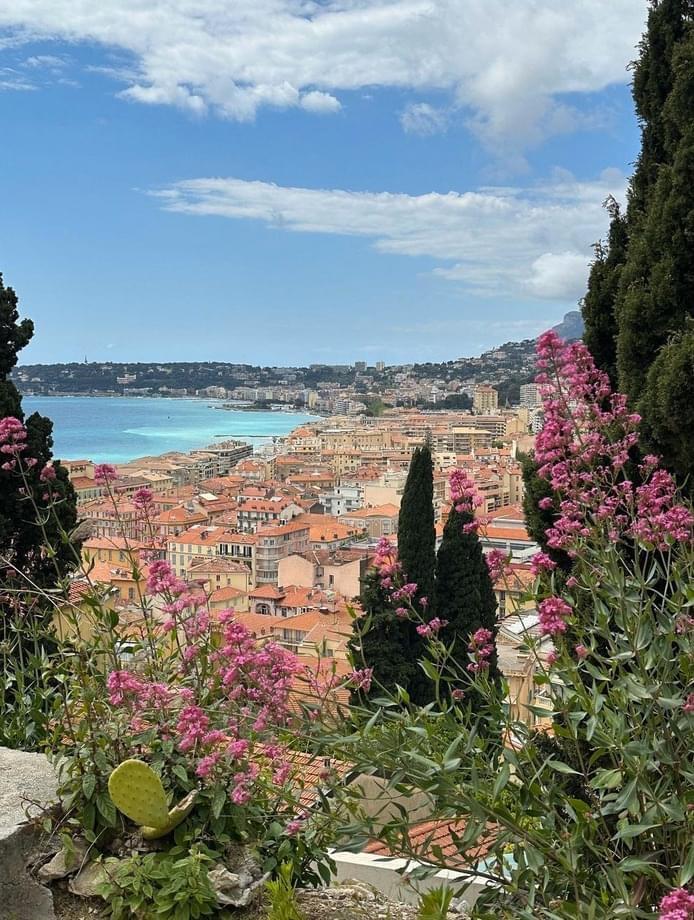
It was a stunning day again today, beautiful sunshine but not too hot – perfect! There were two cruise ships in the bay, that smaller one in the front would look big if it wasn’t dwarfed by that beast.

As usual I did my duo lingo and found myself in first place – it won’t last.

I am doing a lesson with Anastasia online this afternoon and today we are going to be reading Harry Potter at her request – I’m rather looking forward to it.
On the Agenda: What’s happening in France this week
From strikes and political storms to festivals of films, music and staying up all night, here's what is happening in France this week.
Monday
Budget – the 2023 Budget is presented to the Council of Ministers, marking the beginning of what is likely to be an extremely stormy passage through the various stages of parliament for the Macron government’s first budget since the loss of its overall parliamentary majority.
Pension reform – Emmanuel Macron is also expected this week to convene a meeting with his ministers over the controversial subject of further reform to the pension system. He has vowed to push ahead with the thorny issue, despite the loss of the majority.
Fashion week – If you’re in Paris, expect things to take a turn for the fashionable as Women’s Fashion Week begins.
Biarritz festival – beginning in the southern town of Biarritz is the 31st festival of Latin American music.
Tuesday
Hospital strike – Three of the largest unions representing hospital workers have called for industrial action to protest at working conditions and pressure on services – as is normal for health workers’ strikes, this will consist of protests and demonstrations rather than staff walking out of hospitals.
Zemmour case – extreme right pundit and failed presidential candidate Eric Zemmour faces the courts in Paris over alleged racial abuse.
Wednesday
Abortion demo – the international day dedicated to the right to abortion will be marked with demonstrations of support in Paris.
Dinard festival – opening day of the Festival of British film held in Dinard, Brittany.
Thursday
General strike call – the CGT union is calling for a general walk-out across the country in protest at the rising cost of living, backed by some left-wing groups. Some Paris transport workers will also strike, but full details of how big the strikes will be and which services will be affected are expected soon.
Saturday
Nuit Blanche – This is an annual, all-night arts celebration across the country. Museums, exhibits and other cultural centres stay open all night for visitors to come free-of-charge. As this year marks the 20th anniversary of the event, cities across France are planning a wide range of events. You can see what your local area is doing for Nuit Blanche by checking your mairie’s website.
Le goûter: The importance of the afternoon snack in France
The French have developed an entire cultural tradition around the idea of an afternoon snack. It's called "Le goûter" and here's what you need to know about it.
Published: 19 September 2022 13:17 CEST

(Photo: Pierre Verdy / AFP)
With all those patisseries and viennoiseries tempting the tastebuds in high street boulangerie after boulangerie, there can be little wonder that France – which takes food very seriously – has also invented the correct time to eat them.
Let us introduce you to the cultural tradition of le goûter – the noun of the verb “to taste”, and a cultural tradition in France dating back into the 19th century, perhaps even as far back as the Renaissance … allowing for the fact that people have snacked for centuries, whether or not it had a formal name.
It refers to a very particular snack time, usually at around 4pm daily. This is the good news.
The bad news is that, officially, le goûter is reserved for children. This is why many schools, nurseries and holiday activity centres offer it and offices don’t. The idea is that, because the family evening meal is eaten relatively late, this mid-afternoon snack will keep les enfants from launching fridge raids, or bombarding their parents with shouts of, “j’ai faim!”.
Most adults, with their grown-up iron will-power, are expected to be able to resist temptation in the face of all that pastry, and live on their three set meals per day. Le grignotage – snacking between meals – is frowned on if you’re much older than your washing machine.
But, whisper it quietly, but just about everyone snacks (grignoter), anyway – a baguette that doesn’t have one end nibbled off in the time it takes to travel from boulanger to table isn’t a proper baguette. Besides, why should your children enjoy all the treats?
We’re not saying ignore the nutritionists, but if you lead an active, reasonably healthy lifestyle, a bite to eat in the middle of the afternoon isn’t going to do any harm. So, if you want to join them, feel free.
What do you give for goûter
It’s a relatively light snack – we’re not talking afternoon tea here. Think a couple of biscuits, a piece of cake, a pain au chocolat (or chocolatine, for right-thinking people in southwest France), piece of fruit, pain au lait, a croissant, yoghurt, compote, or a slice of bread slathered in Nutella.
Things might get a little more formal if friends and their children are round at the goûter hour – a pre-visit trip to the patisserie may be a good idea if you want to avoid scratching madly through the cupboards and don’t have time to create something tasty and homemade.
Not to be confused with
Une collation – adult snacking becomes socially acceptable when it’s not a snack but part of une collation served, for example, at the end of an event, or at a gathering of some kind. Expect, perhaps, a few small sandwiches with the crusts cut off, a few small pastries, coffee and water.
L’apéro – pre-dinner snacks, often featuring savoury bites such as charcuterie, olives, crisps and a few drinks, including alcoholic ones, as a warm up to the main meal event, or as part of an early evening gathering before people head off to a restaurant or home for their evening meal.
Un en-cas – this is the great adult snacking get-out. Although, in general, snacking for grown-ups is considered bad form, sometimes it has to be done. This is it. Call it un en-cas, pretend you’re too hungry to wait for the next meal, and you’ll probably get away with it.
Le goûter in action
Pour le goûter aujourd’hui, on a eu un gâteau – For snack today, we had some cake.
Veuillez fournir un goûter à votre enfant – Please provide an afternoon snack for your child.
J’ai faim ! Je peux avoir un goûter ? – I’m hungry! Can I have a snack?
Here are a few more lovely photos taken in France in the autumn.
Mountains in Provence
(Photo: Fred/Flickr)

Annecy, eastern France
(Photo: Helene Schmit/Flickr)

Le Castellet, south eastern France
(Photo: Marcovdz/Flickr)

Vineyards near Reims, northern France
(Photo: Vincent Brassinne/Flickr)

The Localnews@thelocal.fr@thelocalfrance




Comments
Post a Comment