Day 1141 (Friday) 24th July 2020
It was super-hot this morning and I saw Olivier at the station again going to Monaco – we had a chat across the tracks and he said that him and Audrey may join us in the bar tonight. They are going to the Vietnamese restaurant called the Mekong and if we are still in the bar they’ll come and have a drink with us.


The class went well and we finished the week playing a board game called ‘Absolutely English’ and even sulky boy became a little animated and won! I think there was some cheating going on but as long as he’s speaking English I don’t care – that’s him covering his face.

During my petite pause I went to see Hayat with my French paperwork and even though I handed her a big pile of papers there was one number missing. Every single time you try to do some French paperwork there is ALWAYS one thing missing. I walked up the train station to get the 12.37 and the platform was packed again.

This was the same platform yesterday for the 1.06

I spent a lovely sweaty couple of hours reading my book in the sun on the balcony and got a phone call from the owner of the big villa saying we’ve got a check-in tomorrow – so some more beer money – hooray!
I forget to mention that yesterday we had a visit from the police. Huw heard someone banging on the front door downstairs then few seconds later our bell rang. He opened the door to three armed police officers who were searching for a Monsieur Russell. He quickly explained that there was no M. Russell here and off they went.
I keep forgetting to post the interesting facts about France – here are some more… (the following photos are not mine)
· When it comes to design and technical innovation, the French automobile industry is always ranked among the top in the world. It was the French who invented the clutch, the transmission shaft, the gearbox, and even front-wheel drive.
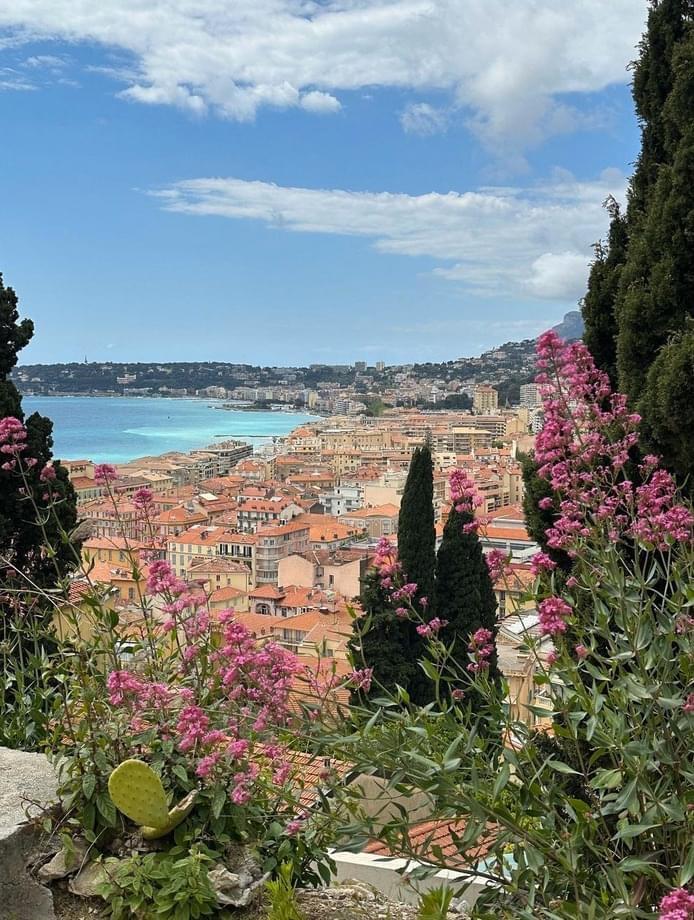
· As part of its strategy to protect the French coastline, the government has purchased coastal properties. This prevents the vulnerable land from pollution, ill-conceived tourism projects, and urbanisation.
· In France you will find some of the largest forests in Europe, covering around 28% of the country. In 1860, after noticing the deteriorating conditions of some forested areas, the French began an unprecedented programme of reforestation.

· France’s TGV or high-speed train was recognised as the fastest passenger train in the world after setting the record at over 320 miles per hour in 1990.

· Conservation is extremely important to the French. They have initiated programmes to re-introduce species which were near extinction into various areas. Brown bears, wolves, lynx, hawks, and even storks have benefited from these programmes.
This lynx is almost as pretty as Badger

· Even though the population of France is approximately 66 million, it is a geographically large country. This results in a very low population density of about 295 people per square mile.
· Thanks to the French education system, 99% of the population 15 and older are literate.
· France was one of the first countries to broadcast regular television programming. TV came to France in 1931.
· Most workers in France have an official work week of 35 hours. Plus they enjoy five weeks of vacation each year.
· One-quarter of the French population take their vacations abroad. The most popular destinations are Greece, Spain, and Italy.
This 35 hour week may change – read on
A 28-hour work week and vegetarian menus: What France's citizen's convention
Measures such as cutting the working week, limiting the use of air conditioning, banning domestic flights and cutting meat consumption have been put forward in a citizens' charter to cut carbon emissions in France.
After nine months of work France's 150-strong Citizens Convention on the Climate have presented their charter for France.
After the final stage of voting, the Charter will then be presented to the government. There is no formal obligation to adopt any of the measures proposed, but president Emmanuel Macron has backed the Citizens Convention, saying: "I am committed to taking strong decisions."
Their brief, as defined by the president, was to set out a series of measures to combat climate change that will make it possible to achieve a reduction of at least 40 percent in greenhouse gas emissions by 2030 (compared to 1990), within a spirit of social justice.
Here are some of their proposals for France.
Working hours
France is already famous for its generous 35-hour week (although in reality not many people actually work 35 hours) but the charter proposes cutting this to a 28-hour week, while bringing in a 20 percent hourly minimum wage increase to ensure that salaries remain the same.
The charter states that in order to cut emissions it is necessary to "consume less, produce less and therefore work less".
Companies would also have to carry out an annual audit of their carbon emissions, while governments would be obliged to take emissions into account when awarding contracts.
Housing
Mandatory energy renovations by 2040. All new buildings or buildings undergoing a renovation before 2030 would be obliged to replace oil-fired heating systems with eco-friendly options and a system of grants and loans would encourage other building owners to make the switch.
Heating/air conditioning
To limit energy consumption from homes and businesses, people would be encouraged to ditch heating or air conditioning when the temperature is between 19C and 30C. This would not apply to medical facilities, nursing homes and childcare facilities.
Cut down on meat and cheese
The aim would be to reduce consumption of meat and dairy products by 20 percent by 2030. The charter stops short of spot-checks at dinner time, but suggests that all forms of collective catering such as school meals and workplace canteens be obliged to adopt this target.
Advertising ban
In order to discourage over-consumption the charter proposes introducing a labelling system similar to food labelling which would show the carbon footprint of a product. Advertising of the products with the biggest carbon footprints could be banned altogether or forced to include a 'health warning' similar to the system in place for advertising of junk food.
Transport
To discourage private car use the charter proposes a package of support for train travel and cycling, coupled with the reduction of tax breaks on diesel and a ban on domestic flights where the destination is available by any other means.
Making ecocide a crime
The charter proposes creating a new crime of ecocide, defined as "any action having caused serious ecological damage by participating in the manifest and significant overstepping of planetary limits, committed with knowledge of the consequences that would result and which could not be ignored".
Joke of the day
The future of the T-shirt



Comments
Post a Comment